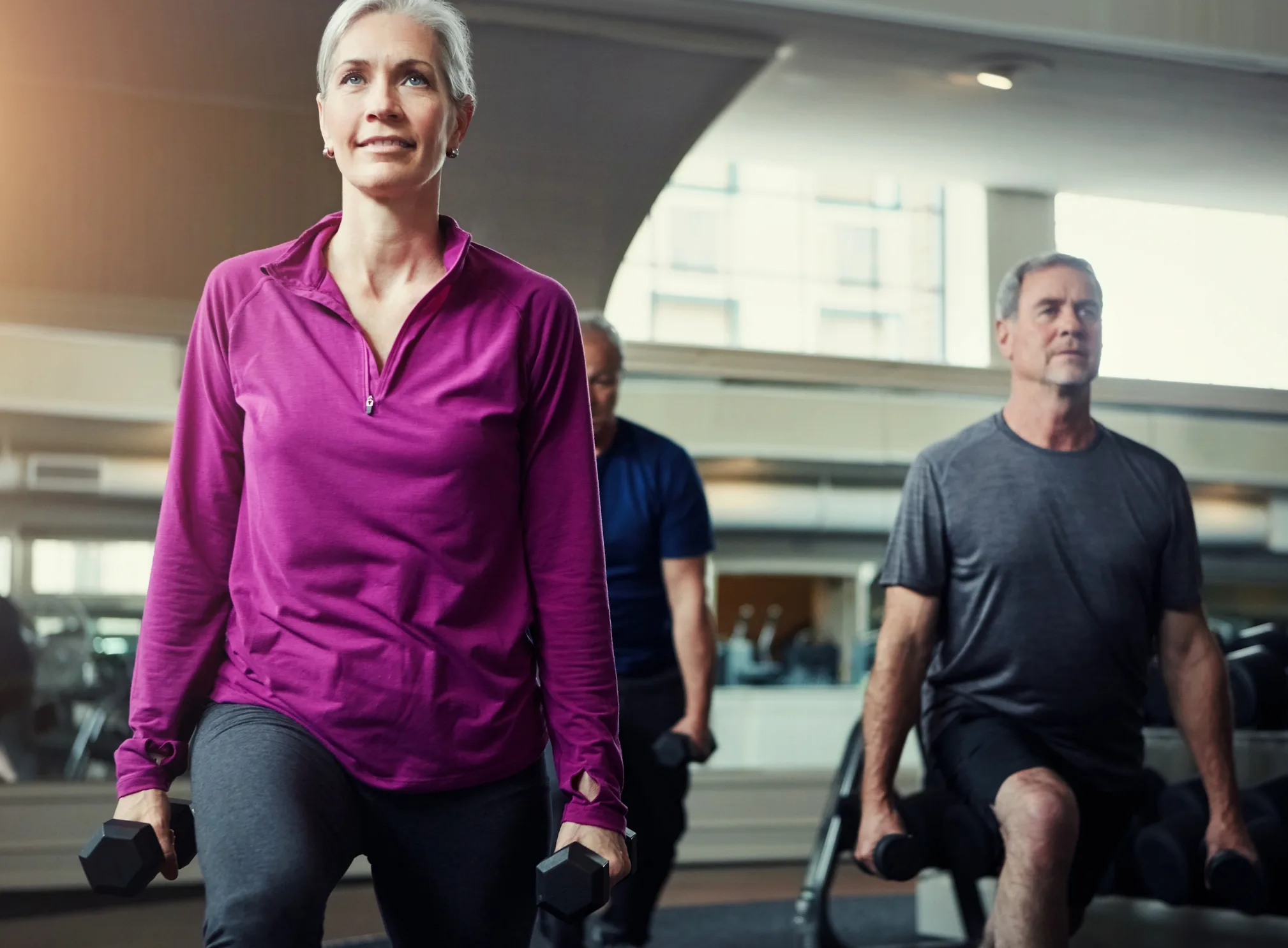
Take a moment to imagine yourself ten or fifteen years from today. In this vision, are you effortlessly hoisting a carry-on into an overhead bin, or are you engaged in a life-or-death struggle with a particularly stubborn jar of pickles? We all hope for the former, but hope, as they say, isn’t a strategy—especially when gravity and Father Time are playing for the opposing team. While we can’t stop the clock, we can certainly make sure the gears are well-oiled. Think of your physical health as a high-yield savings account; the more “functional fitness” you deposit now, the less likely you are to face a’ bankruptcy’ of mobility later.
Fortunately, you don’t need an expensive lab or a crystal ball to see how you’re faring. By performing a few simple assessments, you can gauge your current trajectory and make the necessary mid-course corrections to ensure your “golden years” are spent exploring new cities rather than exploring the limits of a recliner.
Investing in Your “Physical Bank Account”
Aging naturally involves a gradual decline in muscle mass and bone density, but this process is not a predetermined cliff. Dr. Stuart Phillips, a professor of kinesiology at McMaster University, emphasizes that it is never too early—or too late—to begin training for your later years. Strengthening your body now provides a buffer for the future.
Even for those already in their 90s, research indicates that light, regular activity can lead to significant gains in strength and function. To understand your current baseline, medical experts recommend four primary assessments that correlate with longevity, independence, and a reduced risk of mortality.
1. The Sitting-Rising Test (SRT)
Developed by Dr. Claudio Gil Araújo, this test measures a combination of strength, power, flexibility, and balance. It is a potent predictor of mortality because it reflects your risk of falling and your ability to remain mobile.
- The Procedure: Start from a standing position. Lower yourself to a cross-legged sitting position on the floor, then return to a standing position.
- The Scoring: Start with 10 points. Subtract 1 point each time you use a hand, knee, forearm, or the side of your leg for support. Subtract 0.5 points if you lose your balance.
- The Goal: For those over age 60, a score of 8 or higher is considered excellent. A score of 4 or below suggests a significantly higher risk of health complications over the next decade.
2. Walking Speed Assessment
Your “gait speed” is often referred to by geriatricians as the “sixth vital sign.” Walking requires the complex coordination of the cardiovascular, nervous, and musculoskeletal systems. A decline in speed can be an early warning sign of underlying systemic issues.
- The Procedure: Measure a flat, straight path of four meters (approximately 13 feet). Walk the distance at your normal, comfortable pace while timing yourself.
- The Goal: Aim for a speed of at least 1.2 meters per second, which equates to crossing the finish line in roughly 3.3 seconds.
- Monitoring: Test yourself every few months. A noticeable slowing in your natural pace is a signal to consult a professional to check for changes in your vestibular or sensory health.
3. Grip Strength and the “Farmer’s Carry”
Grip strength is a proxy for overall vitality. If you have the strength to carry heavy bags or open heavy doors, it generally indicates an active lifestyle. Maintaining this strength is vital for daily independence and household safety.
- The At-Home Test: Perform a “Farmer’s Carry” by walking for 60 seconds while holding a weight in each hand.
- Target Weights: * Men (Age 65): Two 40-pound dumbbells.
- Men (Age 85): Two 25-pound dumbbells.
- Women (Age 65): Two 25-pound dumbbells.
- Women (Age 85): Two 15-pound dumbbells.
- Precaution: Always start with lighter weights to test your form and stop immediately if you experience joint pain.
4. The Single-Leg Stand
Balance often declines faster than strength, making it a primary factor in fall-related injuries. This simple test evaluates your postural stability and neurological integration.
- The Procedure: Stand on one leg for as long as possible. Have a sturdy chair or wall nearby for safety.
- The Goal: You should be able to maintain your balance for at least 10 seconds.
- The Risk: Research shows that adults over 50 who cannot complete a 10-second unassisted stand have a significantly higher statistical risk of mortality within the following seven years.
Moving the Needle
If these tests left you feeling a little more “vintage” than you’d like, don’t panic. The beauty of the human body—even the 50-plus version—is its remarkable ability to adapt. You aren’t stuck with your current score; you’re just looking at your starting point. Improving your balance and strength today is essentially buying insurance for your independence tomorrow. After all, you’ve spent decades taking care of everyone else; it’s finally time to make sure your own “chassis” is road-ready for the next few hundred thousand miles.
Source: