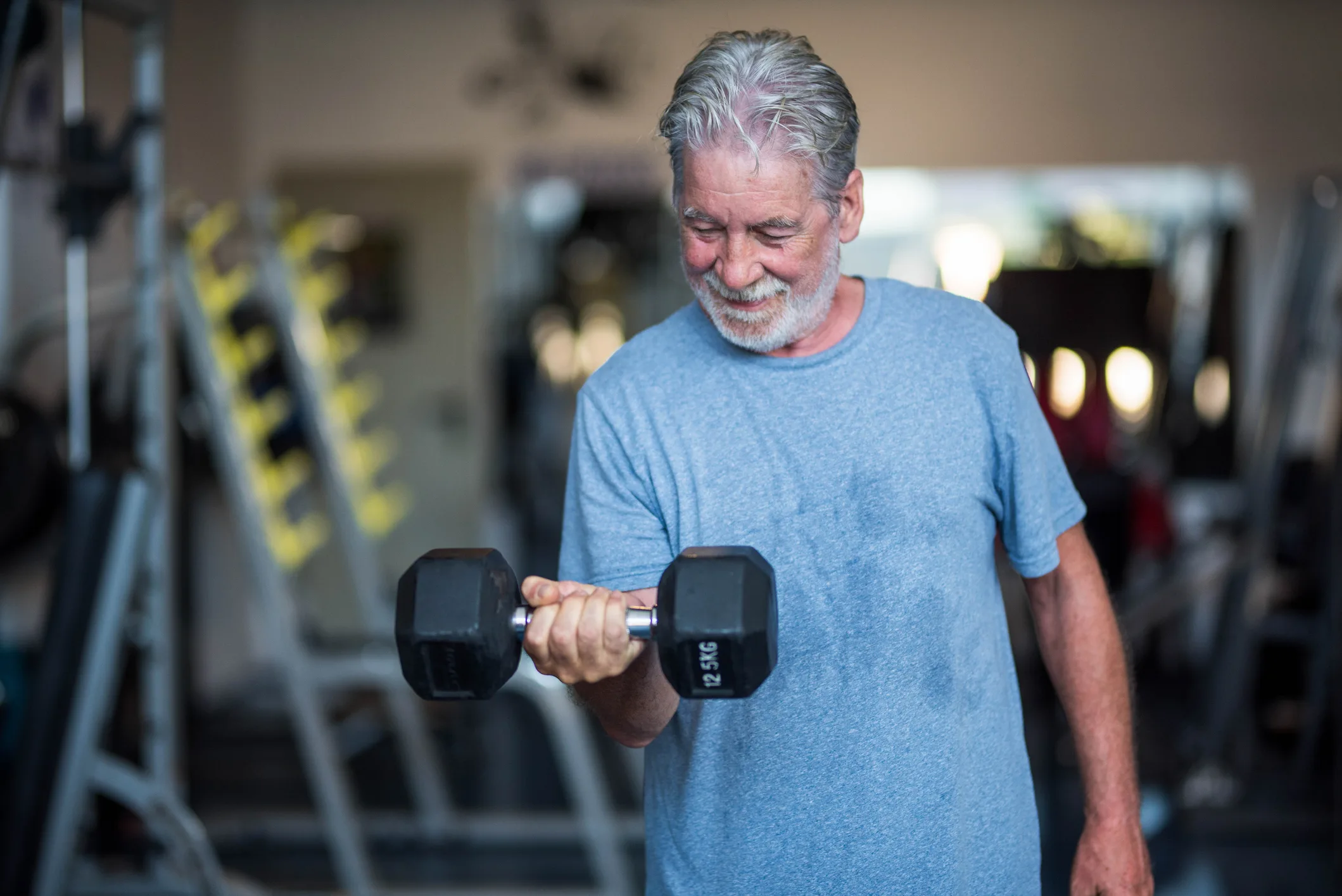
If you’ve reached the age where your back goes out more often than you do, you’ve likely heard the same health advice on loop: “Get more aerobic exercise.” While aerobic exercise is the gold standard for fixing this, the reality is that less than 40% of adults over 50 actually meet the recommended guidelines. The primary barrier isn’t usually laziness; it’s the “time tax.” Finding 150 minutes a week for moderate exercise, plus the time to change, shower, and travel to a gym, is a significant hurdle.
Well fear not. Researchers at the University of Colorado Boulder and UCLA have been investigating a “strength training” alternative for the heart that takes only five minutes a day.
The Solution: High-Resistance IMST
The technique is called High-Resistance Inspiratory Muscle Strength Training (IMST). Originally developed in the 1980s for patients with severe respiratory diseases, it was designed to strengthen the diaphragm and other breathing muscles. However, recent clinical trials have shown that it does much more than help you breathe; it acts as a workout for your entire vascular system.
The protocol is straightforward:
- The Device: You use a small, handheld respiratory trainer that provides resistance as you inhale.
- The Effort: You take 30 deep breaths against high resistance (about five minutes of total time).
- The Schedule: Doing this six days a week for just six weeks has shown dramatic results.
Understanding the Training Device
The device used in these studies, such as the POWERbreathe or The Breather, is a handheld tool known as a “threshold pressure trainer.” It looks a bit like a high-tech whistle or a small inhaler and functions as a gym for your lungs.
The device contains an internal spring-loaded valve. When you inhale, the valve stays shut until you provide enough suction (inspiratory pressure) to crack it open. This forces your diaphragm and ribcage muscles to work against a specific, measurable load—exactly like adding plates to a barbell. Most devices feature a manual dial to adjust the resistance as you get stronger.
- Availability: These devices do not require a prescription. They are available on Amazon, at Walmart, or through medical supply websites like Performance Health.
- Cost: Basic mechanical models generally cost between $50 and $90. More advanced “smart” models with Bluetooth tracking, like the Airofit, can range from $250 to $400.
- Selection: For the “high-resistance” protocol used in the studies, healthy adults should typically look for a “Medium Resistance” model (often color-coded blue in the POWERbreathe line) rather than the “Low” or “Wellness” versions.
Serious Results for the 50+ Crowd
In a double-blind, randomized study published in the Journal of the American Heart Association, the results were striking for adults aged 50 to 79. Because this demographic is at the highest risk for hypertension, the findings are particularly relevant.
- Significant Pressure Drops: Participants saw an average drop of 9 points (mmHg) in their systolic blood pressure. This is the same—or better—than the results typically achieved by walking 30 minutes a day, five days a week.
- Vascular Flexibility: The study found a 45% improvement in vascular endothelial function—the ability of your arteries to dilate and move blood efficiently.
- Molecular Benefits: Testing showed an increase in nitric oxide (a molecule that protects the heart) and a significant decrease in markers of inflammation.
- Sticking With It: Perhaps most impressively, the adherence rate was 95%. Because it is done at home and takes less time than brewing a pot of coffee, people actually did it.
Long-Lasting Impact
One of the most surprising findings from the UCLA and Colorado research was the “carry-over” effect. When participants stopped the 5-minute daily breathing exercises, their blood pressure stayed lower for six weeks afterward. While it isn’t a permanent “one and done” fix, it suggests that the training creates structural improvements in how the body regulates blood pressure, rather than just a temporary dip.
Takeaway
In short, if you have five minutes to spare and aren’t particularly fond of sweating in public, this breathing hack might be the most efficient health “cheat code” available to you. For about the price of a couple of months of a gym membership you never use, you can buy a device that sits on your nightstand and does the heavy lifting for your heart. It turns out that being “short of breath” is actually good for you, provided you’re doing it on purpose against a little plastic resistance. It’s a professional, evidence-based way to keep your arteries from acting like they’re 100 years old while you’re only halfway there. Just think: you could be lowering your risk of a heart attack in the time it takes to watch a segment of the evening news—and unlike that treadmill in the basement, this device makes for a very poor clothes rack.
Source:
Time-efficient, high-resistance inspiratory muscle strength training for cardiovascular aging