By the time you cross the half-century mark, gravity stops being a theoretical concept and starts feeling like a personal vendetta. You wake up, make a sudden movement to reach for your coffee mug, and your lower back sounds like a handful of dry twigs snapping in the wind. We are told to exercise, to stretch, and to “find our zen,” but sometimes the spirit is willing and the knees are highly litigious. Enter Child’s Pose (known classically as Balasana). It is the only yoga posture that actively encourages you to curl into a ball on the floor and ignore the outside world for five minutes. If you’ve been looking for a stretch that feels less like a military boot camp and more like a sanctioned adult nap, you’ve arrived.
What Exactly is Child’s Pose?
At its core, Child’s Pose is a resting posture. In a typical yoga class, it is the designated “safe zone” where you can retreat when the instructor starts demanding transitions that your hips haven’t been capable of since 1994.
Physically, it involves kneeling on the floor, sitting your hips back toward your heels, and folding your torso forward over your thighs so that your forehead rests on or near the ground. Your arms can either stretch out in front of you or rest alongside your body. It is designed to shift your nervous system out of “fight or flight” mode and into a state of deep, restorative rest.
The Physical Benefits for the 50+ Body
As we age, our joints lose fluid and our spinal discs compress. Child’s Pose acts as a gentle countermeasure to the daily wear and tear of life. Here is what a regular practice can do for you:
- Decompresses the Spine: By folding forward and lengthening the torso, you gently separate the vertebrae, creating space in the lumbar (lower) spine where most age-related tension accumulates.
- Opens the Hips and Glutes: Tight hips are a major contributor to lower back pain and balance issues. This pose offers a passive, gravity-assisted stretch to the deep rotators of the hip.
- Stretches the Shoulders and Upper Back: When performed with the arms extended forward, it targets the latissimus dorsi and the muscles surrounding the shoulder blades, combating the “hunch” often caused by computer screens and driving.
- Aids Digestion: The gentle pressure of your thighs against your abdomen creates a soft massage for your internal organs, promoting better circulation and digestive health.
Step-by-Step Guide to the Perfect Setup
To get the maximum benefit from Balasana without straining your joints, proper alignment is essential. Follow these steps to enter the pose safely:
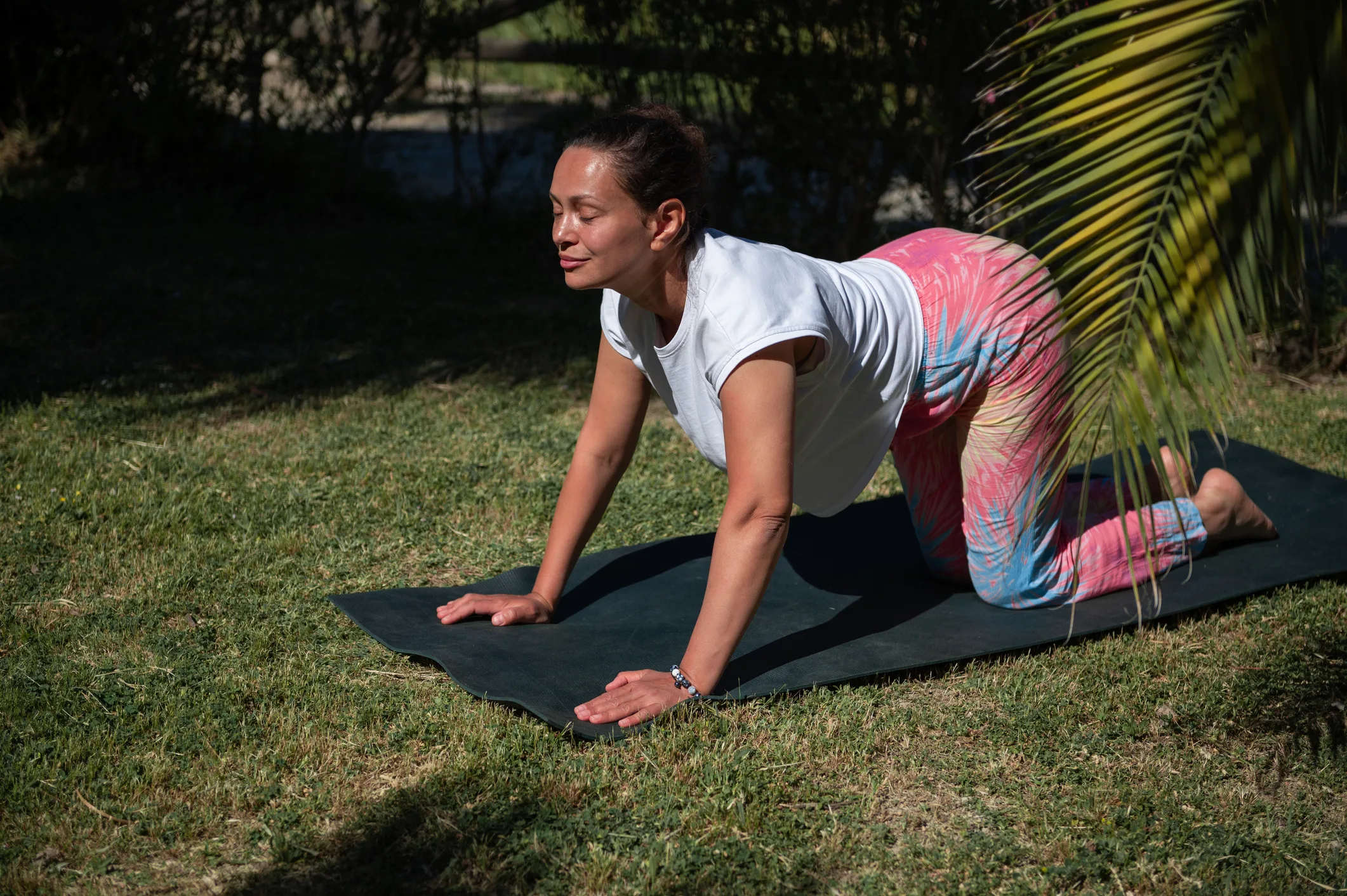
- Start on Your Hands and Knees: Begin in a tabletop position on a well-padded yoga mat. Place your wrists directly under your shoulders and your knees under your hips.
- Position Your Lower Body: Touch your big toes together and widen your knees until they are roughly the width of your mat (or slightly wider than your torso).
- Sink the Hips Back: Exhale as you guide your tailbone back toward your heels. Do not worry if your glutes do not touch your feet; only go as far as your flexibility allows.
- Extend and Lower: Slowly lower your torso down between your thighs. Walk your hands forward, extending your arms long, and gently rest your forehead onto the mat.
- Breathe Deeply: Hold the position for 5 to 10 deep breaths, focusing on expanding the back of your ribcage with every inhalation.
Essential Modifications for Comfort and Safety
Yoga should never cause pain. If you have chronic knee issues, stiff ankles, or a tight back, forcing yourself into the standard shape can do more harm than good. Use these modifications to customize the pose to your body:
- For Knee Discomfort: Roll up a thin blanket or towel and place it directly into the crease behind your knees before sitting back. This reduces the acute angle of flexion on the joint.
- For Tight Hips (If you cannot reach your heels): Place a firm bed pillow or a yoga bolster between your thighs and your calves to support your weight.
- For a Stiff Neck or High Blood Pressure: If your forehead does not comfortably reach the floor, do not let your head dangle. Place a yoga block, a thick book, or your stacked fists under your forehead to keep your neck aligned with your spine.
Takeaway
So, the next time the modern world becomes a bit too loud, or your sciatic nerve decides to voice its opinion on the weather, remember that you have options. You don’t need to twist yourself into a pretzel or stand on your head to reap the benefits of yoga. You simply need to get down on the floor—carefully, of course—and claim your right to do absolutely nothing for a few minutes. Your lower back will thank you, your mind will quiet down, and frankly, the dust bunnies under the couch probably missed you anyway.