Let’s be honest: endurance in your 50s and 60s feels a bit different than it did in your 20s. Back then, “endurance” might have meant staying out until 2 a.m. and still making it to work on time. These days, it’s less about how fast you can sprint and more about how long your body can sustain effort without feeling like a “check engine” light is about to pop up on your dashboard.
While it’s true that muscle mass and aerobic efficiency naturally take a bit of a dip as the candles on the birthday cake multiply, there is excellent news. Endurance is incredibly “trainable” well into our later decades. Staying fit isn’t just about looking good in a polo; it’s about metabolic health, keeping your balance, and ensuring you can outpace your grandkids (or at least keep them in sight).
Abbie Watkins, CPT, a personal trainer with OriGym in the UK, suggests three specific benchmarks. If you can smash these without stopping, you aren’t just “doing okay”—you’re in the elite tier of functional fitness.
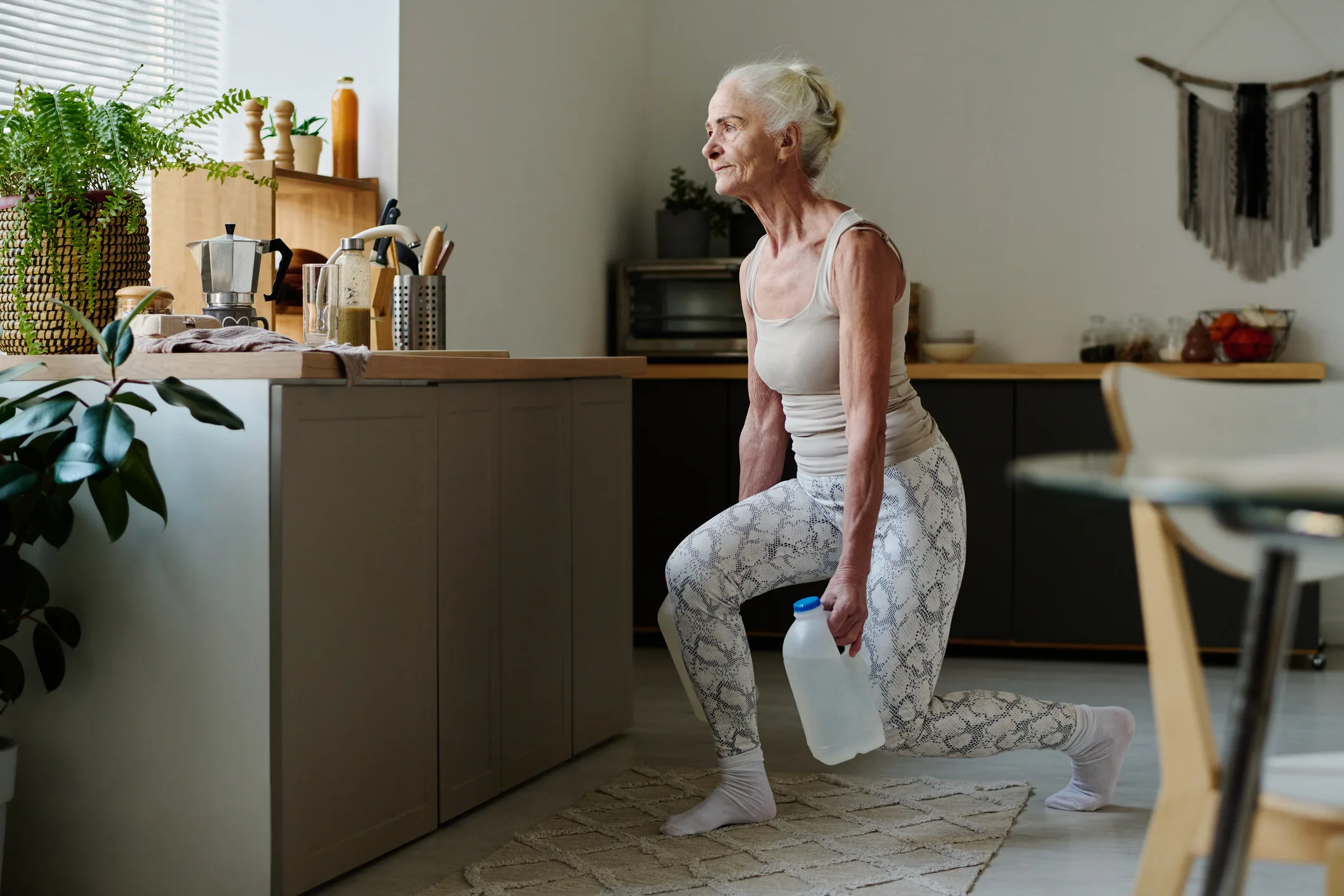
1. The Marathon Squat (40–50 Reps)
The squat is the king of functional movements. Think of it as the “getting out of a low sofa” insurance policy. This test challenges your quads, glutes, and your heart’s ability to keep oxygen flowing to those big muscles.
The Benchmark: 40 to 50 controlled repetitions without pausing.
How to nail it:
- Set the stage: Feet shoulder-width apart, chest proud (like you just won a bridge tournament).
- The Descent: Push your hips back and lower until your thighs are parallel to the floor.
- The Return: Drive through your heels to stand, squeezing your glutes at the top.
- Keep the Rhythm: Maintain a steady pace without “locking” your knees at the top.
2. The “Longest Minute” Plank (90–120 Seconds)
We’ve all heard that a “microwave minute” is the longest unit of time known to man. A plank minute is a close second. This test measures your core stability and total-body tension.
The Benchmark: A solid hold for 90 to 120 seconds.
How to nail it:
- Get Low: Start on your forearms with elbows directly under your shoulders.
- Line it Up: Your body should be a straight line from head to heels—no “mountain peaks” (butt in the air) or “valleys” (sagging hips).
- Breathe: It’s tempting to hold your breath, but your muscles need that oxygen to keep the lights on.
3. The Continuous Step-Up (60 Steps)
Step-ups are the ultimate “real world” exercise. Whether it’s trekking up a flight of stairs with groceries or hiking a trail, this movement tests your balance, coordination, and lung capacity.
The Benchmark: 60 continuous steps at a smooth, steady rhythm.
How to nail it:
- Firm Footing: Place your entire foot on a sturdy step or platform.
- Drive Up: Press through your heel to stand tall on the step.
- Control the Drop: Don’t just “fall” back down; lower yourself with intention.
- Switch it Up: Alternate legs until you hit that 60-count.
Don’t Panic If You Aren’t There Yet
If you tried the plank and hit the floor at 30 seconds, don’t throw in the towel. These aren’t “pass-fail” exams; they are checkpoints.
Tips for progress:
- Warm up first: A little marching in place or shoulder circles goes a long way in preventing “snap, crackle, and pop” joints.
- Scale it down: If 50 squats sounds like a fever dream, start with 15. If your knees grumble, don’t go as deep.
- Consistency is Queen: Improving your stamina is about showing up regularly, not crushing yourself in a single session.
Source:
If You Can Complete These 3 Exercises Without Stopping After 50, Your Endurance Is Exceptional