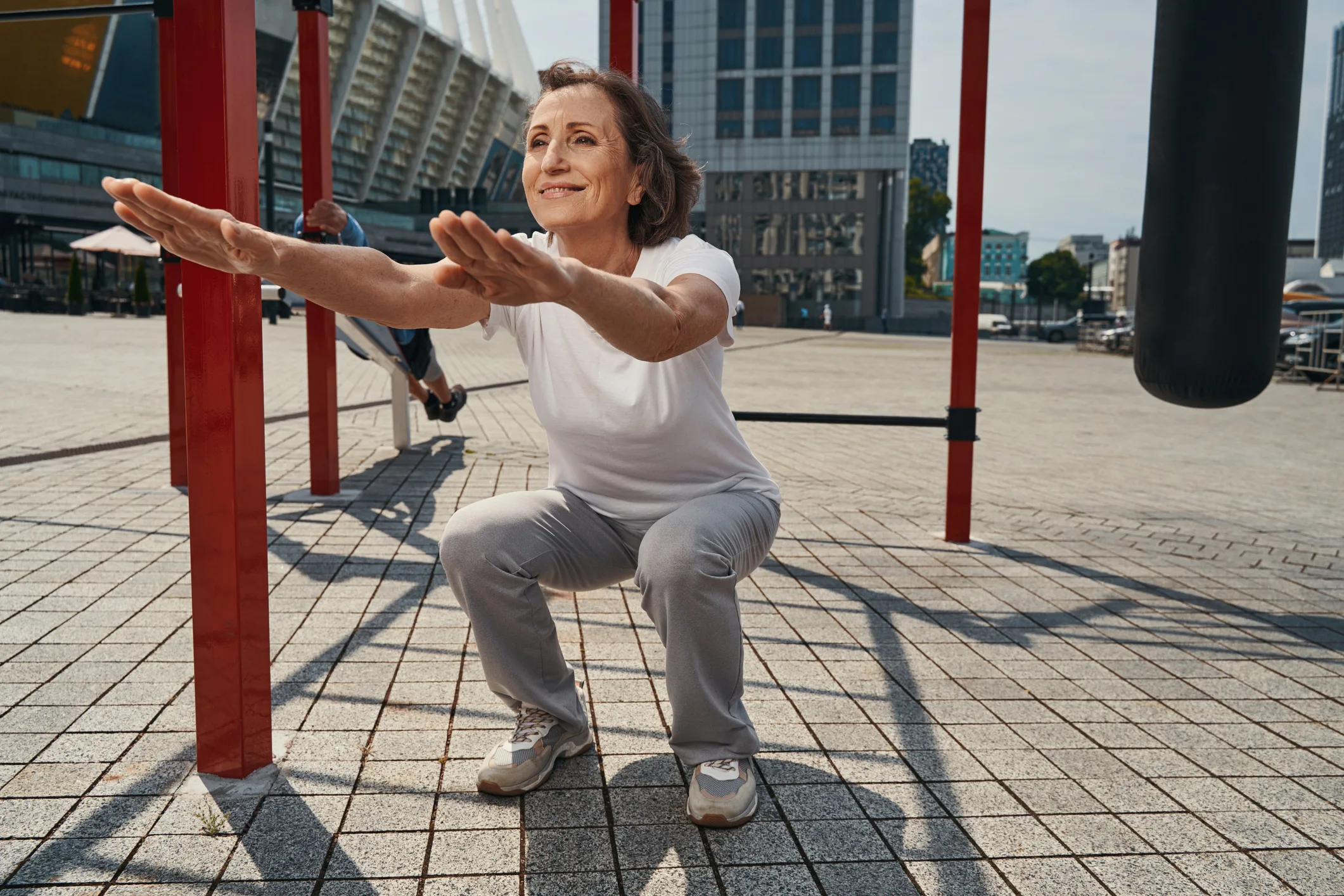
In a previous article we discussed how balancing on one leg for as long as you can is a good indicator of your physical health.
So How About Push-Ups?
Forget fancy gym equipment and complicated fitness routines. One of the most basic exercises, the humble push-up, can reveal surprising insights into your physical health, especially as you age. More than just a test of upper body strength, the ability to perform push-ups is a powerful indicator of overall functional fitness and a key predictor of long-term well-being.
Researchers have shown that how many push-ups you can perform is good indicator to determine your heart health. In a 2019 study published in JAMA Network, scientists found that adults who could do 40 push-ups were 96% less likely than those who couldn’t manage 10 to develop heart conditions.
The study only involved men (women have different scores) but concluded that the number of push-ups “may be a useful and objective clinical assessment tool for evaluating functional capacity and cardiovascular disease risk.”
How many push-ups should you be able to do?
The Mayo Clinic, recommends the following “good” push-up numbers:
| Age | Women: Number of pushups | Men: Number of pushups |
| 25 | 20 | 28 |
| 35 | 19 | 21 |
| 45 | 14 | 16 |
| 55 | 10 | 12 |
| 65 | 10 | 10 |
What constitutes a “good” pushup?
- Lie face down on the floor with your elbows bent and your palms next to your shoulders.
- Keep your back straight. Push up with your arms until your arms are at full length.
- Lower your body until your chin touches the floor.
- Do as many pushups as you can until you need to rest
How to Improve Your Pushup Capacity
You can make incredible progress on your pushup skills with a little consistency and creativity no matter your fitness level.
Our advice is to start small and modify the movement to lower the weight resistance and the strain on your elbow joints. As with all strength movements, gradually increase the intensity with time as you progress.
Here are some examples of modified pushups:
- Diamond pushups (Difficult): In a plank position, place your hands close together so that your index fingers and thumbs make a “diamond” formation. This version recruits more of your triceps than pectoralis and is meant for those who are more advanced.
- Knee pushups (Easier): In a plank position, lower your knees to the ground. Perform regular pushups with your knees grounded and acting as a fulcrum for your bodyweight. This makes the movement easier to perform by lowering the resistance.
- Couch pushups (Easier): Lay in a plank position with your feet on the floor and your hands planted on your couch or coffee table. Perform pushups as usual, with your hands stationed on an elevated surface to reduce overall load.
- Wall pushups (Easiest): Face a wall while standing upright and, with both hands firmly planted on the wall at shoulder-width, lower yourself forward until your face nearly touches the wall. Push away until your arms are fully extended, then repeat.