If you have crossed the threshold of 60, you have likely survived bad hairstyles, hyperinflation, the dawn of the internet, and decades of unsolicited advice. By this point, you might think you know exactly how your body and mind operate. Yet, when a persistent cloud settles over your daily life, it is frequently dismissed as a natural consequence of “just getting older,” usually accompanied by a well-meaning relative telling you to “just take up a hobby.”
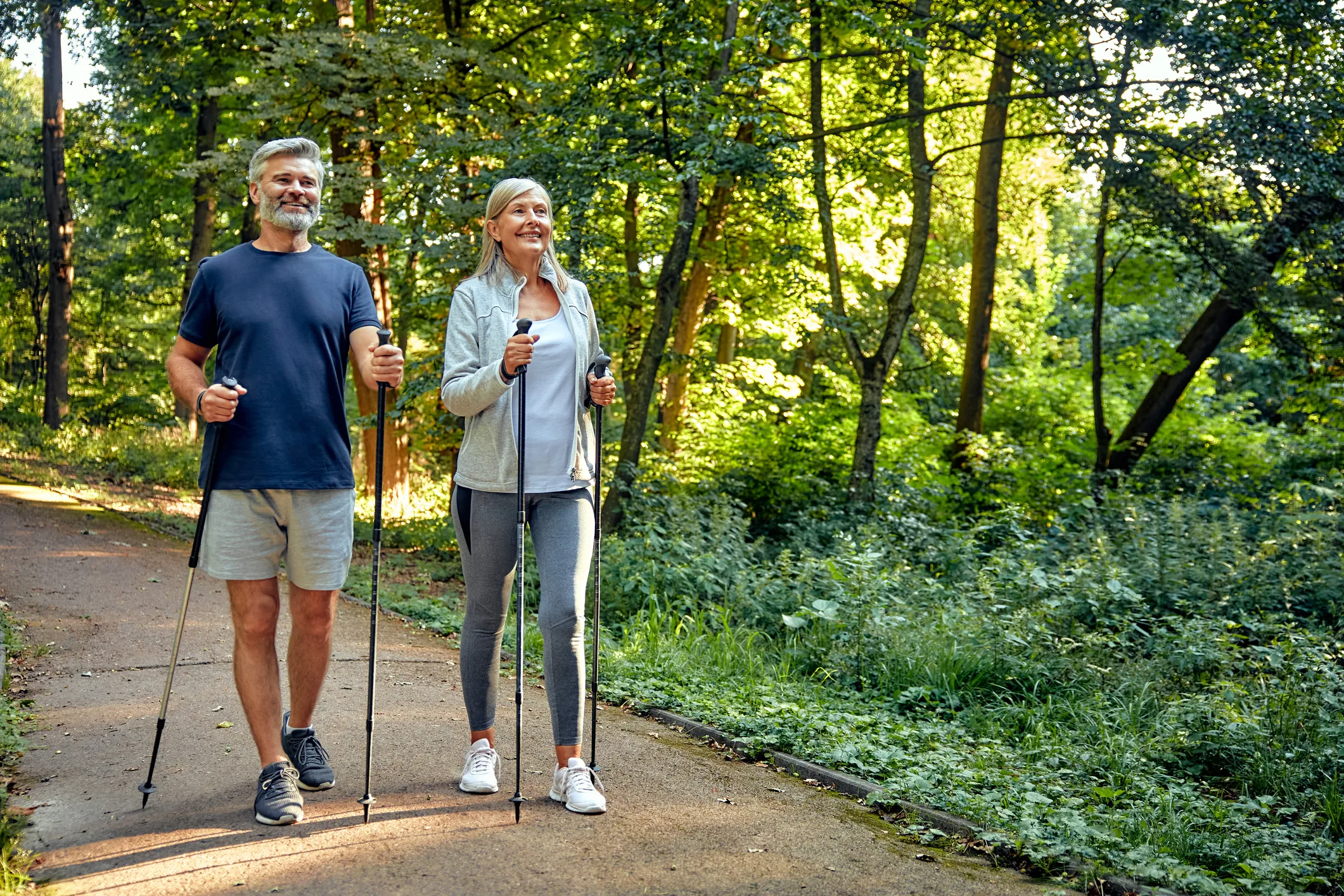
Let’s clear the air: feeling chronically low, empty, or disconnected is not an inevitable feature of the aging process, nor is it a personal failing. It is a distinct medical condition. While the fast-paced modern world often treats mental health like a luxury reserved for the young, clinical data demonstrates that late-life depression is a unique, biologically driven challenge. Fortunately, recent breakthrough research has identified a highly effective, accessible weapon to combat it—and it involves walking like a cross-country skier, minus the sub-zero temperatures and the spandex.
The Breakthrough Study: Nordic Walking as a Fast-Acting Antidepressant
A landmark randomized controlled trial published in the Journal of Affective Disorders explicitly investigated the temporal dynamics of how supervised Nordic walking treats moderate-to-severe depression. The clinical trial separated participants into a non-active control group and a group engaging in a 10-week supervised Nordic walking program.
The results revealed profound advantages for utilizing this specific form of exercise as a front-line therapeutic intervention:
- Substantial Reductions Within 5 Weeks: Unlike many traditional treatment pathways that require months to show a noticeable effect, Nordic walking achieved a “large” clinical reduction in depressive symptoms by the exact midpoint of the 10-week study.
- The 50% Clinical Response Mark: By week 5, approximately half of the participants in the Nordic walking group achieved a formal clinical response (defined as a 50% or greater reduction in total symptom severity), compared to 0% of the non-active control group.
- The Severe Depression Advantage: A highly critical finding showed that participants entering the study with severe baseline depression experienced the largest and most rapid improvements during the first half of the intervention. This establishes physical activity not just as a tool for mild blues, but as a robust clinical intervention.
The Biomechanical Mechanism: Why Nordic Walking Beats Standard Walking
Nordic walking is not simply standard walking while carrying sticks. It is a specific, moderate-intensity aerobic exercise performed at 65–75% of an individual’s maximal heart rate (HRmax), utilizing specialized poles to actively drive the body forward.
The distinct biological and physical advantages of this mechanism include:
- Total Upper-Body Engagement: The use of specialized poles actively engages the arms, shoulders, chest, and core muscles. By distributing the workload across a vastly larger percentage of total muscle groups than ordinary walking, it dramatically increases cardiovascular demand and oxygen consumption without increasing perceived joint strain.
- Biomechanical Trade-offs and Joint Safety: For adults over 60, standard high-intensity aerobic exercises can trigger orthopedic limitations. Nordic walking poles provide spatial stability, improve balance, and reduce structural load on the lower back, hips, and knees, making sustained, moderate-to-vigorous intensity accessible.
- Neurological Pathways of Recovery: The sustained, rhythmic, moderate-to-vigorous aerobic intensity required by Nordic walking induces neurogenesis (the creation of new brain cells) and angiogenesis (the formation of new blood vessels) in critical cortical regions and the hippocampus. Concurrently, it lowers central nervous system inflammation and stimulates the release of essential mood-stabilizing endorphins.
Implementing Supervised Nordic Walking Safely
Because the therapeutic benefits of Nordic walking are deeply tied to maintaining a specific intensity level and correct form, adoption requires a systematic approach.
A standard clinical protocol involves:
- Qualified Supervision: Utilizing a trained instructor ensures the correct pole-planting technique is learned immediately. This maximizes upper-body muscle engagement and prevents habits that diminish the cardiovascular benefits.
- Gradual Intensity Scaling: Training sessions are systematically structured—typically beginning with two 1-hour sessions per week within small peer cohorts. Instructors gradually ramp up the pace to ensure the heart rate reaches the target 65–75% zone without causing overexertion.
- Atypical Presentation Monitoring: Because older adults frequently manifest depressive states as physical complaints (such as unexplained fatigue or cognitive slowing) rather than overt sadness, instructors and clinicians monitor changes in physical energy and cognitive sharpness as primary indicators of recovery.
Stepping Into a Brighter Future
Managing mental health in your wiser years might require a bit more coordination than it used to, much like navigating a modern smartphone or trying to get up from a deep, low-slung sofa gracefully. However, treating late-life depression is profoundly worth the effort. The latest clinical data proves that you don’t have to wait months for a pharmaceutical shift; your body can jumpstart its own neural recovery in just a matter of weeks by grabbing a pair of poles and hitting the trail.
You have accumulated a lifetime of resilience, and your brain remains entirely capable of healing, adapting, and finding balance. If you or someone you care about is experiencing these symptoms, bypass the online self-diagnoses, skip the outdated “grin and bear it” philosophy, and consider looking into a supervised local fitness or rehabilitation group. Your mental health does not have an expiration date—and a fast-acting, cost-effective remedy might just be a brisk, pole-assisted walk in the park away.
Source: