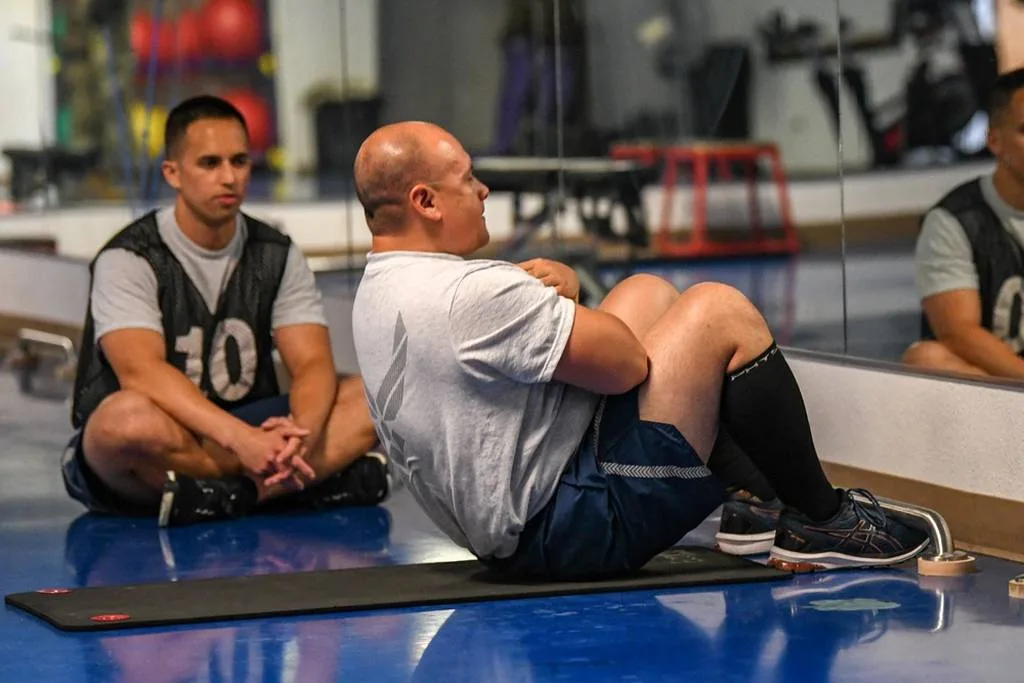
Is your age keeping you from working out? Are you telling yourself that you’re too old and you’ll be too sore for resistance training?
Well there’s some good news and bad news. The good news is, a recent study has shown that older adults DO NOT experience more muscle tissue damage than younger adults. The bad news is, there’s no more excuses not to weight train.
Debunking the Recovery Myth
For years, it’s been widely accepted that intense workouts hit older adults harder, demanding longer recovery periods. This assumption has inadvertently deterred many from embracing regular physical activity. However, a compelling new study published in the Journal of Aging and Physical Activity is turning this notion on its head. The findings suggest that older adults may actually experience less muscle soreness and damage after exercise than their younger counterparts, effectively discrediting the idea that aging muscles are inherently weaker or require more recovery time.
To reach this surprising conclusion, researchers meticulously analyzed 36 studies, encompassing data from 389 younger adults (aged 18-25) and 390 individuals labeled as “older adults” (a somewhat broad category beginning at 35 and up). The data collection involved self-reported muscle soreness, blood markers indicative of muscle damage, and assessments of muscle function one to two days post-exercise.
Older Adults: Stronger Than We Thought
The results were truly eye-opening. Not only did older adults not experience greater loss of muscle function than younger adults, but their muscle soreness was significantly lower. After 48 hours, older adults reported approximately two-thirds less soreness, and after 72 hours, this dropped to a remarkable one-third of the soreness experienced by younger participants. Furthermore, researchers measured creatine kinase levels – a key indicator of recent muscle damage – and found that older adults exhibited 28% lower levels just 24 hours after their workouts.
Dr. Lawrence Hayes, a lecturer in physiology and senior study author at Lancaster University in the United Kingdom, highlighted the profound implications of these findings. “These findings are significant because they challenge the widespread belief that aging muscles recover more slowly or are more prone to exercise-induced damage,” he states. “This misconception often discourages older adults from engaging in regular physical activity due to fears of prolonged soreness or weakness.”
Important Precautions and Nuances
While the study offers exciting news for older adults and their recovery capabilities, experts advise a cautious approach. Dr. Milica McDowell, DPT, an exercise physiologist at Gait Happens, who was not involved in the study, stresses that these findings shouldn’t be interpreted as a green light to immediately jump into excessively long or high-intensity workouts. “I don’t think that this should give ‘older adults’ a free pass to go work super hard in longer durations because they would get ‘less sore.’ They are still at risk of orthopedic or muscular injury,” she cautions.
Another critical point to consider is the study’s definition of “older adult.” The National Institutes of Health typically classifies older adults as 65 years and above, whereas this study included anyone 35 and older in that category. While the authors explained that this threshold was based on the age range of the analyzed studies (30 to 60 years old), it undeniably blurs important distinctions within the aging population.
Ultimately, rather than seeing this research as permission to drastically increase workout intensity or duration, Dr. McDowell suggests older adults view it as valuable reassurance. It highlights their remarkable ability to recover well and safely engage in more frequent physical activity, paving the way for a healthier, more active future.
Source:
Science Just Shattered a Major Myth About Aging and Muscle Recovery