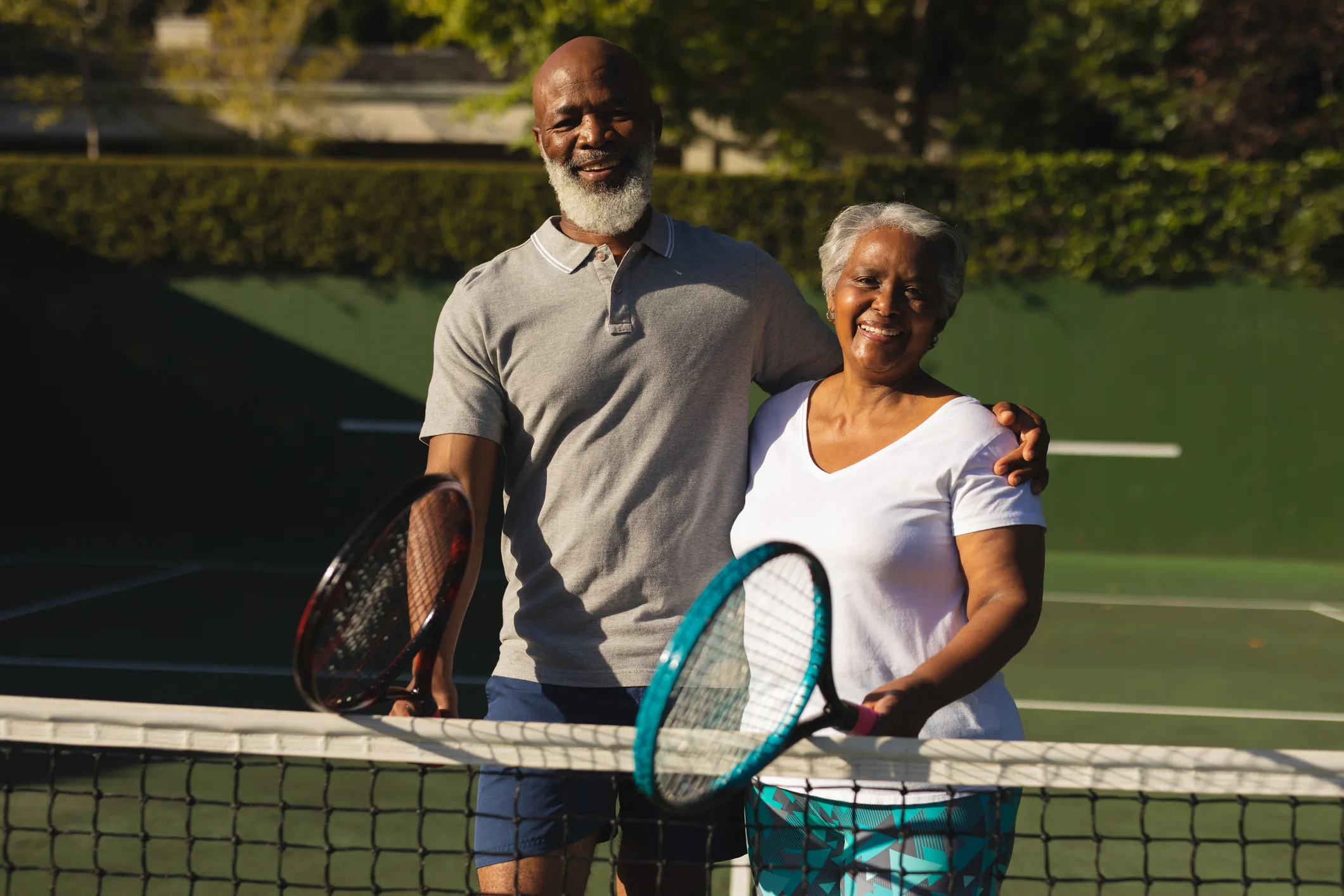
As a follow up to our earlier article (Live Longer, Play Harder: Ranking the Best Sports for Your 50s, 60s, and Beyond), you may have asked yourself “If racket sports are the number one top sport when it comes to longevity, why did the article only mention Tennis? What about Pickleball”?
Well, the reason you didn’t see it mentioned in the original New York Times article or the primary research (The Copenhagen City Heart Study) is actually a matter of timing.
That landmark study followed participants for 25 years, starting back when neon headbands were high fashion. Because pickleball only became a global phenomenon in the last few years, there wasn’t enough longitudinal data to include it in a 25-year look-back.
However, researchers and sports medicine experts from institutions like the Mayo Clinic have begun “extrapolating” the data, and the news for “Picklers” is incredibly encouraging. Here is what the emerging science says:
The “Extrapolated” Longevity Number
While we don’t have a 25-year verified stat yet, researchers believe Pickleball sits right in the “Sweet Spot” between Tennis and Badminton.
- The Estimate: Experts suggest Pickleball likely adds between 6 to 9 years of life expectancy compared to a sedentary lifestyle.
- Why the Range? It matches the “Interval Training” profile of tennis (which added 9.7 years) and the social, fast-paced nature of badminton (which added 6.2 years).
Why Pickleball is a “Longevity Machine”
Scientific reviews, including a 2022 study in the Journal of Aging and Physical Activity, highlight why Pickleball might actually be better for the 50+ crowd than the sports originally studied:
- The “Social Multiplier”: The single biggest predictor of longevity isn’t just heart health—it’s social connection. Pickleball is inherently more social than tennis; the smaller court means you’re literally closer to your partners and opponents, leading to more laughter and interaction (which lowers cortisol).
- Cardiovascular “Ready Position”: A study of players (average age 62) found they spent 70% of their play time in the moderate-to-vigorous heart rate zone. It provides the benefits of high-intensity training without the “I’m about to collapse” feeling.
- Brain & Balance: Pickleball requires “proprioception” (knowing where your body is in space) and quick strategic thinking. This “dual-tasking”—moving while thinking—is the gold standard for preventing cognitive decline and avoiding the falls that often plateau health in later years.
The Professional Verdict: Pickleball vs. Tennis
If you’re choosing based purely on the “Warranty,” here is how they stack up:
- Tennis: Better for Bone Density. The larger court requires more “explosive” running, which puts more stress on bones, telling them to stay thick and strong.
- Pickleball: Better for Consistency and Joint Longevity. Because it’s easier to learn and lower impact, players over 50 are more likely to play it more often and for more years without a major injury sidelined them.
So, while the scientists in Copenhagen didn’t have a paddle in their hands back in the day, the medical community today is essentially giving Pickleball a standing ovation. You’re getting the heart-pumping intervals of a sprinter, the strategy of a chess player, and the social life of a teenager—all while trying to stay out of “The Kitchen.”
So, keep playing! You might not have been part of the original 25-year study, but you’re currently writing the “success story” for the next one. Just remember to stretch those calves—we want those extra 9 years to be spent on the court, not on the heating pad!
Source:
Live Longer, Play Harder: Ranking the Best Sports for Your 50s, 60s, and Beyond