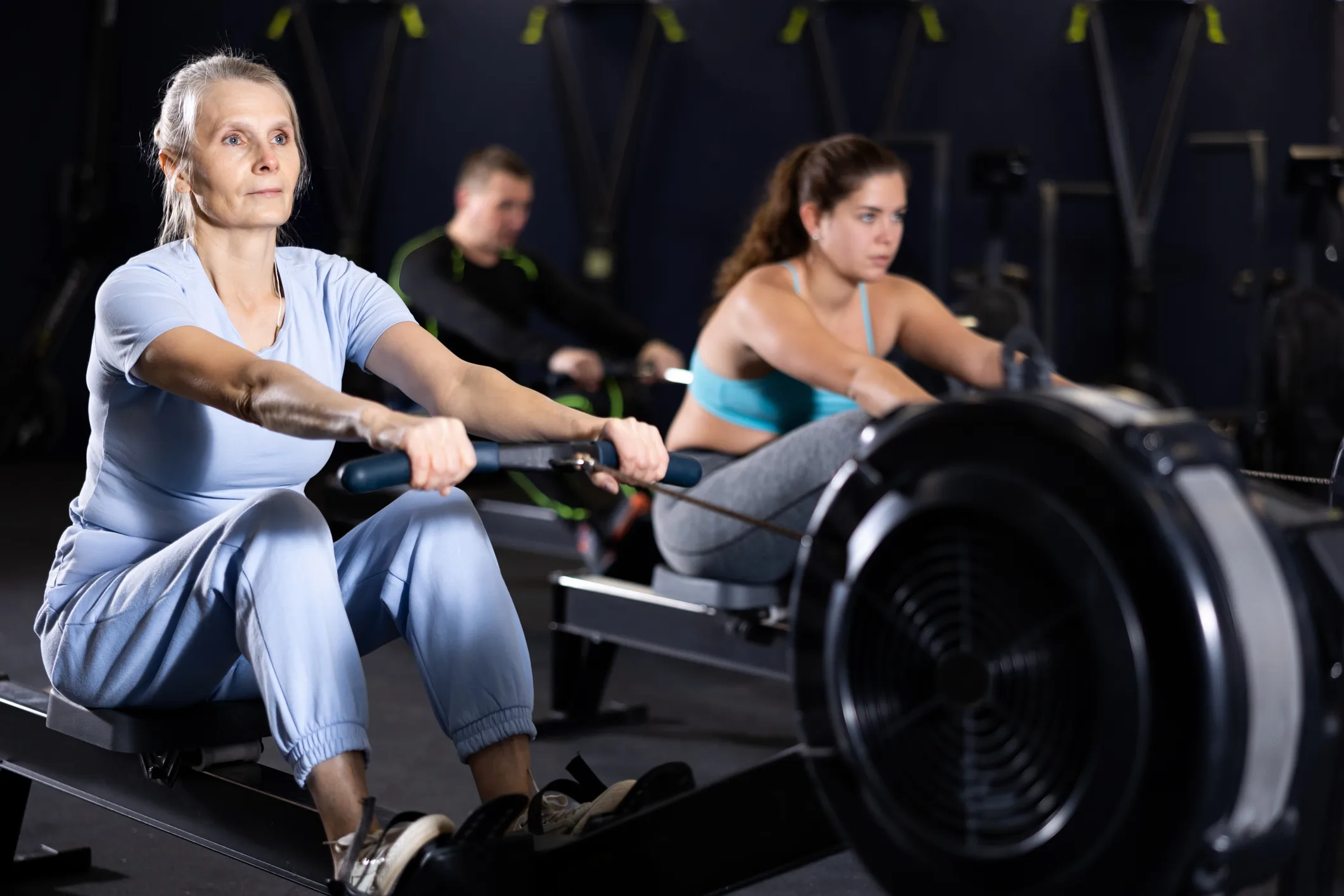
Progressive overload is a key principle in exercise, and it generally applies to older adults as well. However, it needs to be adapted to your specific needs and limitations.
What is Progressive Overload?
Progressive Overload involves changing or “progressing” your workouts so your muscles are constantly challenged and stay stronger. Research has shown that by gradually increasing the resistance of an exercise over time, you effectively cause your musculoskeletal system to get stronger.
When you exercise, you place a stress on your body. Your body then recovers and adapts to this stressor, so that when that same stressor happens again, you can do it with much less effort. By gradually increasing the training stress, session after session, week after week, your body adapts and continues to improve.
What’s important to note is this “overloading” does not only apply to strength training. The same concept can be applied to other forms of exercise, such as running, cycling and swimming with duration being the variable that you’d progressively overload.
Equally important to note is the practice of overloading not only makes your stronger, it causes your body to recover quicker. And this is true for both men and women.
What’s key is the word “gradual”. Don’t over do it. Don’t try to lift too much too soon, or go from a 5k run to a 10k run. “You might get away with it initially, but at some point, the lack of adaptation your body has will hold you back via injury or fatigue” says Andy Vincent, a strength and conditioning coach.
This sounds great if I were in my 20’s or 30’s. But what if I’m in my 60’s?
Contrary to long held beliefs, the muscles of older people (i.e. people aged 60 years and older) continue to be adaptable, even into the extremes of old age. As we age, we naturally lose muscle mass (sarcopenia). Progressive overloading helps stimulate muscle protein synthesis, which is crucial for building and maintaining muscle mass.
This is especially important for older adults to prevent frailty and maintain independence. This includes functional abilities like climbing stairs, lifting groceries, and getting out of a chair. Many progressive overloading exercises, such as those involving bodyweight or resistance bands, can improve balance and coordination, reducing the risk of falls.
See the video below for a description of progressive overload training for older adults
Source:
Progression of volume load and muscular adaptation during resistance exercise