For many of us, the gym has long been a place of grunt-work and gravity-defying feats. We’ve spent decades being told that the “real” work happens when we’re hoisting something heavy toward the ceiling, whether it’s a barbell or just our own stubborn frames after a long afternoon in a low-slung armchair. We celebrate the “lift” and treat the “lowering” part as a mere formality—a brief intermission before the next struggle. But as it turns out, we may have been ignoring the most productive half of the equation.
Understanding Eccentric Exercise
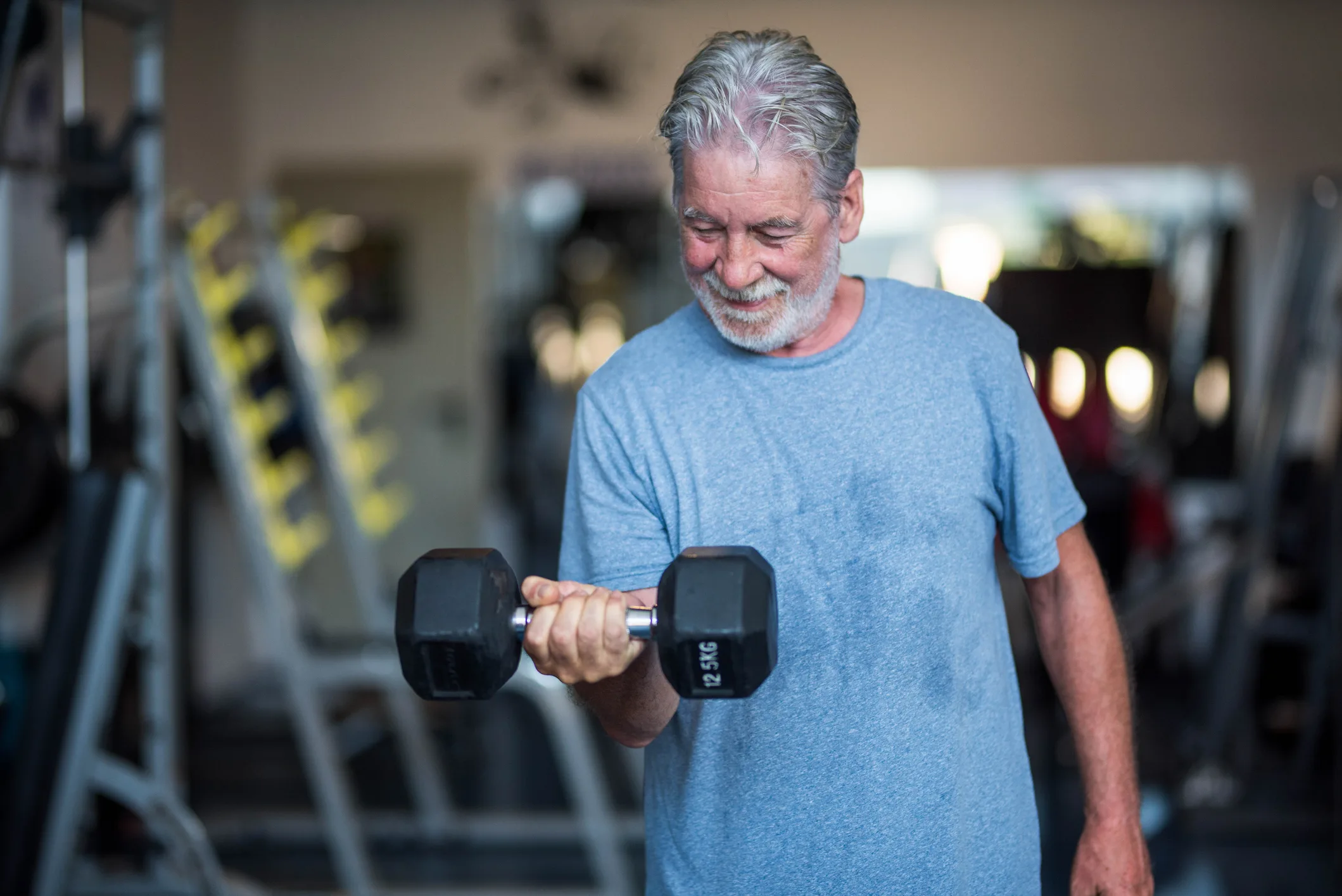
In the world of sports science, every movement is divided into phases. The “concentric” phase is when the muscle shortens (the “up” part of a bicep curl or a squat), while the “eccentric” phase occurs when the muscle lengthens under tension (the “down” part).
New research, including a notable paper by Professor Kazunori Nosaka in the Journal of Sport and Health Science, suggests that focusing on this lengthening phase offers unique neuromuscular advantages. For adults over 50, this is particularly significant. Eccentric training has been shown to be consistently effective for improving muscle power, metabolic health, and flexibility without the high cardiovascular strain often associated with traditional heavy lifting.
The Science of the “Slow Down”
The primary benefit of eccentric exercise lies in its efficiency. Our muscles are actually stronger when they are lengthening than when they are shortening. This means we can handle higher loads during the lowering phase, which triggers greater muscle fiber recruitment and adaptation.
Key professional benefits include:
- Increased Functional Strength: Eccentric movements reinforce proper technique and develop a better range of motion, which is essential for maintaining independence and mobility.
- Injury Prevention: By strengthening the tendons and connective tissues, eccentric training builds a “buffer” against common age-related injuries.
- Lower Metabolic Demand: Because it requires less oxygen and puts less strain on the heart, it is an ideal modality for those who may have cardiovascular concerns but still need to maintain muscle mass.
Five Eccentric Movements to Integrate
You do not need an expensive gym membership to take advantage of these findings. Most of these can be performed using household items or body weight.
- Eccentric-Focused Squats: Lower yourself into a squat slowly, taking three to five seconds to reach the bottom. Use a chair for safety or a door frame for balance, then stand up at a normal pace.
- Wall Press-Ups: Stand facing a wall and slowly lower your chest toward it over a five-second count. Pause, then press back to the starting position.
- Heel Drops: Stand on the edge of a step. Rise up on your toes with both feet, then slowly lower your heels below the level of the step. This is highly effective for maintaining Achilles health and calf strength.
- Push Presses: Use a light weight or even water bottles. Use your legs to help “pop” the weight overhead, but then focus entirely on a slow, controlled five-second descent.
- Slow Descent Step-Downs: Stand on a low, sturdy box or the bottom step of a staircase. Slowly lower one foot toward the floor without letting it touch, then bring it back up. This builds the single-leg stability required for safe walking on uneven surfaces.
Professional Recommendations for Starting
If you are new to this approach, the consensus among experts is to start conservatively. Begin with two sessions per week, allowing at least three days of rest between them. Focus on three sets of five to eight repetitions. The “slow” part should last between three and five seconds.
It is important to note that eccentric exercise is notorious for causing Delayed Onset Muscle Soreness (DOMS). Because you are lengthening the muscle under tension, you may feel more “tender” than usual 24 to 48 hours after your first session. This is a normal physiological response to the remodeling of muscle tissue.
Takeaway
In short, it’s time to embrace being a bit “eccentric.” It may not look as heroic as slamming a sledgehammer into a tractor tire or whatever the youngsters are doing on social media these days, but it works. Think of it as the exercise equivalent of a fine wine or a well-steeped tea: it’s better when you don’t rush it. Besides, at this stage of life, “taking it slow” is no longer a suggestion—it’s a lifestyle. Now, go forth and lower things with the quiet, calculated dignity of someone who knows exactly where they’re going, even if it is just toward the floor.
Source:
Put those weights down! How ‘eccentric’ exercise opens up a whole new world of fitness