Squats are a great way to exercise your butt and legs. But depending on the exercise you choose your results may differ. So decide which body parts you want to engage and choose the appropriate exercise accordingly.
The Sumo Squat
The Sumo Squat is a great exercise to strengthen your legs (both quadriceps and inner thighs or adductors), and your glutes. It also stretches your hips more (similar to the Yoga Garland pose) than a goblet squat. It puts less pressure on you lower back, so those of you with back issue may prefer this exercise. And it’s great for strengthening your pelvic floor.
To perform the Sumo Squat:
- Stand with your feet slightly wider than hip-width apart, toes pointed out at a 45-degree angle.
- Clasp your hands together at your chest or hold a dumbbell or kettlebell with both hands, letting it hang between your legs*.
- Keeping your back straight, push your hips back and bend your knees out over your toes to squat down.
- Lower until your thighs are parallel to the floor (or as low as you can go).
- Squeeze your glutes, push through your heels, and return to a standing position.
* Optionally, you can hold the kettlebell in front of your chest. This will put more stress on your hips and lower back.
The Goblet Squat
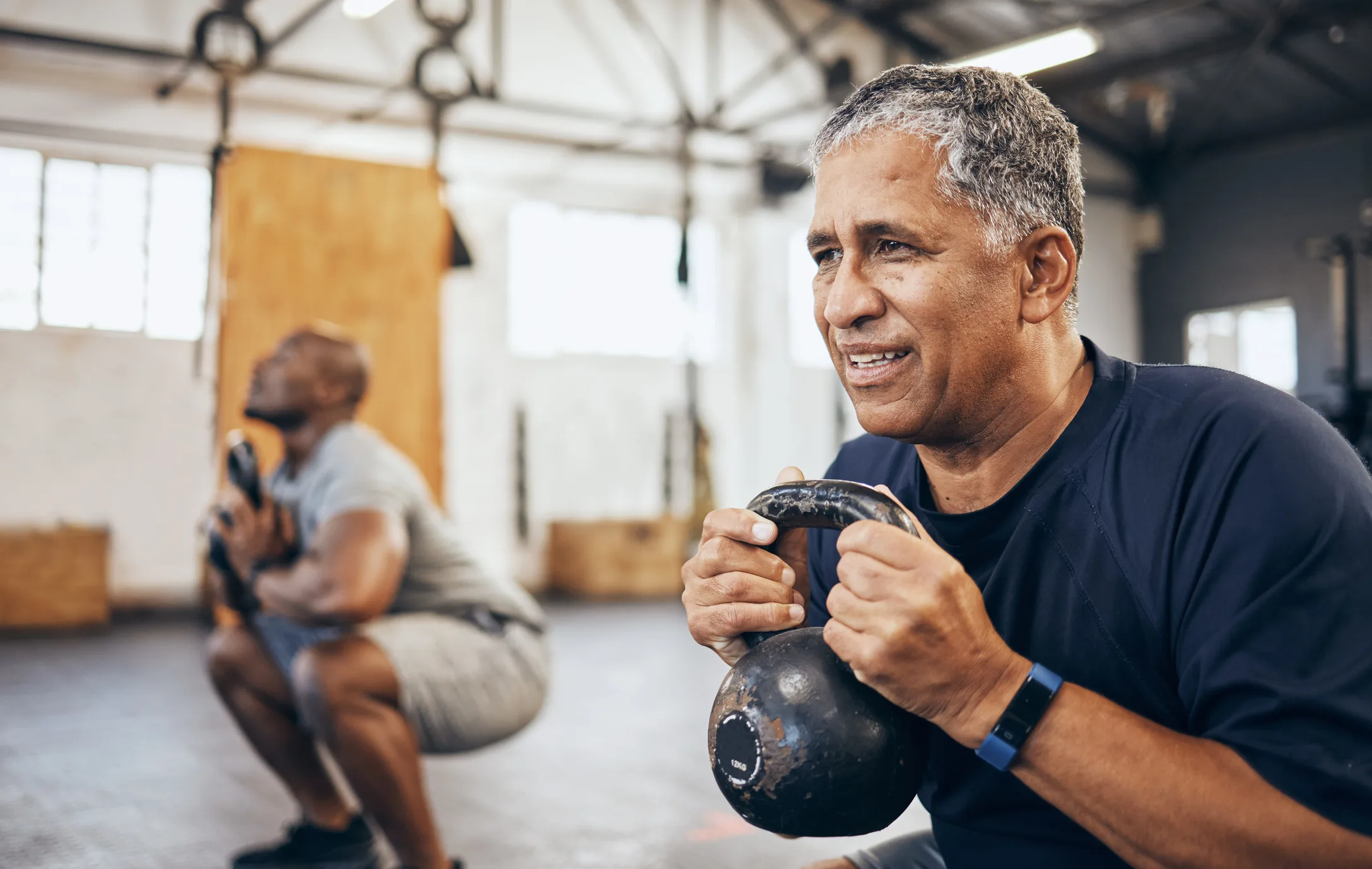
The Goblet Squat puts more emphasis on your quadriceps and lower back than a sumo squat. It also engages your core more. The squat mimics everyday movements such as getting out of bed of picking things up off the ground.
To perform the Goblet Squat:
- Stand with your feet shoulder-width apart, your toes slightly pointed out.
- Hold weight in front of your chest. (If using a kettlebell or dumbbell, hold it in a vertical position.)
- Your elbows should be tucked into your sides, not flaring out.
- Keeping your chest up and core engaged, sit your hips back and bend your knees to lower into a squat.
- Continue lowering yourself down until your thighs are parallel to the ground (or as close as you can comfortably go without pain and maintaining proper form).
- Squeeze your glutes, push through your heels, and return to a standing position.
Which Squat is Better?
Again, it depends on which muscle groups you’re trying to engage. Personally, we prefer Sumo Squats for older adults as it put less stress on your lower back and your knees. But if building up your quads is your primary concern, Goblet Squats are a better option.
Source:
Sumo Squat vs. Goblet Squat: Which Lower-Body Move Is Best for Your Fitness Goals?