2 MIN. READ

Just 5 Minutes of Activity Reduces Dementia Risk in Seniors

iStock/AaronAmat

A team of researchers at Johns Hopkins University found that up to 35 minutes of moderate-to-vigorous physical activity (MVPA) every week is associated with a 41 percent drop in dementia risk, compared to those who didn’t exercise at all. And this is true even for frail older adults.

There were other encouraging findings. Even the oldest among us can reduce dementia risk by increasing our weekly activity, and even just a few minutes of exercise per day can have protective effects for brain health.

How was the research conducted?

The researchers analyzed data on nearly 90,000 adults living in the UK, with a median age of 63, across an average of 4.4 years. Data was logged using dedicated activity trackers worn on the wrist, which logged movement over time. By also recording which participants went on to develop dementia, the researchers could link activity with dementia risk

What were the findings?
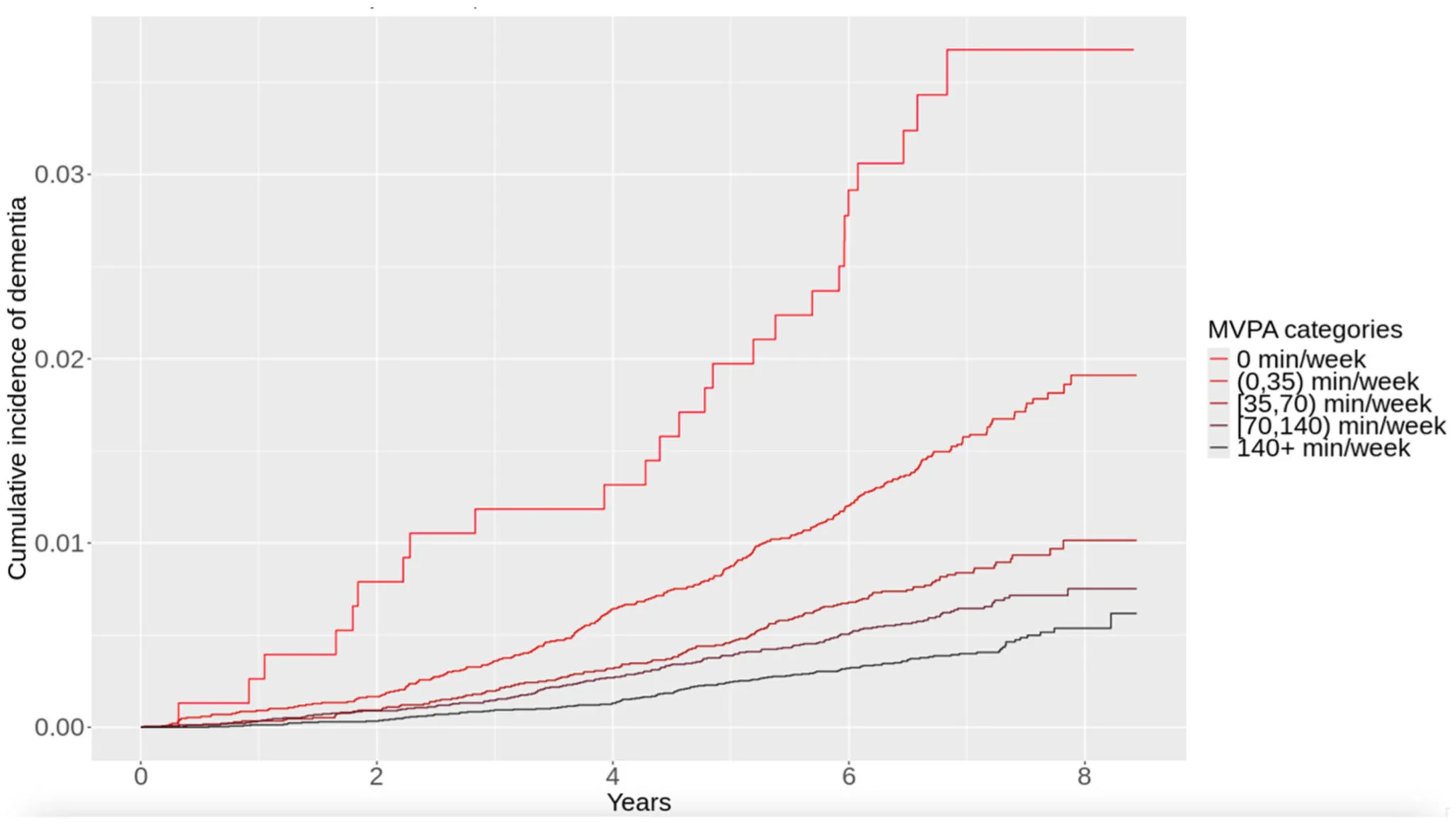
Chart showing risk of dementia as a function of exercise
Researchers compared dementia cases against activity levels. (Wanigatunga et al., Journal of the American Medical Directors Association, 2025)

The chart above shows the risk of dementia as a function of exercise. It concludes that:

  • 35 mins of exercise per week reduces your dementia risk by 41%
  • 35-70 mins of exercise per week reduces your dementia risk by 60%
  • 70-140 mins of exercise per week reduces your dementia risk by 63%
  • 140+ mins of exercise per week reduces your dementia risk by 69%


“Our findings suggest that increasing physical activity, even as little as five minutes per day, can reduce dementia risk in older adults,” says Johns Hopkins epidemiologist Amal Wanigatunga.

He goes on to say that “even frail or nearly frail older adults might be able to reduce their dementia risk through low-dose exercise.”

Additionally, “a growing body of evidence (suggests) that some exercise is better than nothing, especially with regard to an aging-related disorder that affects the brain that currently has no cure.”

Takeaway

There are lots of factors at play, from diet to genetics, so this research doesn’t prove direct cause and effect, but it does suggest exercise and brain health are closely linked (as we’ve discussed in previous articles).

More importantly, it shows that anyone at any stage of life can benefit from almost any level of additional exercise. So if you feel like you’re not exercising as much as you should, this is your wake up call. It’s never too late to start.


Source:

Small Amounts of Moderate to Vigorous Physical Activity Are Associated with Big Reductions in Dementia Risk

Moderate-to-Vigorous Physical Activity at any Dose Reduces All-Cause Dementia Risk Regardless of Frailty Status

Share the Post:

Active Aging News

Weekly Newsletter

RELATED NEWS

Muscular older bald Caucasian man working out in gym doing exercises with barbell at biceps.

Staying Fit as You Age: What Happens to Your Body When You Hit 50?

Hip pain, senior black man and injury in nature for fitness, workout or training with accident. Runner, dead leg and elderly sports person on trail hurt with tendinitis, inflammation and arthritis

The Non-Death Loss: Why Stopping Your Favorite Sport Feels Like Grief

Seniors exercising walking outdoors with backs to camera

Belly Fat vs. Thigh Fat: The Great Divide and What It Means for Your Health

Women injecting semaglutide

Navigating the GLP-1 Wave: What Adults Over 50 Need to Know About the Side Effects

sarcopenia infographic showing young upright man and older man using a walker

Sarcopenia: The Silent Muscle Waster Affecting Millions of Older Adults

OTHER STORIES

Side view of mature female with short hair standing in front of opened refrigerator at home with puzzled pensive facial expression, thinking of cooking breakfast, looking for ingredients

The Fridge-Stare Syndrome: What to Eat When Your Appetite Goes on Strike

Happy senior woman controlling her blood glucose with an insulin delivery

New Hope for Adults with Uncontrolled Diabetes

Xray profile view of the hypothalamus 3D rendering illustration. Human brain and body anatomy, medical, biology, science, neuroscience, neurology concepts.

The Secret Manager of Your Stamina: Why Your Brain, Not Your Legs, Holds the Keys to Fitness

Rear View Of Senior Couple Power Walking Through Park

Walking Is Great. But Is It Enough To Meet Your Fitness Goals?

hands of car driver on steering wheel, road trip

Springing Forward Without Falling Apart: How to Handle the Time Change at 50+

NYTimes/Annie Judis

Jumping Into Your Prime: Lessons from the World’s Oldest Competitive Rope Skipper

[chatbot style="floating"]

Please enter your email to access your profile