As we navigate our fabulous 50s and beyond, our health screenings become non-negotiable. Now, a new “co-pilot” is entering the medical cockpit: Artificial Intelligence (AI). Forget the sci-fi movies; this AI isn’t driving your car—it’s helping your oncologist look for things your doctor might miss.
This technology is already here, but it’s causing a healthy debate among specialists. According to a recent survey, oncologists are split: roughly a third find AI helpful in diagnosis, a third don’t, and a third are waiting to see. The bottom line for us, the patients? AI is here to make your doctor more efficient, but it certainly isn’t replacing them. Yet.
AI’s Sweet Spots: Where the Tech Shines
The current wave of cancer AI is essentially a high-powered, image-reading assistant. It excels where there’s a lot of visual data to process quickly.
- Breast Cancer: AI is being used to assist in reading mammograms, potentially catching subtle changes a human eye might overlook on a first pass.
- Lung Cancer: It helps analyze CT scans of the lungs.
- Prostate and Colon Cancer: AI is increasingly aiding in the assessment of lab results and analyzing images from colonoscopies.
Think of AI as an advanced calculator for diagnosis. As one Harvard specialist put it, AI can spot “subtle signals” that might be invisible to a busy physician. It’s an extra layer of scrutiny for your peace of mind.
The Big Question: Do We Trust the Robot?
While AI is a powerful tool, doctors are proceeding with caution for two major reasons: evidence and skill erosion.
-
The Need for Evidence (The “Show Me” Factor)
Before doctors fully rely on AI, they want proof—and we should, too.
- Long-Term Trials: Cancer progression is measured over years, even decades. Specialists want to see long-term trials that prove AI tools produce the same or better patient outcomes than traditional methods.
- Accuracy Check: Does the AI miss cancers (under-diagnosis)? Or does it flag too many things that turn out to be harmless (over-diagnosis)? We need the evidence to ensure it’s not causing unnecessary worry or procedures.
-
The Deskilling Dilemma (Will Doctors Get Lazy?)
There’s a legitimate concern that relying too heavily on AI for diagnosis might erode the fundamental skills of young clinicians—a phenomenon called “deskilling.”
- One study showed that endoscopists who used AI assistance for polyp detection saw a significant drop in their ability to find polyps when they didn’t use the tool.
- The Calculator Analogy: Experts counter that this is like the introduction of calculators: some people lost the ability to do simple arithmetic by hand, but they gained the freedom to focus on higher-level problem solving. The goal is for AI to free doctors to concentrate on complex strategy, not basic image reading.
Your Future of Hyper-Personalized Care 🔮
The most exciting applications of AI are still emerging and could revolutionize cancer care for the better, especially for our generation.
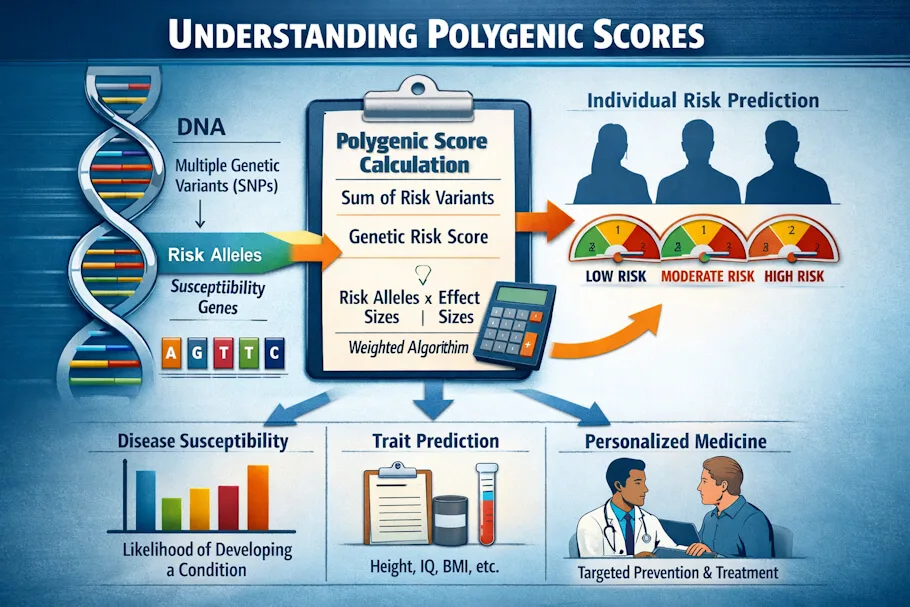
- Hyper-Personalization: Imagine an AI that combines your mammogram images, your genetic data, your pathology reports, and even your electronic health record. This “multimodal data” approach will allow oncologists to move beyond general risk and make individualized predictions and treatment recommendations tailored just for you.
- Predicting Treatment Response: New AI models are already showing an ability to predict how a tumor will respond to treatment, simply by analyzing the images taken at the initial diagnosis. This could spare patients from undergoing chemotherapy or radiation that would prove ineffective, avoiding unnecessary toxicity.
Takeway
The prediction is simple: future clinicians won’t be replaced by AI, but rather, those who know how to effectively harness AI will replace those who don’t. For us, that means better, earlier detection and customized treatment plans.