If your current exercise regimen looks like a pleasant morning stroll interrupted by the occasional light dumbbell, it might be time to rethink your strategy. While taking it easy sounds like a well-earned reward after six or seven decades on Earth, your skeleton has entirely different plans—and it turns out that “playing it safe” with featherweight routines might not be keeping your bones as safe as you think.
The Shift: From Light Fitness to Heavy Lifting
Former Baywatch star Brandy Ledford—now 57 and a proud grandmother—recently highlighted a major shift in how adults over 50 and 60 approach physical longevity. While she embraces her past as a swimsuit icon—admitting, “I love, I mean, I’m a grandmother… I’m not ready to hang up my bikini yet”—she has radically altered how she stays fit.
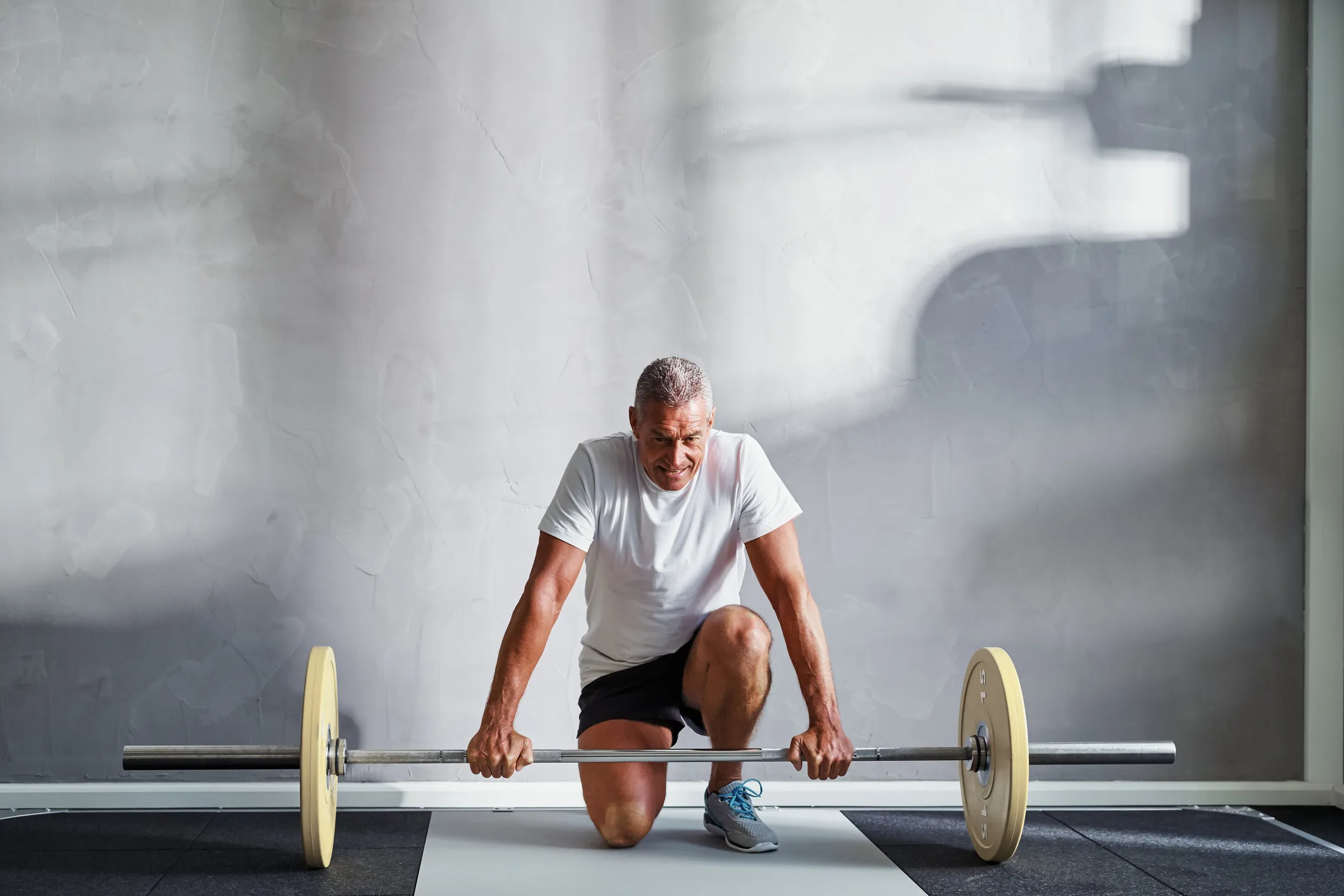
For years, Ledford relied heavily on low-impact, high-rep routines. “For the last few years, I was pretty addicted to yoga sculpt, a high-intensity yoga workout with light weights,” she explained. However, advice from her physician prompted a fundamental shift in her routine. Today she says, “My fitness routine these days focuses on strength training more than ever. When you get to be my age, you need to lift weights for bone density and longevity. My doctor is really stressing weight training using heavier weights for me… I’m really trying to use much heavier weights now to strengthen my bones and muscles.”
While she still enjoys hiking and regular walking, Ledford notes that her central focus has narrowed: “I’m really, really, really focused on serious weight training.” Her experience reflects a growing consensus among geriatricians and sports medicine physicians.
The Physiology of Bone Density and Mechanical Loading
To understand why doctors are urging older adults to lift heavier, one must look at how bone tissue remodels itself throughout life.
Bone is dynamic, living tissue governed by two primary cell types: osteoclasts (which break down old bone material) and osteoblasts (which build new bone material). As estrogen and testosterone levels naturally decline with age, osteoclast activity frequently outpaces osteoblast activity, leading to osteopenia and osteoporosis.
Mechanical load is the primary trigger for stimulating osteoblast production:
- Mechanotransduction: When muscles contract forcefully against heavy resistance, they pull directly on their tendon attachments to the bone. This generates mechanical strain across the skeletal frame.
- The Osteogenic Threshold: Bone tissue requires a stimulus that exceeds the threshold of daily movement (such as unweighted walking) to signal the body to deposit calcium and micro-architectural reinforcements.
- The Limit of Light Weights: High-repetition routines using 2- to 3-pound weights build local muscular endurance, but they rarely generate enough mechanical strain to meet the osteogenic threshold required for structural bone adaptation.
Combating Osteosarcopenia in the Senior Population
Age-related bone loss (osteoporosis) rarely happens in isolation; it frequently pairs with age-related muscle loss (sarcopenia). Clinical researchers refer to the concurrent loss of both muscle mass and bone density as osteosarcopenia.
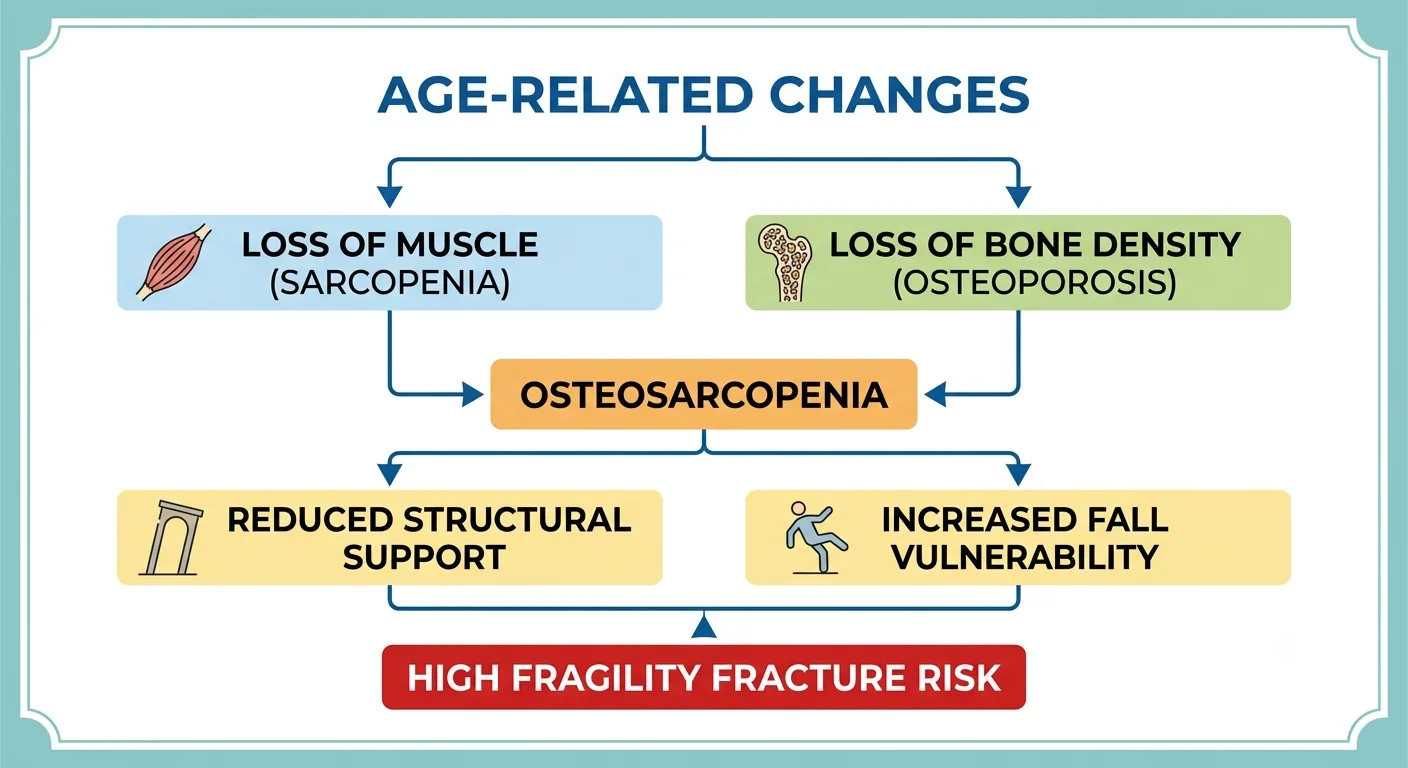
Progressive heavy resistance training directly counters both conditions simultaneously:
- Hypertrophy and Muscle Recruitment: Lifting heavier loads forces the nervous system to recruit higher-threshold motor units (Type II fast-twitch muscle fibers). These are the exact muscle fibers responsible for explosive force, balance recovery during a slip, and overall functional strength.
- Joint Stability: Strengthening the surrounding musculature protects major joints—specifically the hips, knees, and spine—from rotational torque and compression forces during daily movement.
- Fall Prevention: Studies consistently show that increased lean muscle mass and axial bone strength significantly reduce both the occurrence of falls and the likelihood of experiencing a catastrophic hip or spinal fracture if a fall occurs.
Key Principles for Implementing Progressive Resistance Training
Safety and proper biomechanics are fundamental when transitioning from light exercises to heavier loads. Physicians and exercise physiologists recommend following specific criteria when designing a routine for older adults:
- Progressive Overload: Resistance must increase incrementally over time. Once a weight can be lifted for 10–12 repetitions without significant fatigue, the load should be increased slightly rather than simply adding more repetitions.
- Multi-Joint Compound Movements: Exercises that load the spine and hip axis—such as goblet squats, deadlifts, chest presses, and seated rows—yield the highest systemic strain and subsequent bone remodeling response.
- Intensity Targets: Clinical guidelines suggest aiming for an intensity where the final few repetitions of a set feel challenging (typically corresponding to 70%–85% of an individual’s one-repetition maximum), rather than stopping when muscle sensation is light.
- Recovery Windows: Heavier resistance creates microscopic mechanical tears in muscle tissue and requires adequate recovery time. Older adults should leave 48 hours between high-load resistance sessions targeting the same muscle groups.
Takeaway
Lifting heavier weights over 60 doesn’t mean you need to prepare for a powerlifting competition or trade your comfortable walking shoes for a chalk bag. It simply means acknowledging that your bones demand a bit more persuasion to stay strong than a gentle breeze or a brisk walk can provide. So, clear it with your physician, get a qualified trainer to double-check your form, and don’t be afraid to pick up something that actually feels heavy—your future self (and your skeleton) will thank you.
‘Baywatch: Hawaii’ alum Brandy Ledford reveals her fitness secrets

Source:
Baywatch Star Brandy Ledford Ditched Yoga Sculpt for Heavy Weights at Doctor’s Urging