If you feel like your spine has transitioned from a flexible conduit of energy into a rusted rebar rod, you aren’t alone. We spent our thirties and forties building lives, and now our vertebrae are billing us for the overtime. But before you resign yourself to moving with the grace of a Victorian wardrobe, there is a simpler way to reclaim your range of motion—and it involves mimicking a household pet.
The Cat-Cow Pose (Marjaryasana-Bitilasana) is the gold standard for spinal maintenance. It’s a gentle, accessible flow that treats your back less like a problem to be solved and more like a high-mileage engine that just needs a little high-quality oil.
The Anatomy of the Flow: A Professional Breakdown
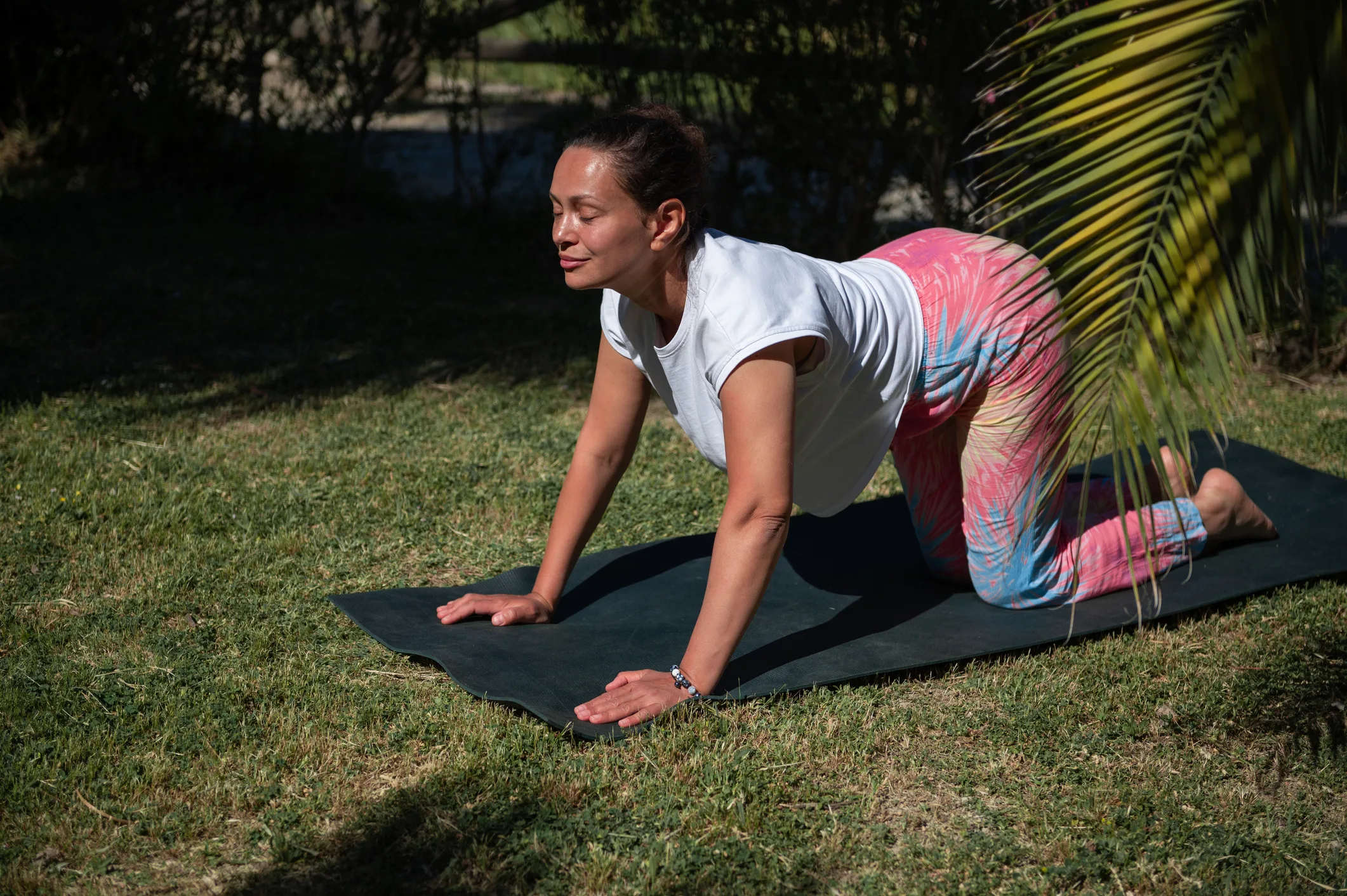
To the casual observer, Cat-Cow looks like simple arching and rounding. However, for the mature practitioner, it is a sophisticated tool for spinal decompression and core engagement. The movement transitions between two distinct shapes:
- Bitilasana (Cow Pose)
In this phase, the spine enters a gentle extension. As you inhale, the belly sinks toward the floor while the sit-bones and chest lift. This movement helps to counteract the “kyphotic” curve (the forward hunch) often developed through years of driving, reading, or computer work. It stretches the front of the torso and creates space in the chest for deeper diaphragmatic breathing.
- Marjaryasana (Cat Pose)
On the exhale, the spine moves into flexion. The navel pulls up toward the spine, and the back rounds like an angry cat. This provides a deep stretch to the posterior chain, specifically the erector spinae muscles and the space between the shoulder blades (the rhomboids). This phase is crucial for releasing tension in the cervical and lumbar regions.
Targeted Benefits for Adults 50+
As we age, the intervertebral discs—the “shock absorbers” between our bones—lose hydration and elasticity. Cat-Cow serves as a mechanical pump to keep these structures healthy.
- Improved Spinal Mobility: Regular practice maintains the range of motion in the joints, preventing the “stiffening” that often leads to chronic pain.
- Enhanced Postural Awareness: It trains the brain to recognize a neutral spine, helping you stand taller and sit with better alignment throughout the day.
- Stress Reduction: By syncing the movement with deep nasal breathing, you stimulate the vagus nerve, which triggers the parasympathetic nervous system (the body’s “rest and digest” mode).
- Lubrication of Joints: The rhythmic motion encourages the flow of synovial fluid, which keeps the spinal joints moving smoothly.
Step-by-Step Instructions for Proper Form
To ensure safety and maximize the therapeutic benefits, follow these technical cues:
- The Foundation: Start on all fours in a tabletop position. Ensure your wrists are directly under your shoulders and your knees are directly under your hips.
- The Inhale (Cow): Slowly drop your belly. Draw your shoulder blades back and down away from your ears. Look slightly upward, but avoid “crunching” the back of your neck.
- The Exhale (Cat): Press firmly through your palms. Round your back toward the ceiling and tuck your chin toward your chest. Focus on pulling your belly button in to engage the abdominal muscles.
- The Cadence: Repeat this cycle for 5 to 10 breaths. The movement should be slow, deliberate, and led entirely by the breath.
Safety Modifications and Considerations
For many in the 50+ demographic, traditional floor yoga can be hard on the joints. If you have specific physical limitations, consider these professional adjustments:
- Sensitive Knees: Place a folded blanket or a double-layered yoga mat under the knees to provide extra cushioning.
- Wrist Issues: If putting weight on your palms causes discomfort, you can perform the movement on your forearms or use yoga blocks.
- Chair Cat-Cow: This pose can be done sitting in a sturdy chair. Keep your feet flat on the ground and hands on your knees, following the same breathing pattern.
Closing the Loop
Think of Cat-Cow as the “WD-40” for your musculoskeletal system. It won’t magically give you the back of a twenty-year-old Olympic gymnast, but it might just make the act of picking up a dropped pen feel significantly less like a high-risk stunt. Your spine has been holding you up for half a century; it’s about time you gave it a little attention that doesn’t involve a heating pad and an apology. So, the next time you feel like a stiff board, drop to the floor (carefully) and give this a try. Your body will thank you.