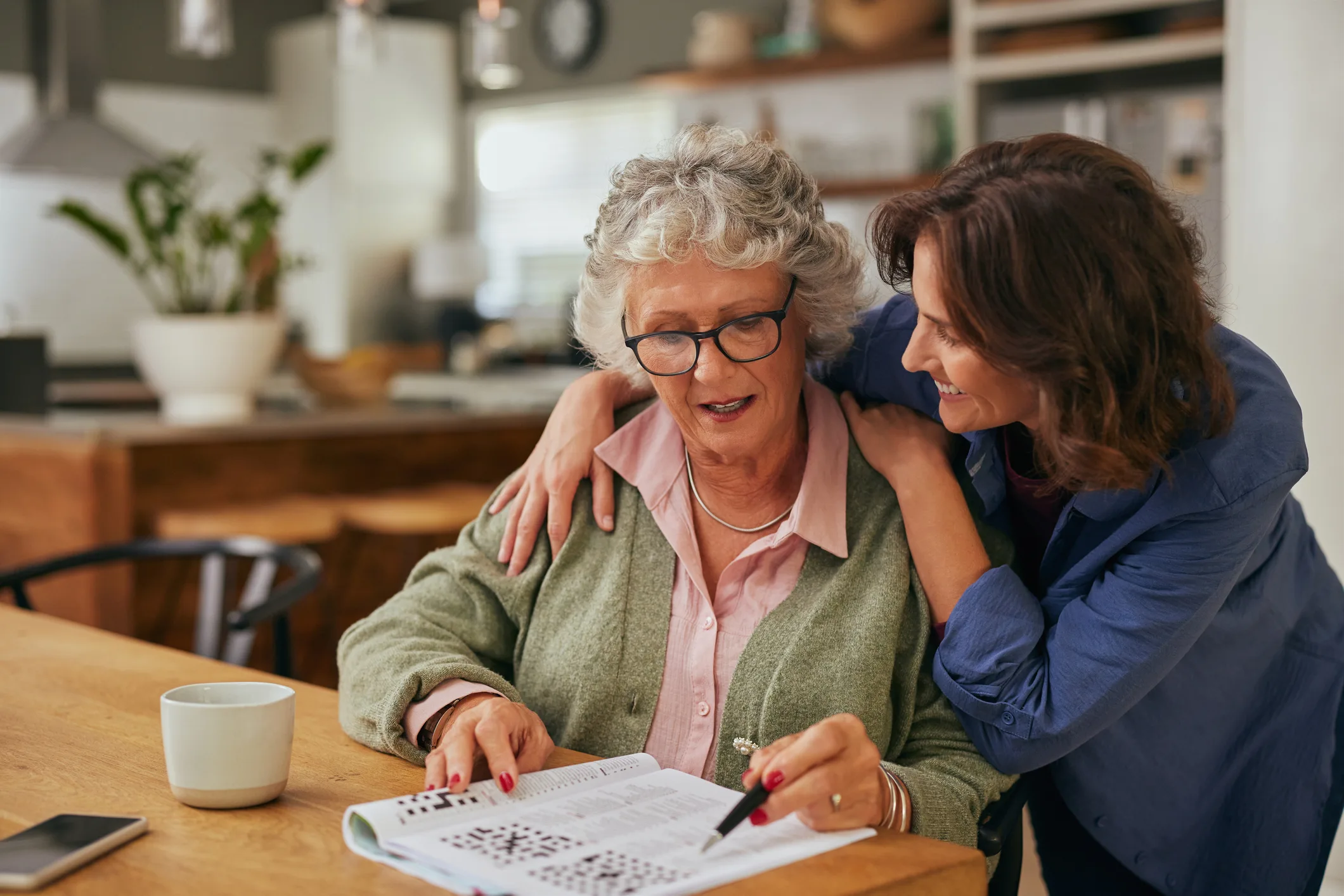
If you’ve ever found yourself standing in the middle of the kitchen wondering why on earth you walked in there, you’re not alone. We’ve all been told that the secret to staying sharp as we age is to lace up our sneakers and hit the pavement. But let’s be honest: some mornings, the only “marathon” we’re interested in is the one on the back of the Sunday paper. Well, good news for those of us who prefer a comfortable armchair to a 5K run—science is finally siding with the stationery fans. It turns out that a simple crossword puzzle might be doing more for your brain than a brisk walk around the block ever could.
The Power of the Puzzle vs. Physical Exercise
Recent research, including a notable study published in NEJM Evidence and highlighted by StudyFinds, has shed new light on how we can best protect our cognitive health. For years, physical exercise was hailed as the gold standard for brain protection. However, a randomized controlled trial involving older adults with mild cognitive impairment revealed a surprising twist: web-based crossword puzzles were actually superior to other forms of cognitive training and even showed more promise in certain areas than traditional exercise interventions.
The study followed participants with an average age of 71 over a span of 78 weeks. The findings were striking:
- Cognitive Superiority: Those assigned to do crossword puzzles showed significantly greater improvement in memory and cognitive function compared to those using modern computer games.
- Physical Brain Health: MRI scans revealed that those who engaged in crossword puzzles experienced less brain shrinkage (atrophy) over the course of the study.
- Daily Functioning: The benefits weren’t just theoretical; puzzle-solvers reported better performance in their everyday activities and chores.
Timing and Diversity: The Late-Life Strategy
While exercise remains vital for heart health and mobility, the Innovation in Aging journal emphasizes that the type of activity we choose matters more as we get older. Their prospective analysis suggests that while social diversity and physical movement are excellent for midlife, “active manipulation of previously stored knowledge”—the exact kind of work your brain does during a crossword—becomes the heavy lifter in late-life dementia prevention.
Key takeaways from the research include:
- Cognitive Reserve Theory: Engaging in mentally demanding tasks like crosswords builds a “reserve” of brain power, making your neural networks more resilient against decline.
- Mental Scaffolding: Challenging puzzles help create “compensatory scaffolding,” which is essentially the brain’s way of building back-up routes to bypass aging-related “roadblocks.”
- Social Group Participation: When combined with social engagement—such as a crossword club or a shared puzzle with a spouse—the cognitive benefits are amplified.
Why It Works: The “Active” Ingredient
The reason crosswords triumph over more passive activities (like watching television or even certain repetitive exercises) lies in the level of engagement required. Solving a puzzle requires you to ignore distractions, shift your attention between horizontal and vertical clues, and dig deep into your long-term memory. This “active manipulation” of information keeps the brain’s synaptic connections robust. Unlike physical exercise, which primarily benefits the brain through improved blood flow and reduced inflammation, puzzles directly stress the cognitive “muscles” responsible for logic and recall.
Filling in the Blanks
So, the next time you’re feeling a bit guilty about skipping the gym to finish that tricky 14-across, just tell yourself you’re doing “heavy lifting” for your hippocampus. It’s a win-win: you get to stay in your pajamas, and your brain gets a workout that would make an Olympic athlete jealous.
Of course, this doesn’t mean you should throw your walking shoes in the trash—your heart still needs the cardio—but it does give you the perfect excuse to spend a little more time with the “A-E-I-O-U” crowd. After all, if we can keep our minds 10 years younger just by figuring out a five-letter word for “happiness,” I’d say we’ve already solved the most important puzzle of all. Just don’t ask me for a seven-letter word for “where did I leave my glasses?”—some mysteries are still beyond the reach of science.
Source:
Crossword Puzzles Protect Older Brains From Decline Better Than Exercise, Study Suggests
Does type or diversity of activities delay aging-related cognitive decline?