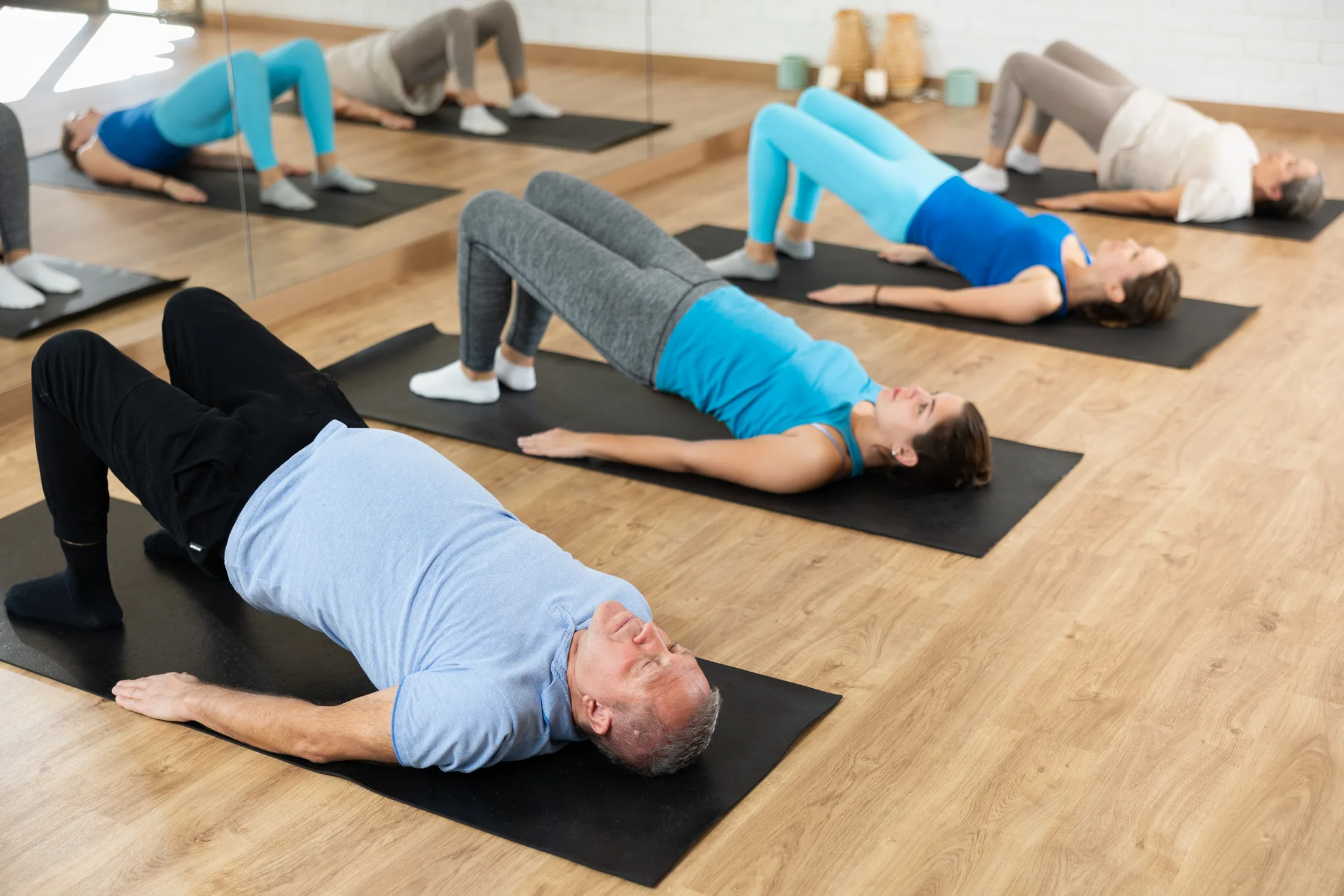
When most people think of exercise, they picture aggressive lifting, breathless panting, and enthusiastic trainers shouting phrases that no sane person would utter at 7:00 AM. If the idea of grunting through heavy squat sets sounds less like fitness and more like a fast track to a chiropractor appointment, there is good news. A highly effective, science-backed approach to building muscle allows you to skip the theatrical strain and focus on the part of the movement gravity usually does for you: eccentric exercise.
What Is Eccentric Exercise?
In exercise physiology, dynamic muscle movements consist of two primary phases:
-
Concentric Phase: The muscle shortens while contracting under load (e.g., lifting a dumbbell toward your shoulder during a bicep curl, or pushing yourself up from a chair).
-
Eccentric Phase: The muscle lengthens while controlling a load against gravity (e.g., slowly lowering the dumbbell back down, or gradually lowering yourself into a chair).
While traditional resistance training emphasizes the concentric “lift,” eccentric exercise shifts the primary effort to the controlled “lowering” phase.
The Science: Why Eccentric Exercise Benefits Adults 60+
As the body ages, maintaining skeletal muscle mass and strength becomes critical. After age 50, adults can lose approximately 1% of muscle mass annually—a condition known as sarcopenia. This loss directly impacts balance, joint stability, and the ability to perform daily living activities.
Research published in clinical literature (including systematic reviews in the Journal of Applied Physiology and PubMed Central) highlights several distinct physiological advantages of eccentric training for older adults:
1. High Force Production with Lower Energy Cost
Eccentric muscle contractions can generate up to 20% to 60% higher mechanical force than concentric contractions, yet they require significantly less oxygen consumption and ATP (cellular energy). For older adults, this high efficiency means you can overload and stimulate muscle growth with a much lower cardiovascular strain and perceived exertion.
2. Relative Preservation of Eccentric Strength
Studies show that as adults age, eccentric strength is preserved longer than concentric or isometric strength. Capitalizing on this natural physiological reserve allows older individuals to train effectively without exceeding their functional limits.
3. Functional Transfer to Daily Activities
Key daily tasks depend far more on eccentric strength than most realize:
-
Descending stairs safely relies on the eccentric braking force of the quadriceps.
-
Sitting down in a chair with control rather than plumping down heavily.
-
Absorbing impact while walking to protect joints and prevent falls.
4. Bone and Tendon Health
The mechanical stress applied during controlled lengthening stimulates collagen synthesis in tendons and promotes bone mineral density, offering greater joint protection against arthritis and osteoporosis.
Key Eccentric Movements for Your Routine
Incorporating eccentric training does not require specialized gym machinery. Simple bodyweight or light resistance movements can yield significant results:
-
Controlled Chair Sit-Downs (Lower Body): Stand in front of a sturdy chair. Take 4 to 5 seconds to slowly lower yourself until seated. Stand up using both legs (or assist with your hands on your knees if needed), then repeat the slow 5-second lowering phase.
-
Step-Downs (Balance & Quadriceps): Stand on a low step. Slowly lower one foot toward the floor over 3 to 4 seconds without putting full weight on it, then return to the starting position.
-
Two-Up, One-Down Bicep Curls (Upper Body): Lift a modest weight using both hands during the concentric phase, then take 4 to 5 seconds to slowly lower the weight using just one arm.
Safety Guidelines
-
Expect mild delayed onset muscle soreness (DOMS): Eccentric contractions cause micro-tears in muscle fibers—the natural trigger for hypertrophy—which may cause mild soreness 24 to 48 hours later.
-
Prioritize tempo over heavy weight: Focus on a slow, controlled cadence (typically a 3-to-5-second descent).
-
Consult a professional: Before beginning any new resistance regimen, consult with a physical therapist or healthcare professional to tailor movements to your current joint health and baseline fitness.
Takeaway
Taking control of your strength in your 60s, 70s, and beyond doesn’t mean trying to match the gym routines of 20-year-olds. By letting gravity do half the work while you simply resist it gracefully, eccentric exercise provides a practical, low-effort, high-reward strategy for maintaining independence and functional mobility. After all, if slowing down can actually make you stronger, it seems unreasonable to move any faster than necessary.
Source:
How ‘Eccentric’ Exercise Opens Up a Whole New World of Fitness