If you’ve spent any time lately negotiating with your knees just to get out of a low sofa, you know that “planned obsolescence” isn’t just for iPhones—it apparently applies to human joints, too. But a recent breakthrough from Stanford Medicine suggests that we might finally be able to cancel those appointments for titanium upgrades.
Researchers have discovered an anti-aging injection that doesn’t just mask joint pain; it actually regrows the cartilage we’ve spent the last few decades wearing down.
The “Gerozyme” Villain
The culprit behind our creaky knees is a pesky protein called 15-PGDH. Scientists have dubbed it a “gerozyme” because it acts like a master regulator of aging. As we get older, this protein levels up, systematically weakening our muscles and thinning out the smooth cartilage that keeps our joints gliding.
In a recent study, researchers found that by blocking this protein, they could flip a “youth switch” in the body. When they tested the treatment on older mice—whose knees were arguably as tired as ours—the results were nothing short of a medical miracle.
The Problem: When Your “Shock Absorbers” Wear Out
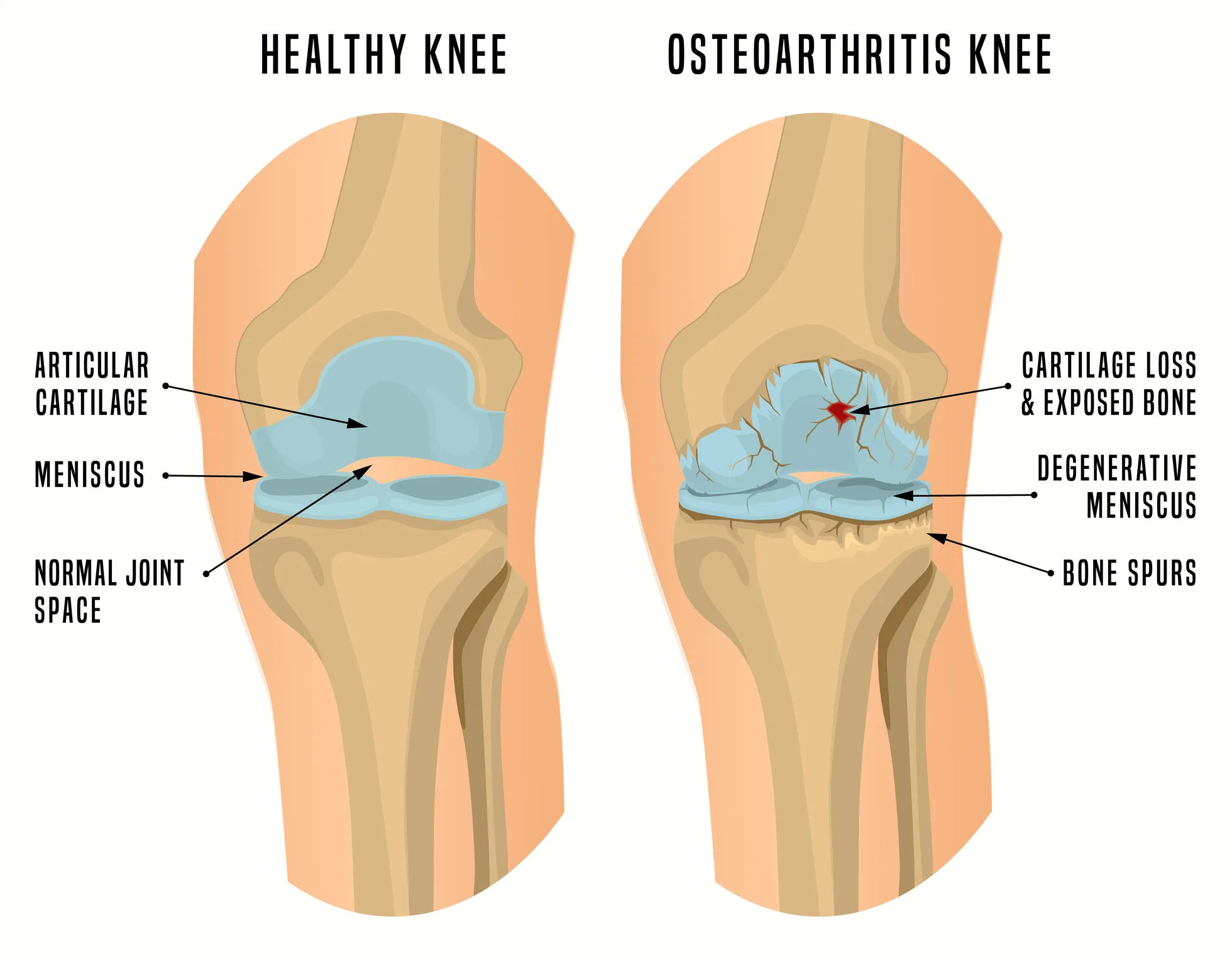
Cartilage is the slippery tissue that allows your joints to glide. As we hit our 50s and beyond, two things happen:
- The Thinning: Decades of walking, tennis, or just chasing grandkids wear that tissue down.
- The Inflammation: Our bodies become less efficient at repairing wear and tear, leading to the “bone-on-bone” grinding that makes us reach for the ibuprofen.
Ultimate this translates into Osteoarthritis, a condition that occurs when a joint is stressed by aging, injury or obesity. Until now, the standard treatment was a “wait and see” approach—waiting until the pain became so bad that a total knee replacement was the only option.
Rebuilding the Cushion
Most current treatments for arthritis are about as effective as putting a fresh coat of paint on a crumbling house. They dull the pain, but they don’t fix the foundation. This new injection is different:
- Regenerates Cartilage: Instead of just reducing inflammation, the treatment tells existing cells to start rebuilding high-quality “hyaline” cartilage—the smooth, glassy stuff that makes joints move like they’re well-oiled machines.
- No Stem Cells Required: Unlike many complicated therapies, this doesn’t require stem cell transplants. It simply “reprograms” the cells you already have to act young again.
- Prevents Future Damage: In the study, the treatment also stopped arthritis from developing after injuries—great news for those of us who still insist on playing “weekend warrior” on the pickleball court.
Beyond the Knee
The best part? This isn’t just for knees. Because 15-PGDH is a “master regulator,” blocking it has shown benefits across the board. In addition to regrowing cartilage, the therapy has been shown to:
- Increase muscle mass and endurance.
- Improve the regeneration of bone and nerve cells.
- Potentially be delivered via a simple pill (which is currently in early human trials for muscle weakness).
Are We Ready for the “New” Us?
While the primary study was conducted on mice, the researchers also tested the treatment on human tissue samples taken from knee replacement surgeries. The human cells responded with the same enthusiasm, immediately beginning to form new, functional cartilage.
While we aren’t quite at the “shot and a beer” stage of joint repair yet, the path toward a future without hip and knee replacements is looking clearer. Imagine a world where the only thing clicking when you walk is your TV remote. We might just get to keep our original parts after all—and that’s a legacy worth standing up for (without the groaning).
Source:
Anti-Aging Injection Regrows Knee Cartilage and Prevents Arthritis