If you’ve turned on a television or scrolled through a news feed lately, you’ve likely heard of GLP-1 receptor agonists—better known by their “celebrity” names like Ozempic, Wegovy, and Mounjaro. They are hailed as the “holy grail” of weight loss, helping people shed pounds at rates previously seen only with bariatric surgery.
But for those of us who have celebrated more than 50 birthdays, a nagging question remains: when we lose the weight, are we also losing the “engine” that keeps us moving? Specifically, what is happening to our muscle mass?
A recent scientific review took a deep dive into this very issue, and the results are surprisingly reassuring—provided we play our cards right.
Muscle Loss: The Good, the Bad, and the “Adaptive”
It is a biological fact of life: when you lose weight, you lose a bit of everything—fat, water, and some lean tissue. For years, critics have worried that GLP-1 medications might be “muscle-wasters.” However, researchers now suggest that most of this muscle loss is actually adaptive.
Think of it this way: your muscles are like a car engine. If you’ve been carrying around a heavy trailer (excess weight) for years, your body built a bigger engine to haul it. When you unhook that trailer, your body realizes it no longer needs the “V8” and naturally downsizes to a “V6.”
Key Findings From the Review:
- Commensurate Loss: The muscle loss seen with GLP-1s is generally in proportion to the total weight lost. Specifically, muscle loss accounted for approximately 20% to 25% of total weight loss, which is similar to the ratios seen with traditional calorie restriction.
- Better Quality over Quantity: While you might have slightly less muscle volume, the quality and insulin sensitivity of the remaining muscle often improve as your metabolic health stabilizes.
- The “V8” Effect: Most of the loss is a physiological adjustment to a lighter frame, rather than a “maladaptive” disease-driven wasting of the muscle.
The 50+ Factor: Don’t Let the Engine Stall
While the news is mostly good, we 50-plus folk do need to be a bit more vigilant. As we age, we naturally face a risk of sarcopenia (the age-related loss of muscle and strength). If we lose weight too rapidly without support, we could accidentally fast-track that process. This could impact our mobility, balance, and the ability to perform daily activities.
For those in their 50s, 60s, and beyond, the goal isn’t just to look better in those jeans we’ve kept since 2004; it’s to stay strong enough to get out of a chair without making that “unnh” sound.
How to Keep Your “Gains” While Losing the “Grains”
The study suggests that we can maximize the benefits of these medications while protecting our strength. Here is how to ensure your weight loss is “all-star” and not “muscle-sparse”:
- Eat Your Protein: Don’t let your suppressed appetite stop you from hitting your protein goals. GLP-1 medications significantly suppress appetite. It is essential to ensure that the calories you consume are nutrient-dense, with a specific focus on high-quality protein to provide the building blocks for muscle maintenance.
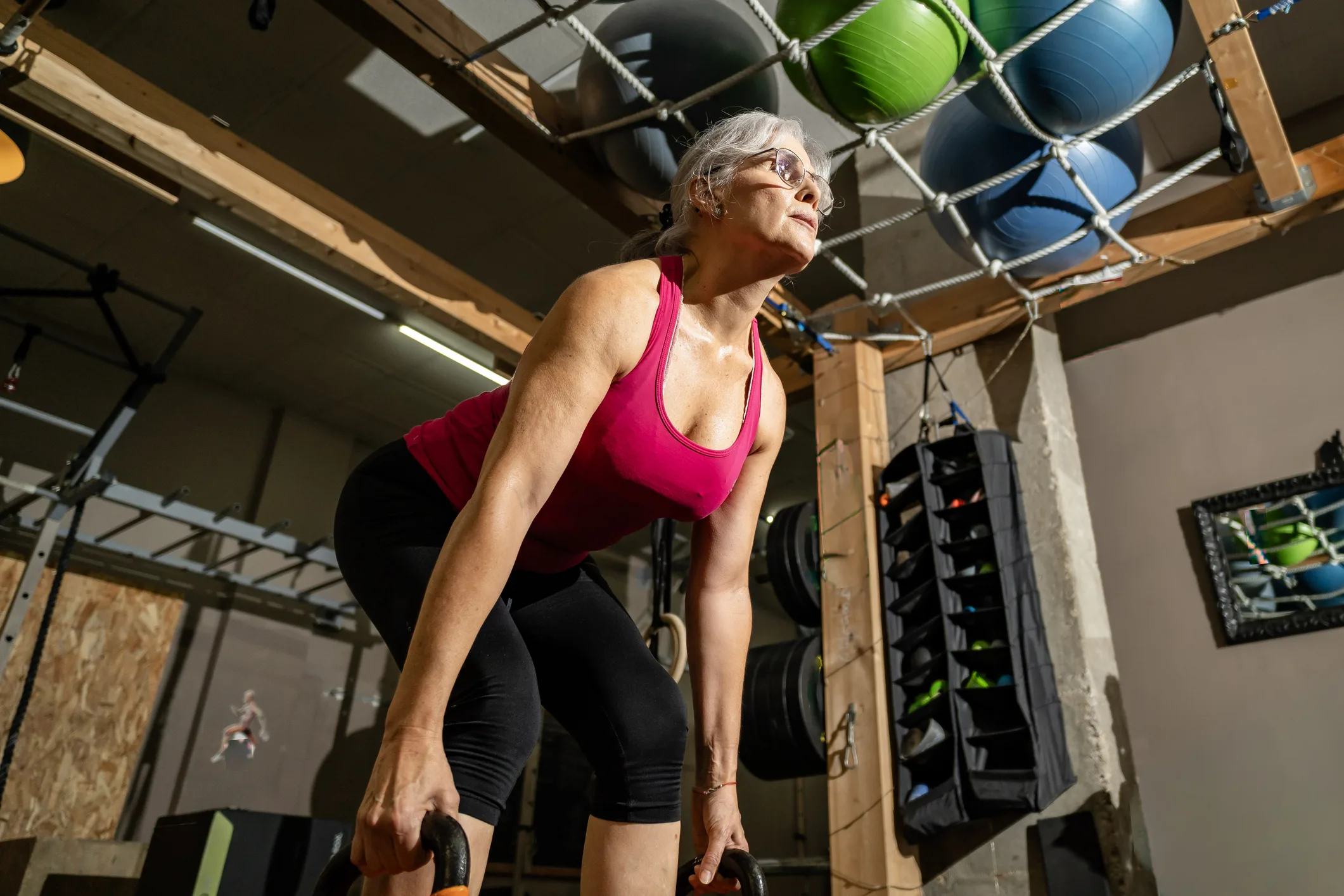
- Pick Up the Weights: Resistance training is the “use it or lose it” rule in action. Lifting weights (or even heavy groceries) tells your body, “Hey, I still need this V8 engine!”
- Monitor Quality, Not Just the Scale: Focus on how you feel and move. If you’re losing weight but feeling weaker, it’s time to talk to your doctor about adjusting your plan.
The Bottom Line
GLP-1 medications are transformative tools, not muscle-destroying villains. For the 50+ crowd, the “muscle math” works in our favor as long as we stay active and nourished. You’re not just losing weight; you’re optimizing your body for the next chapter. And let’s be honest—carrying less weight makes those morning walks a whole lot easier on the knees!
Source: