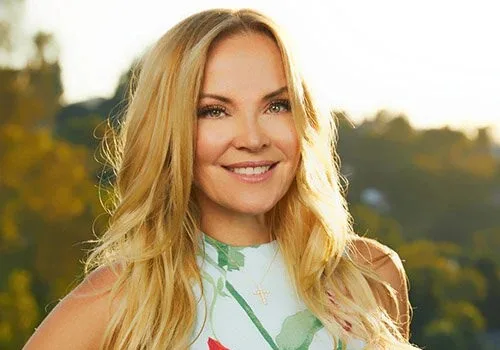
If you had told my 40-year-old self that my sixties would be my happiest decade, I would have assumed I’d either won the lottery or finally succumbed to a very pleasant form of delusion. Back then, life felt like a perpetual-motion machine fueled by caffeine, mortgage payments, and the exhausting need to prove I was “keeping up” with people I didn’t even particularly like. But a funny thing happens once you cross the half-century mark: the “scoreboard” in your head starts to run out of batteries, and for once, you don’t feel the need to replace them.
Research confirms that this isn’t just a personal fluke or the result of a particularly good vintage of Chardonnay. According to consistent psychological data, happiness follows a “U-shaped curve.” We start off high in youth, hit a rocky bottom in our late 40s (the “midlife dip”), and then—stubbornly and beautifully—begin a steady climb upward after 50.
The Science of the “Happiness U-Curve”
For decades, economists and psychologists have tracked life satisfaction across hundreds of thousands of people in over 140 countries. The results are remarkably consistent regardless of geography or income. The “dip” in the middle isn’t necessarily because life gets harder—though caring for aging parents while raising teenagers certainly doesn’t help—but because of the weight of unmet expectations.
By age 50, the brain undergoes a “recalibration.” A major study in the Journal of Happiness Studies tracked citizens across 20 countries and found that happiness consistently rises after 50. This isn’t because we’ve finally figured everything out, but because we’ve stopped trying to. We begin to move away from the “aspirational” phase of life and into the “actualization” phase.
The Power of Social De-Comparison
One of the most significant drivers of this emotional surge is the quiet abandonment of social comparison. Research published in Personality and Individual Differences shows that the tendency to measure our success against others weakens significantly with age.
- Internal vs. External Validation: Older adults report lower levels of “social comparison tendency.” Instead of sizing up a neighbor’s new car or a peer’s professional title, they focus on internal metrics of contentment.
- Reduced Resentment: This reduction in comparison is directly tied to lower feelings of personal deprivation and resentment.
- The “Positivity Effect”: According to Socioemotional Selectivity Theory, as our perception of remaining time becomes more limited, we naturally prioritize emotionally meaningful goals over status-seeking ones.
The Shift in Brain Processing
It isn’t just a change in perspective; it’s a change in how our brains process the world. Over 100 peer-reviewed studies have highlighted a pattern where older adults attend to and remember positive information more readily than negative information.
- Emotional Stability: Older individuals become less “emotionally labile,” meaning they are less prone to the wild mood swings and reactive stress that define the 30s and 40s.
- Prioritizing Connection: Long-term studies, including the Harvard Study of Adult Development, show that the warmth of relationships at age 50 is a better predictor of health at age 80 than cholesterol levels. We learn to invest in being “known” rather than being “admired.”
Wisdom Over Performance
Interestingly, the research suggests that the happiest people over 60 aren’t necessarily those who found a grand “purpose” or “passion.” Instead, they are the ones who stopped treating happiness as a trophy to be won. They moved from “performing” contentment to actually experiencing it. This shift involves:
- Letting go of peripheral obligations: Learning that “No” is a complete sentence and that your presence is a gift, not a requirement.
- Accepting imperfections: The realization that the “version of adulthood” we were sold at twenty-two was mostly marketing, and we are finally free to ignore it.
Closing the Scoreboard
So, if you find yourself caring a little less about the Joneses and a little more about the quality of your afternoon tea, congratulations—you’re right on schedule. It turns out that the secret to a happy life isn’t about having more; it’s about the “measuring tape” finally getting shorter.
Source: