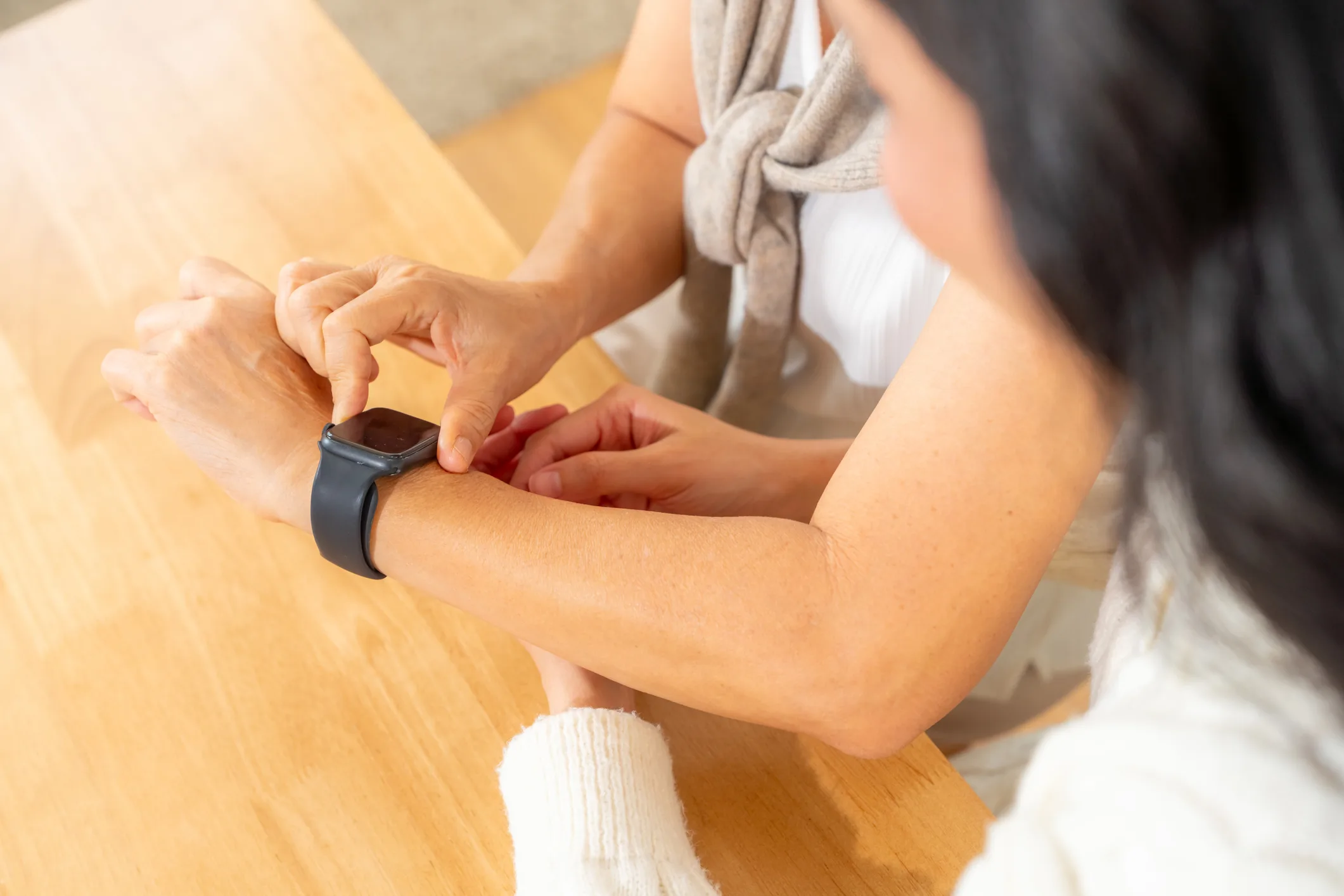
Welcome to the age of digital health, where your wrist-worn tech tracks more data points than your accountant. Smartwatches, sleep monitors, and connected blood pressure cuffs are constantly generating information. The problem? Data alone is useless. If you’re like most adults over 50, you’re not looking for another confusing chart; you’re looking for actionable insights that help you feel better and live longer.
As the experts say, doctors don’t want raw data—they want clarity and context. This is where Artificial Intelligence steps in, acting not as a replacement for human wisdom, but as its highly skilled, twenty-first-century partner.
The Mystery of Your Own Metrics
Remember the good old days when a fitness tracker just counted steps? Now, these devices give you a multi-dimensional view of your health, like a digital “check engine light” for your body.
Take, for instance, the subtle signals our bodies send:
- Resting Heart Rate (RHR): A prolonged, aggressive exercise routine might see your RHR drop significantly over time—a clear sign of improved cardiovascular fitness.
- VO₂ Max Decline: That seemingly small, unexplained drop in your estimated VO₂ max (a key measure of aerobic fitness) after a bout of the flu or COVID-19? Your wearable catches that. You might have missed it, but the data makes it undeniable.
These digital breadcrumbs are everywhere. The real challenge is assembling them into a meaningful map of your health—not just a list of numbers.
Why Your Doctor Needs an AI Co-Pilot
Medicine is an art perfected by years of clinical intuition. A seasoned physician can often sense what matters most in a complex sea of symptoms. But no human can absorb the real-time data flow from the electronic health record plus every connected device a patient uses.
The goal is not to replace your physician’s wisdom, but to enhance it.
This is the power of AI:
- Spotting Subtle Trends: AI can recognize tiny correlations and flag early signs of deterioration long before a human could notice them across thousands of patients.
- Workflow Integration: No clinician wants to be buried under hundreds of raw data feeds. We need sophisticated dashboards and decision support that simply say: “Call these five high-risk patients now.”
- The Power of Diversity: Historically, health guidelines were based on limited studies (often demographically narrow). Initiatives like the NIH’s “All of Us” are building massive, diverse datasets to train AI models. This means future advice won’t be based on a generic profile but on people who are genuinely similar to you—where you live, your genetics, and your life experience.
The Google Maps of Longevity
Imagine your health journey guided by an AI that works like Google Maps—constantly adjusting for traffic, construction, and your personal preferences. This is the future of proactive, personalized, preventive care.
- Catching the Unseen: Your smartwatch could passively track subtle heart arrhythmias and flag atrial fibrillation before you ever feel a symptom.
- Personalized Diet Plans: A continuous glucose monitor paired with a food diary reveals exactly how your body handles that sourdough bread, not how the “average person” does.
- Early Warnings: Gait analysis from your phone might show early changes linked to neurodegeneration years before traditional clinical diagnosis.
The opportunity here isn’t just about catching diseases early; it’s about shifting from reactive sick care to predictive wellness, extending your healthspan (the number of years you live well), and improving the quality of your vibrant second act. We have the tools—now we just need to align the systems to use them wisely.
Source: