In this second of our 2-part series, we examine how the theoretical link between HSV-1 (herpes), VSV (shingles), and Alzheimer’s has now been proven in the real world.
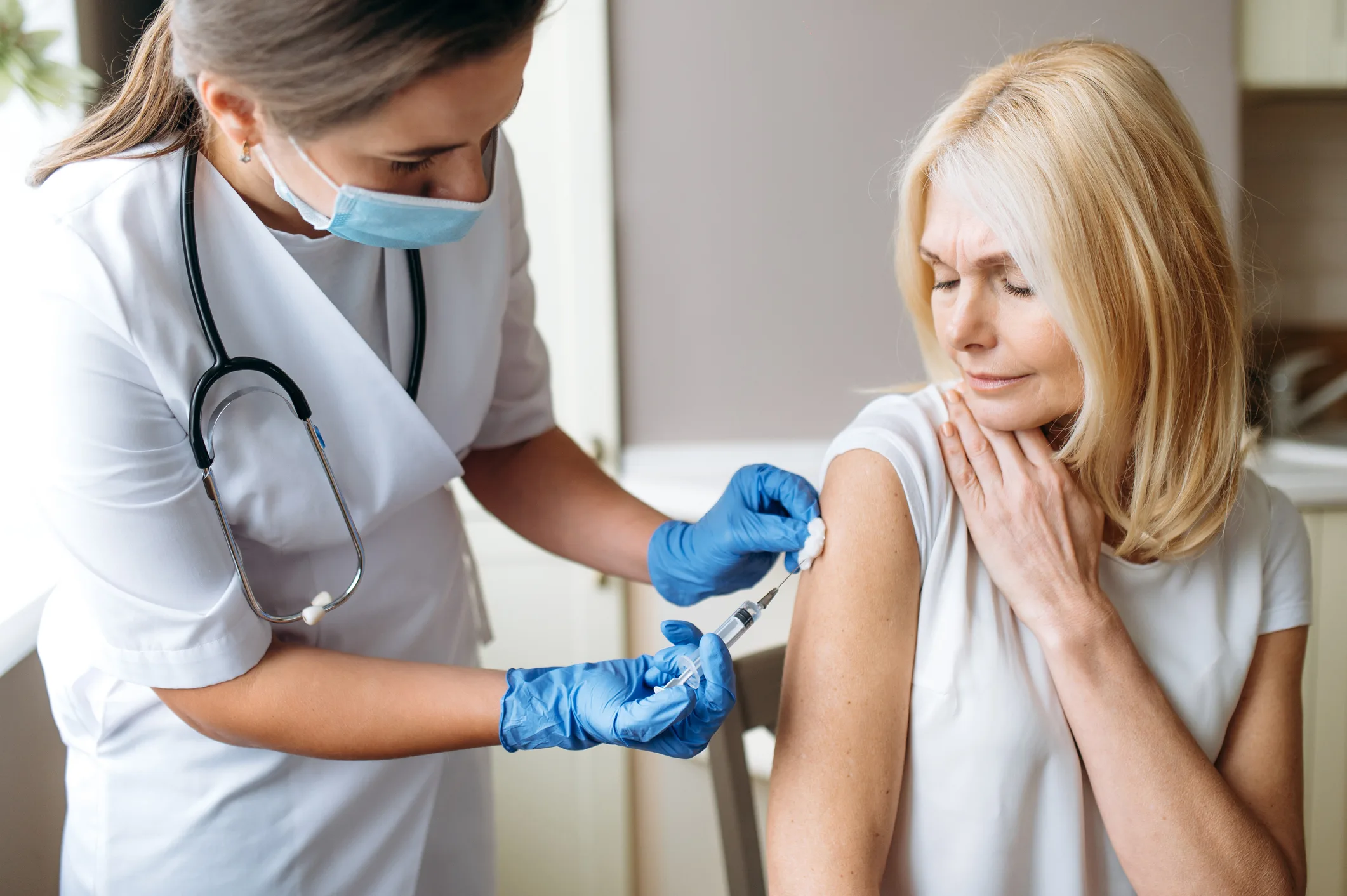
Imagine a world where a simple shot could ward off not just the fiery pain of shingles, but also the creeping fog of dementia. That’s the tantalizing possibility emerging from a groundbreaking study that cleverly leveraged a quirk in UK public health policy to reveal a striking truth: the shingles vaccine appears to slash dementia risk by a significant 20%.
The Study
This isn’t just another observational study, where healthy habits muddy the waters. No, this research, spearheaded by Stanford Medicine, took advantage of a unique “natural experiment” in Wales. Picture this: Wales, in 2013, decided to offer the shingles vaccine to those 79 and younger. Suddenly, a clear dividing line appeared: those just a few weeks apart in age, one group eligible, the other not. This created a near-perfect comparison, a real-world scenario mimicking a controlled trial.
“It was a really striking finding,” exclaimed Dr. Pasal Geldsetzer, the study’s lead author. “This huge protective signal was there, any which way you looked at the data.”
The logic is compelling. By comparing those born just before and just after the eligibility cut-off, researchers minimized the usual confounding factors that plague vaccine studies. Think about it: two groups, practically identical, except for vaccine access. This eliminated the issue of health-conscious individuals skewing the results, revealing a clearer picture of the vaccine’s impact.
The Results
Over seven years, as participants aged into their late 80s, dementia diagnoses were tracked. The results? A 20% reduction in dementia among those who received the shingles vaccine. This wasn’t a fluke. Rigorous analysis, considering various age ranges and even dementia-related deaths, consistently pointed to the same conclusion. Intriguingly, women seemed to benefit even more, possibly due to stronger immune responses.
Experts, while acknowledging the study’s observational design, are enthusiastic. “This is the best evidence yet,” declared Dr. Henry Brodaty, a leading aging and mental health expert. “Future research will determine whether the newer Shingrix vaccine will provide the same benefit and whether immunization at younger ages may be just as effective.”
The study’s focus on the older Zostavax vaccine, now replaced by the more potent Shingrix, raises exciting questions. Shingrix, with its non-live virus and powerful adjuvant, offers superior protection. Could it also offer even greater dementia protection?
While the exact mechanism remains a mystery, the implications are profound. “This is a landmark finding in brain health and disease prevention,” said Professor Tissa Wijeratne. “It supports the emerging understanding that infections can contribute to long-term neurological decline.”
The researchers themselves are optimistic. “Our substantial effect sizes, combined with the relatively low cost of the zoster vaccine, imply that, if these findings are truly causal, the zoster vaccine will be both far more effective as well as cost-effective in preventing or delaying dementia than existing pharmaceutical interventions.”
Takeaway
While this study is promising, there is one issue. The vaccine that was given to the participants in Wales, Zostavax, is no longer available. It has since been replaced by the new-school Shingrix vaccine that doesn’t contain a live virus. Further research is required to determine if this new vaccine has the same, or hopefully better results as Zostavax.
But it’s a beacon of hope. It suggests that a simple, widely available vaccine might be a powerful weapon in the fight against dementia, a disease that casts a long shadow over aging populations worldwide.
Source: