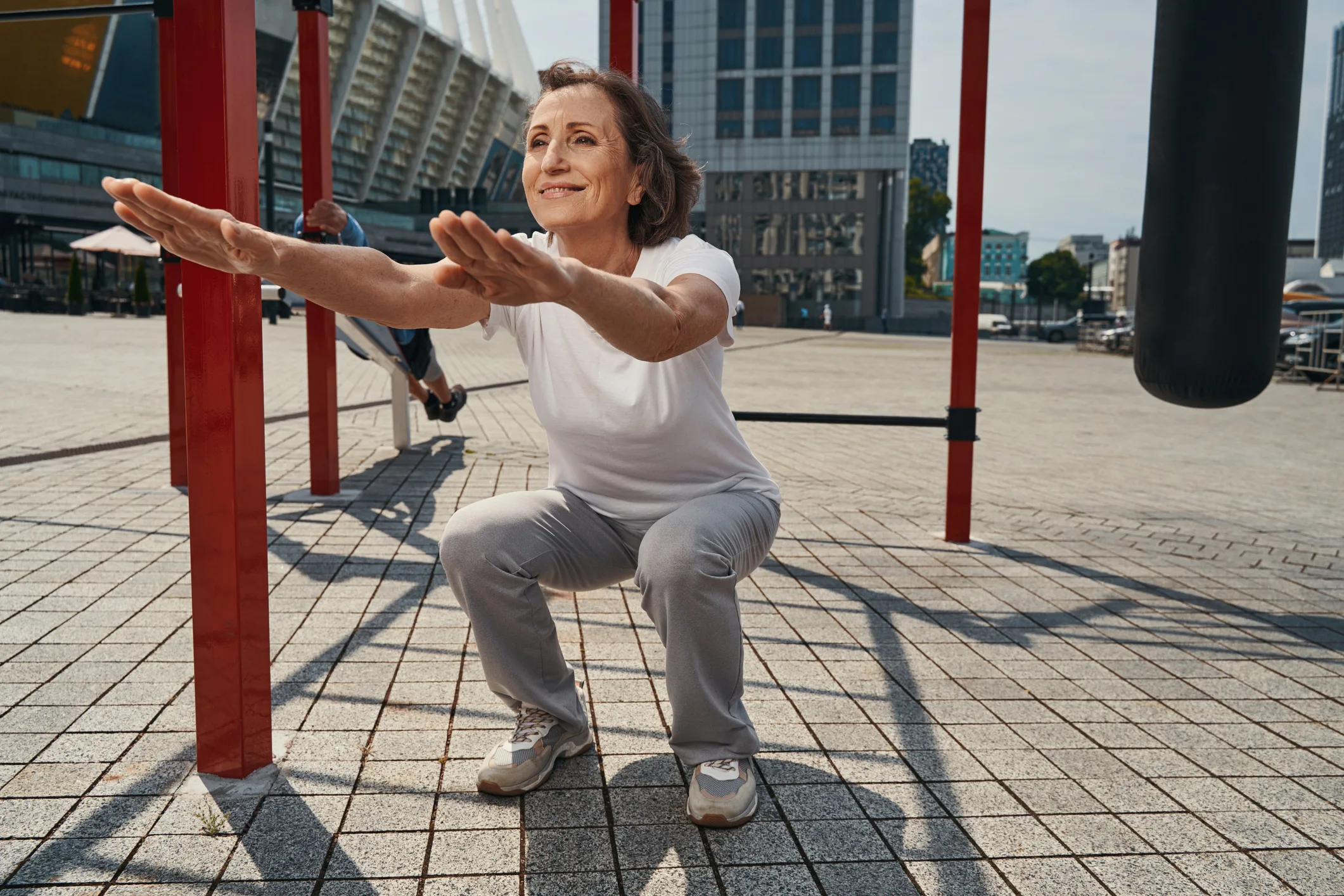
Imagine this: You gracefully lower yourself to the floor, then, with minimal fuss, you rise back to your feet. If you can do this with ease, you’re not just showing off — you’re demonstrating excellent muscle strength, flexibility, and balance. These are all crucial components of what’s known as non-aerobic fitness, and new research highlights their vital role in our longevity, especially as we age.
A study published in the European Journal of Preventive Cardiology followed over 4,000 adults (age, 46-75 years; 68% men) for about 12 years. What they found was remarkable: individuals who aced a simple “sitting-rising test” were significantly less likely to die from natural causes or heart-related issues compared to those who struggled.
How Does the Test Work?
The beauty of the sitting-rising test (SRT) is its simplicity. No fancy equipment is needed, just your own body. It’s scored out of a possible 10 points:
- Starting Strong (5 points for sitting, 5 for standing): To get a perfect score, you aim to sit down and stand up without using your hands, forearms, knees, or the side of your legs for support. You also need to stay steady throughout.
- Losing Points: If you need to touch a hand to the floor, brace a knee, or lose your balance, you start to lose points from that perfect 10.
- Room for Improvement: If you can’t complete the movements without leaning on a table, a wall, or needing assistance from another person, your score is 0.
For older adults, this test is particularly relevant because it assesses several physical abilities that naturally decline with age. Maintaining these abilities can make a huge difference in your independence and quality of life.
The Numbers Speak for Themselves
The study’s findings were compelling. Among those who scored a perfect 10 on the test, only 3.7% passed away during the 12-year follow-up. For those who scored an 8, the mortality rate was 11.1%. But among participants with the lowest scores (0-4), a striking 42.1% died.
After accounting for factors like age, gender, and body mass index (BMI), researchers found that individuals with the lowest scores were nearly four times more likely to die from natural causes and six times more likely to die from cardiovascular causes than those with the highest scores.
Beyond Aerobics: The Importance of Strength and Balance
For years, the focus of fitness has often been on aerobic exercises like swimming or brisk walking. While these are incredibly important for heart health, experts are increasingly emphasizing that they’re only part of the puzzle. As Dr. Daniel Forman, a co-author of a recent statement on cardiac rehabilitation, points out, “It’s not enough to think that ‘I have to go swimming several times a week.’ We are talking now about adding in strength training at least twice a week. And it is just as essential if not more so to prevent decline.”
The sitting-rising test beautifully illustrates this point. Getting up from the floor is a dynamic movement that requires a combination of muscle strength and balance. If you find this challenging, it could be an early warning sign of impaired physical function.
While more research is needed to determine the best “exercise prescription” to improve SRT scores and whether improving these scores directly prolongs survival, the message is clear: maintaining your ability to perform everyday movements is incredibly important. Incorporating strength training and balance exercises into your routine, alongside your aerobic activities, can be a game-changer for your long-term health and vitality.
Are you up for the sitting-rising challenge?
Source: