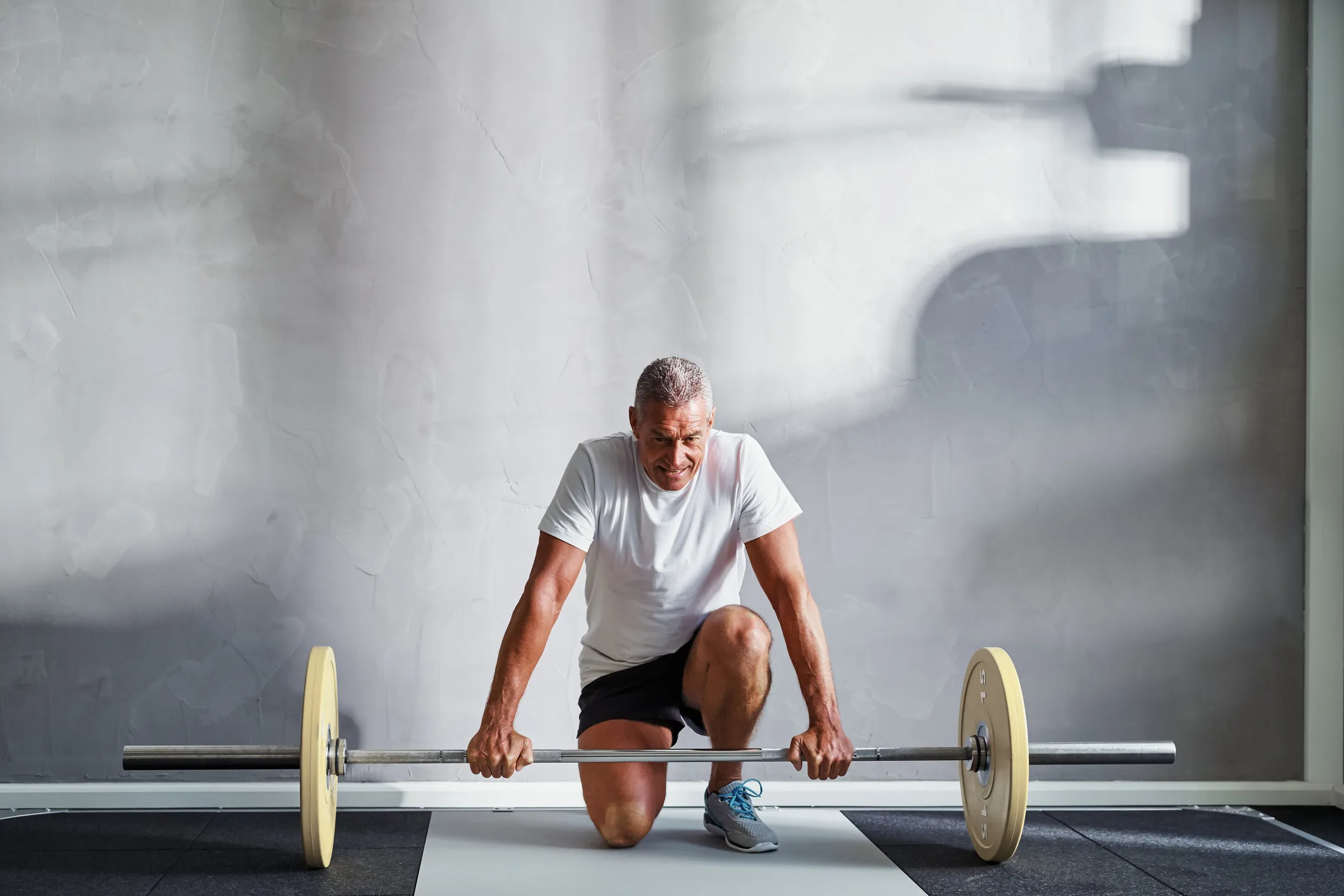
If you’ve spent any time in a gym lately, you’ve likely seen someone half your age grunting under a barbell that looks heavy enough to bend time. We’ve been told for decades that if you aren’t lifting “big,” you aren’t getting big. But for those of us who have lived long enough to know that “heavy lifting” usually refers to carrying all the groceries in one trip, there is some refreshing news. Recent science suggests that your muscles might not be as obsessed with heavy iron as the local gym rat claims.
Redefining the “Load” in Weightlifting
A comprehensive study published in The Journal of Physiology has challenged the long-standing dogma that high-load training (heavy weights, fewer reps) is the only path to muscle growth. Researchers from McMaster University found that when it comes to building muscle size (hypertrophy), the actual weight on the bar is secondary to the effort applied.
In a meticulously designed experiment, participants trained one side of their body with heavy weights (70-80% of their maximum) and the other with much lighter weights (30-40% of their maximum). After ten weeks, the results were striking: muscle growth was statistically identical on both sides.
The Critical Role of Volitional Fatigue
The “catch”—and the most important takeaway for your routine—is the concept of volitional fatigue. The weight itself didn’t matter, but the intensity of the set did. To achieve these results, every set was performed until the participant could no longer complete another repetition with good form.
- Effort vs. Load: Muscle growth is triggered by recruiting and exhausting muscle fibers. This can be achieved with 25 light repetitions just as effectively as with 8 heavy ones, provided you reach near-failure.
- Safety and Longevity: For adults over 50, using lighter loads reduces the mechanical stress on joints and connective tissues, lowering the risk of acute injury while still providing the biological signal for growth.
- Protein Synthesis: The study confirmed that myofibrillar protein synthesis rates—the process that actually builds muscle—remain comparable between high and low loads when effort is matched.
Strength vs. Muscle Mass: The Mortality Link
While muscle size is load-independent, researchers noted a slight distinction in absolute strength. High-load training still holds a narrow edge for those looking to maximize their “one-rep max.” However, for long-term health, the focus shifts to “muscle quality.”
Data from the Health, Aging and Body Composition Study (involving over 2,000 seniors) revealed a crucial insight: muscle strength is a significantly stronger predictor of mortality than muscle mass alone. In other words, how well your muscles function is more important for longevity than how large they look in the mirror.
Key Takeaways for Your Workout
- Choose your “Heavy”: You can stop chasing the heaviest dumbbells in the rack. Choose a weight that allows for 15–25 controlled repetitions.
- Focus on the Finish: Ensure the last few repetitions of your set are challenging. If you finish a set feeling like you could have done ten more, you likely haven’t stimulated the muscle sufficiently.
- Consistency Over Intensity: Because muscle-building capacity is influenced by individual genetics, the most effective program is the one you can perform consistently without injury.
A Stronger Future
So, the next time you see a “no pain, no gain” enthusiast struggling with a weight that looks like it belongs on a forklift, you can smile knowingly. Science has officially given you permission to put down the ego-bruising weights and pick up something more manageable. Your joints will thank you, and your muscles won’t know the difference—even if your neighbor still thinks “light weights” are just for rehabilitation. Now, go forth and lift… just maybe leave the heavy lifting to the grandkids and the professional movers.
Source: