Ever notice how everyday tasks, like opening a jar or carrying groceries, seem to get a little harder as we age? While we often attribute this to general slowing down, a surprising factor might be at play: grip strength. It’s more than just a firm handshake; grip strength is emerging as a powerful indicator of overall muscle health and a key predictor of well-being in older adults
Why Is Grip Strength Important?
Research has shown that grip strength is associated with a number of health indicators, including:
Mobility: While grip strength isn’t necessarily used when you’re walking, it’s associated with mobility. People with physical limitations are more likely to have decreased grip strength.
Overall strength: Grip strength is a good indicator of overall strength. But there are some cases where this doesn’t apply. It may be better to measure grip strength along with leg strength for a more accurate indicator.
Cognitive function: People who have good grip strength scored better on tests of working memory, processing speed, and verbal ability. They are also less likely to have thinking problems as they age.
Bone mineral density: Low grip strength is correlated with low bone mineral density, which is how strong your bones are. It’s a strong risk factor for osteoporosis, which is when your bones get thinner. People with low grip strength are also more likely to have hip fractures and fragility fractures. Fragility fractures are fractures that happen from a fall of standing height or less.
Heart health: A study of 140,000 people showed that decreased grip strength was associated with measures of heart health. For each 11-pound decrease in grip strength, there was:
- A 16% increase in deaths from any cause
- A 17% increase in death from heart disease
- A 9% increase in the risk of having a stroke
- A 7% increase in the risk of having a heart attack
What’s “good” grip strength by age?
You can measure grip strength by using a tool called a hand dynamometer, which you squeeze as hard as you possibly can.
A 2018 study found that on average, grip strength using your dominant hand should be roughly:
1) Age 18–24
- Men: 47 kg
- Women: 28 kg
2) Age 25–29
- Men: 48 kg
- Women: 30 kg
3) Age 30–34
- Men: 46 kg
- Women: 29 kg
4) Age 35–39
- Men: 47 kg
- Women: 29 kg
5) Age 40–44
- Men: 47 kg
- Women: 30 kg
6) Age 45–49
- Men: 42 kg
- Women: 29 kg
7) Age 50–54
- Men: 44 kg
- Women: 28 kg
8) Age 55–59
- Men: 41 kg
- Women: 25 kg
9) Age 60–64
- Men: 39 kg
- Women: 24 kg
10) Age 65–69
- Men: 37 kg
- Women: 22 kg
11) Age 70–74
- Men: 35 kg
- Women: 22 kg
12) Age 75–79
- Men: 33 kg
- Women: 20 kg
13) Age 80–85
- Men: 28 kg
- Women: 20 kg.
How can you improve my grip strength?
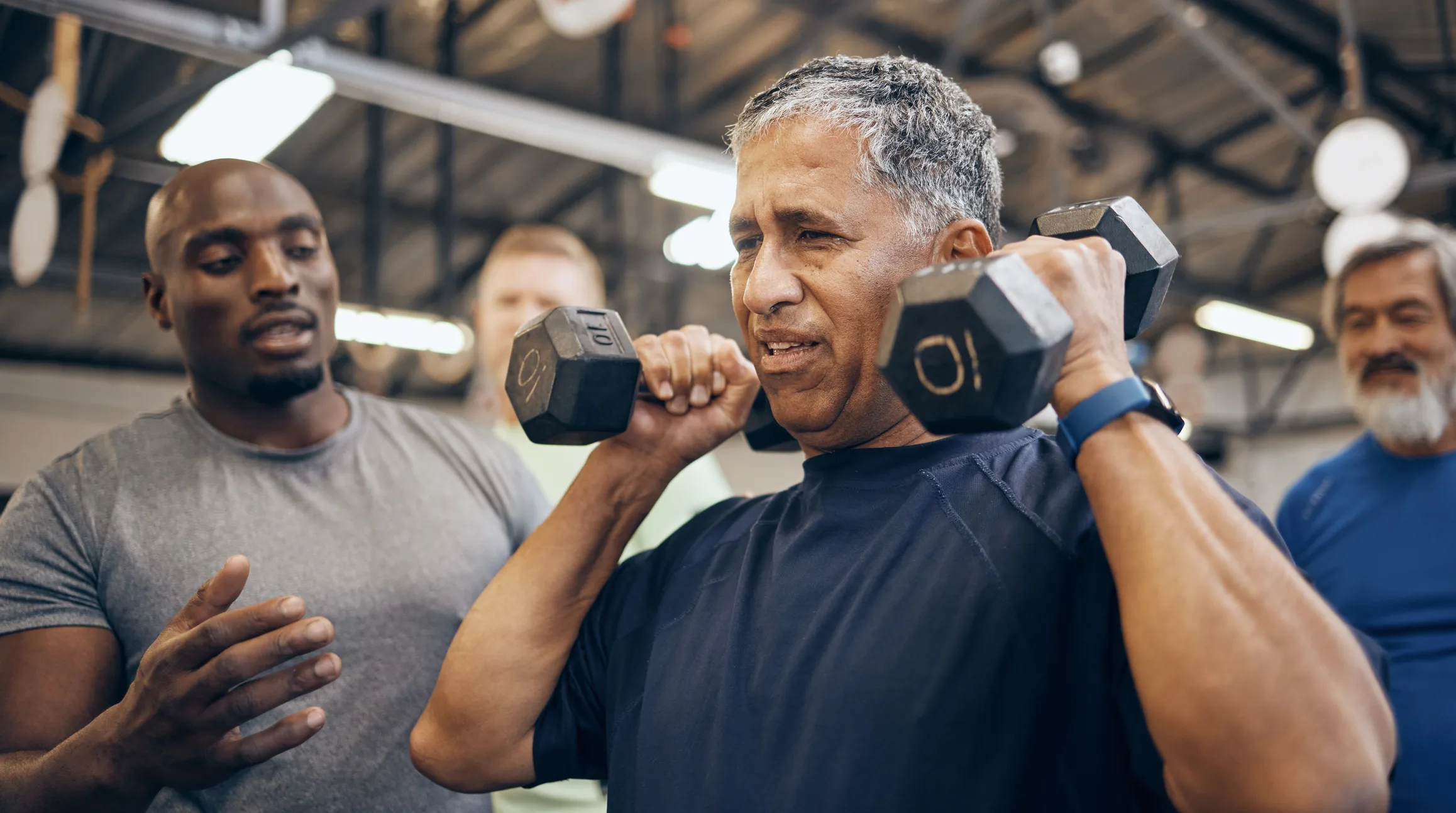
Men’s Health says that farmer’s carries, kettlebell swings, and deadlifts can help to strengthen your grip.
But it doesn’t need to be as intense as that. Other ways to include grip strengthening in your daily routine include:
- Wash your car by hand instead of taking it through the car wash.
- Use a push lawnmower to cut your grass instead of a riding lawnmower.
- Shovel your snow instead of using a snowblower.
- Open your garage door manually instead of using an electric garage door opener.
- Carry your groceries to your car instead of driving up and having them loaded.
- Rake your leaves instead of blowing them.
- Squeeze a stress or tennis ball.
Source: