When Diane retired at age 65 after 32 years as a hospital administrator, she looked forward to a well-earned slowdown. During her career, she walked miles of hospital corridors, climbed stairs between buildings, and maintained a non-stop physical pace. She didn’t belong to a gym, nor did she follow a deliberate fitness regimen; she simply didn’t think of herself as someone who needed to “exercise.”
Within 18 months of retirement, however, Diane noticed an unexpected shift: she had gained weight, felt chronically fatigued, and experienced a subtle dullness in the sharp mental acuity she had relied on for decades. When she mentioned to her physician that she had “always been active,” her doctor asked a simple defining question: What did “active” actually mean?
Diane had no clear answer. What she had experienced wasn’t personal discipline; it was environmental design. The workplace had served as her default gym. The average office worker logs 2 to 4 miles of walking per day through daily routines, cross-floor meetings, and commutes. When employment ends, that built-in physical architecture vanishes overnight. Without intentional redesign, the default human state quickly becomes sedentary—not due to a lack of character, but due to a sudden absence of structure.
Biological Capital: Why Movement is Your Body’s Ultimate Upgrade
Forget viewing exercise as a dull chore or a lecture from your doctor to “get 10,000 steps.” The latest medical research treats daily physical movement as a high-powered biological strategy that keeps your brain sharp and your body firmly in control.
1. Your Brain on Movement: Cognitive Defense Systems
If you want to keep your mind quick, agile, and resilient, moving your body is non-negotiable:
- Knocking Out the “Dirty Half Dozen”: A landmark report by the Lancet Commission identified 12 modifiable risk factors responsible for roughly 40% of dementia cases globally. Regular physical activity takes a sledgehammer to six of them all at once: physical inactivity, high blood pressure, diabetes, obesity, depression, and social isolation (Livingston et al., 2020).
- Fertilizer for Your Brain Cells: Sweating a little bit releases Brain-Derived Neurotrophic Factor (BDNF)—think of it as Miracle-Gro for your neurons. BDNF helps grow new neural connections, keeping your memory crisp and your brain structurally resilient.
- Outperforming the Medicine Cabinet: A 2025 meta-analysis proved that structured aerobic and strength workouts reduce cognitive decline and depressive symptoms in adults over 65 just as effectively as standard pharmaceutical treatments for mild-to-moderate cases (Frontiers in Aging Neuroscience, 2025).
2. Defending Your Independence
Nobody retires dreaming of losing their mobility or needing help getting off the couch. Targeted movement acts as your personal defense system against physical decline:
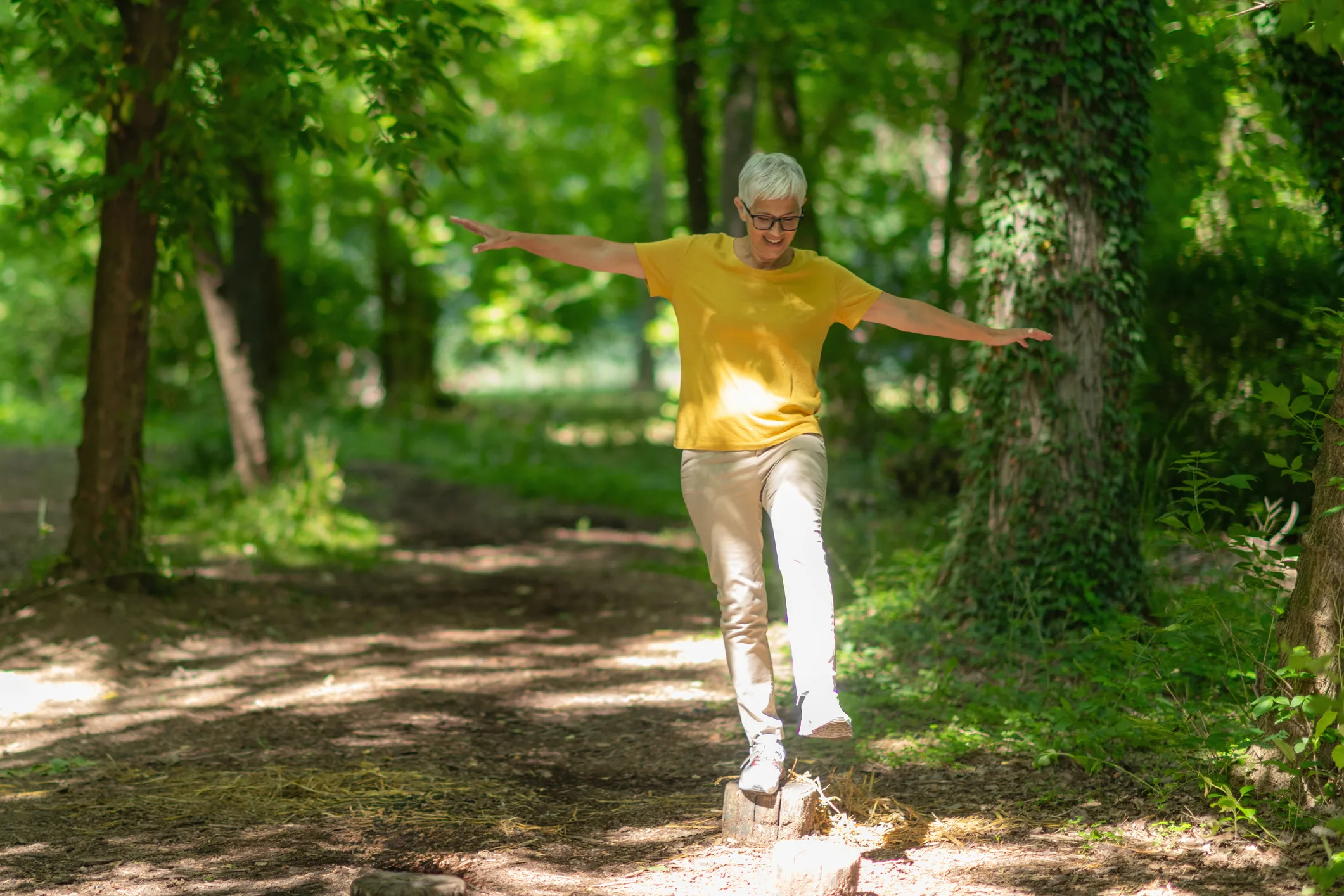
- Ditching the Fall Risk: Core strength and balance exercises build the stabilizer muscles that keep you firmly upright. Since falls are the single leading cause of lost independence for older adults, staying strong keeps you in the driver’s seat.
- Outsmarting Muscle Loss: Age-related muscle loss (sarcopenia) tries to quietly creep in after age 60. Progressive movement halts it in its tracks, making sure you keep the raw power needed to wrangle heavy suitcases, haul groceries, or tackle the stairs without gasping for air.
“Physical fitness is the single most effective tool available to defer the conditions that compromise independence: falls, muscle loss, cardiovascular disease, and cognitive impairment.”
The Social Multiplier: Why Working Out in Pairs Beats Solo Grinding
Not all movement gives you the same bang for your buck. If you want to supercharge the benefits, make it a team effort. Activities like pickleball, golf, and group cycling consistently blow solo treadmill sessions out of the water because they combine three powerhouses: cardiovascular work, spatial coordination, and social banter.
| Activity Type | Physical Health | Brain Stimulation | Social Connection | Overall Vitality Impact |
|---|---|---|---|---|
| Solo Treadmill | Moderate | Low | None | Baseline Maintenance |
| Social Exercise (Pickleball, Golf, Group Walks) |
High | High (Strategy & Reflexes) |
High (Laughter & Community) |
Compounded Synergy |
- Crushing Loneliness: Studies show that social isolation accelerates brain drain faster than a sedentary lifestyle alone.
- Maximum Efficiency: Joining a group sport or walking group hits your physical stamina, brain elasticity, and mood all in one single, fun appointment.
Habit Architecture: Making Movement Automatic
Rebuilding the natural movement you used to get from your 9-to-5 isn’t about relying on willpower—it’s about setting smart traps for yourself so good habits happen automatically.
- Choice Architecture: Make the healthy choice ridiculously easy. Put your walking shoes right by the front door where you’ll trip over them, or lay out your clothes the night before to cut out morning decision fatigue.
- Social Peer Pressure (The Good Kind): Lock in a regular morning walk or tennis game with friends. It’s a lot harder to hit the snooze button when you know two people are waiting for you at the park bench.
- The Compound Effect: Don’t try to transform into an marathon runner overnight. Adding just 10 minutes to a daily stroll every week builds massive physical endurance over six months without burning you out.
Designing Your Next Chapter
Today, Diane walks every morning with two neighbors and plays nine holes of golf twice a week. Her weight and energy levels have fully bounced back, but the real victory is her new mindset. She doesn’t view movement as a punishment or an afterthought—it’s the most important, unmissable appointment on her daily calendar.
You don’t need a demanding boss or miles of hospital hallways to stay vibrant and sharp—you just need a deliberate daily routine. After all, your sixties and beyond should be your most active chapter yet, and keeping your body moving is the best way to ensure you’re fully present to enjoy every minute of it. Just leave a little room in your schedule for recovery… and perhaps a victorious post-pickleball smoothie!
Source: Why Exercise Can Pay Better Dividends Than Your Portfolio