2 MIN. READ

Just 5 Minutes of Activity Reduces Dementia Risk in Seniors

iStock/AaronAmat

A team of researchers at Johns Hopkins University found that up to 35 minutes of moderate-to-vigorous physical activity (MVPA) every week is associated with a 41 percent drop in dementia risk, compared to those who didn’t exercise at all. And this is true even for frail older adults.

There were other encouraging findings. Even the oldest among us can reduce dementia risk by increasing our weekly activity, and even just a few minutes of exercise per day can have protective effects for brain health.

How was the research conducted?

The researchers analyzed data on nearly 90,000 adults living in the UK, with a median age of 63, across an average of 4.4 years. Data was logged using dedicated activity trackers worn on the wrist, which logged movement over time. By also recording which participants went on to develop dementia, the researchers could link activity with dementia risk

What were the findings?
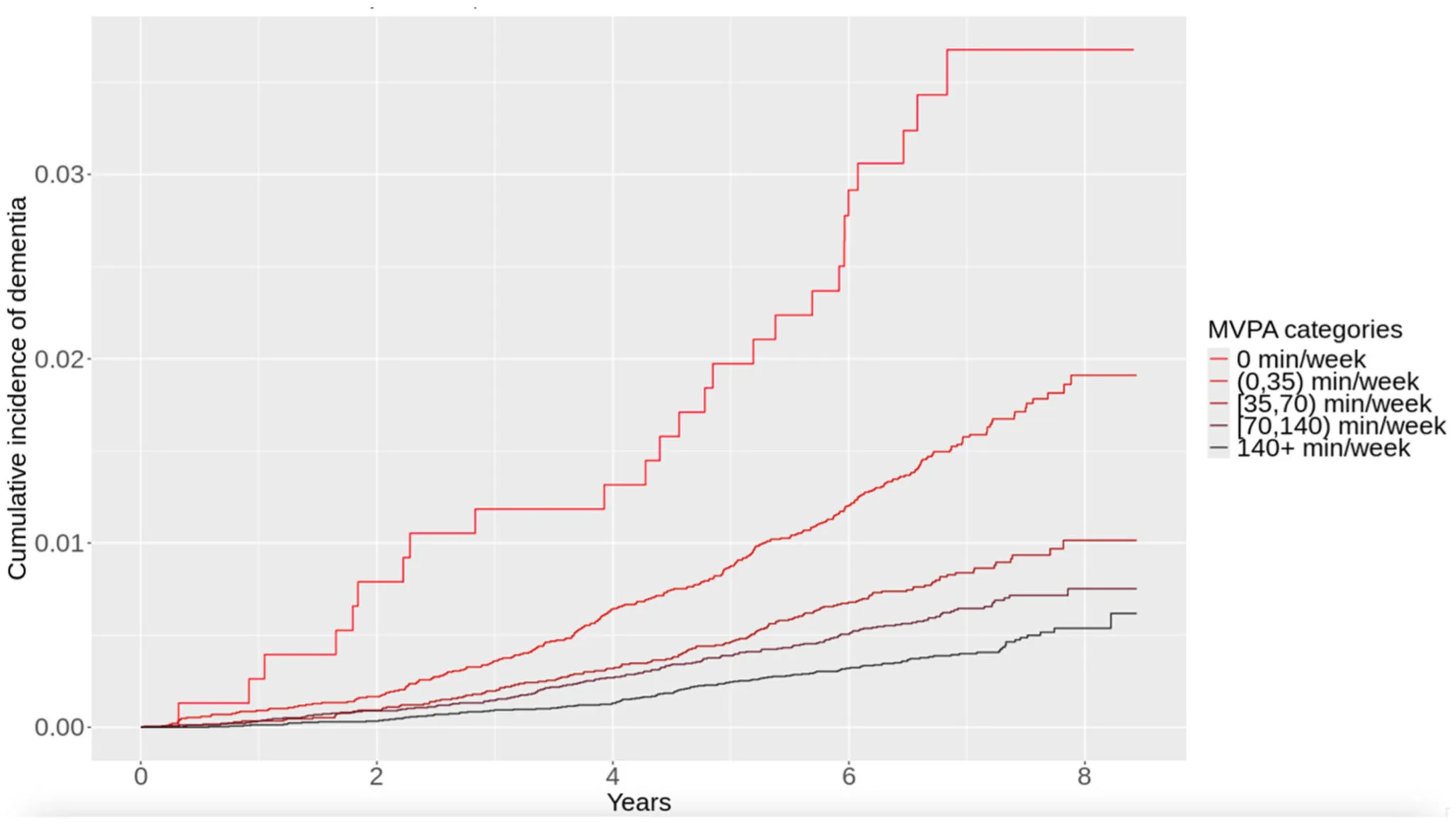
Chart showing risk of dementia as a function of exercise
Researchers compared dementia cases against activity levels. (Wanigatunga et al., Journal of the American Medical Directors Association, 2025)

The chart above shows the risk of dementia as a function of exercise. It concludes that:

  • 35 mins of exercise per week reduces your dementia risk by 41%
  • 35-70 mins of exercise per week reduces your dementia risk by 60%
  • 70-140 mins of exercise per week reduces your dementia risk by 63%
  • 140+ mins of exercise per week reduces your dementia risk by 69%


“Our findings suggest that increasing physical activity, even as little as five minutes per day, can reduce dementia risk in older adults,” says Johns Hopkins epidemiologist Amal Wanigatunga.

He goes on to say that “even frail or nearly frail older adults might be able to reduce their dementia risk through low-dose exercise.”

Additionally, “a growing body of evidence (suggests) that some exercise is better than nothing, especially with regard to an aging-related disorder that affects the brain that currently has no cure.”

Takeaway

There are lots of factors at play, from diet to genetics, so this research doesn’t prove direct cause and effect, but it does suggest exercise and brain health are closely linked (as we’ve discussed in previous articles).

More importantly, it shows that anyone at any stage of life can benefit from almost any level of additional exercise. So if you feel like you’re not exercising as much as you should, this is your wake up call. It’s never too late to start.


Source:

Small Amounts of Moderate to Vigorous Physical Activity Are Associated with Big Reductions in Dementia Risk

Moderate-to-Vigorous Physical Activity at any Dose Reduces All-Cause Dementia Risk Regardless of Frailty Status

Share the Post:

Active Aging News

Weekly Newsletter

RELATED NEWS

Happy senior woman controlling her blood glucose with an insulin delivery

New Hope for Adults with Uncontrolled Diabetes

Shot of a mature man sitting with his doctor and going over his medical results on a digital tablet in the clinic

The Geriatrician’s Dossier: Common Health Advice You Should Now Ignore

Pill, medicine and portrait of senior woman for pharmaceutical, medical product and retirement health. Happy elderly person hand holding tablet or supplement for healthy life and vitamins healthcare

The Workout in a Bottle? How Science is Engineering an Exercise Pill

Green powder with green capsules on white background.

The Next Generation of Weight Control: Why Tiny Tea Beads Might Be Your New Diet Hero

Vaccine covid-19. Female doctor or nurse giving shot or vaccine to a patient's shoulder. Vaccination and prevention against flu or virus pandemic

A Half-Off Sale on Alzheimer’s? Why Your Next Vaccine Is a No-Brainer

OTHER STORIES

Back view of fitness instructor teaching boys kettle bell class in dark shadow gym. Teenagers training lifting dumbbell weight with concrete wall background.

Is Weightlifting Safe for Kids and Teens?

Older Couple Lunging Working out Together at City Park

Beyond the Scale: The Four Functional Tests Every Adult Over 50 Should Take

Female doctor measuring waist of overweight patient using tape measure. Obesity affecting middle-aged men's health. Concept of health risks of overwight and obesity.

Mind Your Muscles: The Surprising Link Between Lean Mass, Back Pain, and Longevity

Home, skincare and old woman in bathroom, dry brush and lens flare with hygiene. Morning routine, pensioner and senior person with exfoliation, cleaning and wellness with healthy skin and body scrub

Flush Out Fluid Retention: 3 Everyday Lymphatic Drainage Habits You Can Do at Home

Food rich in folic acid

Could a Simple Vitamin Deficiency Be Quietly Raising Dementia Risk?

Nature, fitness and senior friends in conversation while sitting in the forest after hiking. Happiness, communication and elderly people talking, bonding and drinking water after outdoor exercise.

The Right Amount of Water for Older Adults

[chatbot style="floating"]

Please enter your email to access your profile