2 MIN. READ

Just 5 Minutes of Activity Reduces Dementia Risk in Seniors

iStock/AaronAmat

A team of researchers at Johns Hopkins University found that up to 35 minutes of moderate-to-vigorous physical activity (MVPA) every week is associated with a 41 percent drop in dementia risk, compared to those who didn’t exercise at all. And this is true even for frail older adults.

There were other encouraging findings. Even the oldest among us can reduce dementia risk by increasing our weekly activity, and even just a few minutes of exercise per day can have protective effects for brain health.

How was the research conducted?

The researchers analyzed data on nearly 90,000 adults living in the UK, with a median age of 63, across an average of 4.4 years. Data was logged using dedicated activity trackers worn on the wrist, which logged movement over time. By also recording which participants went on to develop dementia, the researchers could link activity with dementia risk

What were the findings?
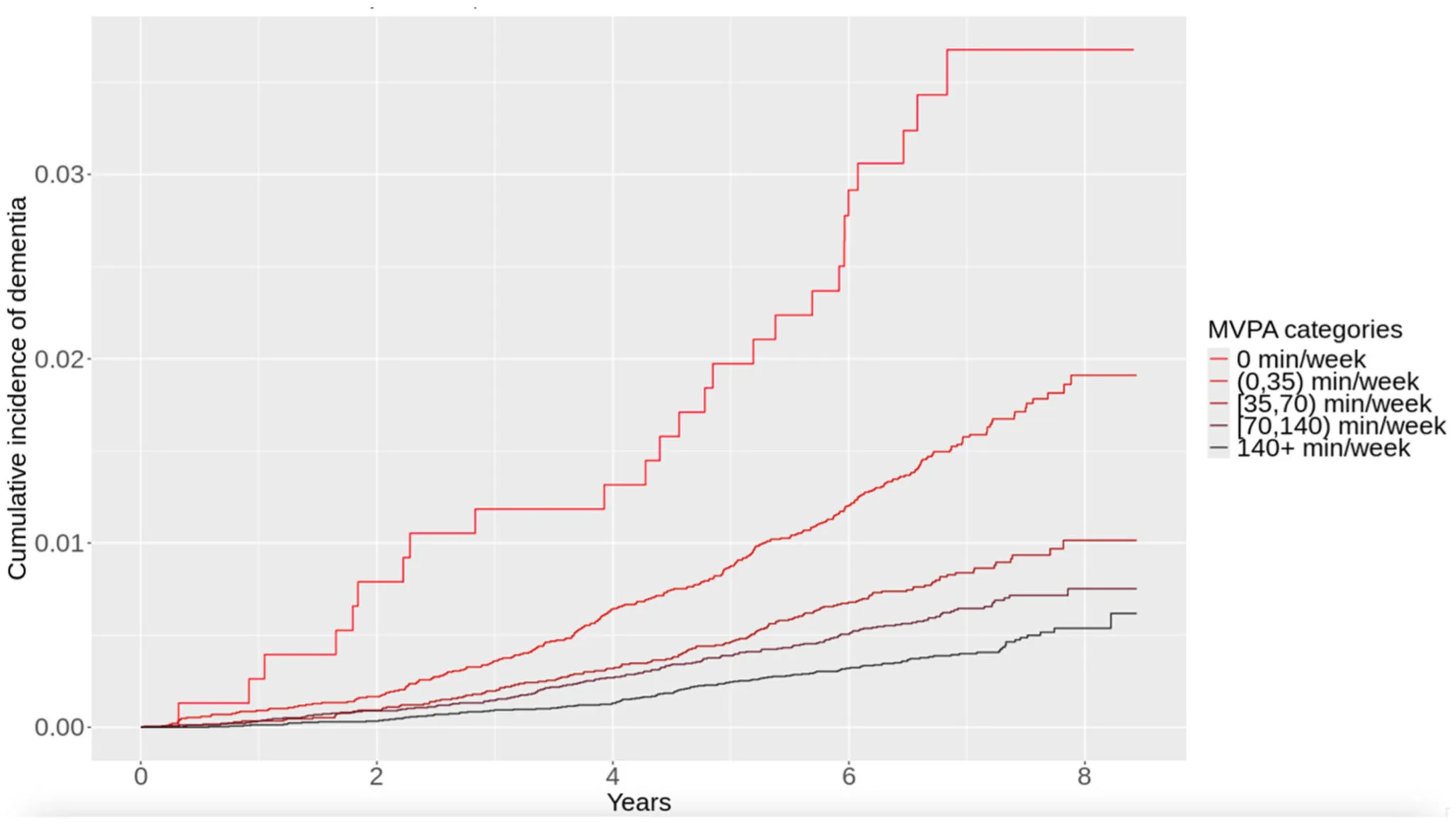
Chart showing risk of dementia as a function of exercise
Researchers compared dementia cases against activity levels. (Wanigatunga et al., Journal of the American Medical Directors Association, 2025)

The chart above shows the risk of dementia as a function of exercise. It concludes that:

  • 35 mins of exercise per week reduces your dementia risk by 41%
  • 35-70 mins of exercise per week reduces your dementia risk by 60%
  • 70-140 mins of exercise per week reduces your dementia risk by 63%
  • 140+ mins of exercise per week reduces your dementia risk by 69%


“Our findings suggest that increasing physical activity, even as little as five minutes per day, can reduce dementia risk in older adults,” says Johns Hopkins epidemiologist Amal Wanigatunga.

He goes on to say that “even frail or nearly frail older adults might be able to reduce their dementia risk through low-dose exercise.”

Additionally, “a growing body of evidence (suggests) that some exercise is better than nothing, especially with regard to an aging-related disorder that affects the brain that currently has no cure.”

Takeaway

There are lots of factors at play, from diet to genetics, so this research doesn’t prove direct cause and effect, but it does suggest exercise and brain health are closely linked (as we’ve discussed in previous articles).

More importantly, it shows that anyone at any stage of life can benefit from almost any level of additional exercise. So if you feel like you’re not exercising as much as you should, this is your wake up call. It’s never too late to start.


Source:

Small Amounts of Moderate to Vigorous Physical Activity Are Associated with Big Reductions in Dementia Risk

Moderate-to-Vigorous Physical Activity at any Dose Reduces All-Cause Dementia Risk Regardless of Frailty Status

Share the Post:

Active Aging News

Weekly Newsletter

RELATED NEWS

Senior man laying down on the sofa and watching tv

Heart Health After 50: Why Being an “MVP” Just Means Moving Very Periodically

Worried Senior Man In Bed At Night Suffering With Insomnia

Wanna Sleep Better After 60? Grab Those Weights!

young man take medicine. self-medication. guy is being treated home with pills. Headache

😴 Wake Up Call: Are Your Sleep Meds Costing You More Than Just Money?

3d illustration of HIV virus. Medical concept

Could An Existing HIV Medication Hold the Key to Preventing Alzheimer’s?

MedicalNewsToday mitochondria-illustration

Mitochondrial Health and Aging

OTHER STORIES

Progressive Overload

Progressive Overload: What is it and can it help older adults?

Smartwatch health check with digital system on modern virtual screen. Wristwatch brain monitor checking for tracking health condition. Healthcare, Medical technology and futuristic concept.

Retire Your Old Excuses: Introducing the AI Coach That Actually Understands Your Wearable Data

Senior man at gym sitting on bench press looking at watch

Science Says Time Actually Slows Down When Working Out

Concept of eating too much of sweets. Cropped closeup photo of cheerful girl enjoying eating sweets holding almost empty plate in hands isolated grey background

How Long Does It Take Your Brain To Catch Up To Your Stomach?

Imagine of Mushroom Scallops in Salad bowl ready to serve

Shell Shock: Introducing the Decadent ‘Scallops’ That Won’t Break the Bank (or Your Cholesterol)

Senior, man group and fitness selfie at park together for elderly health or wellness for happiness smile. Happy retirement, friends portrait or runner club in diversity, teamwork or outdoor training

How Exercise Kicks Loneliness to the Curb for Seniors

[chatbot style="floating"]

Please enter your email to access your profile