2 MIN. READ

Just 5 Minutes of Activity Reduces Dementia Risk in Seniors

iStock/AaronAmat

A team of researchers at Johns Hopkins University found that up to 35 minutes of moderate-to-vigorous physical activity (MVPA) every week is associated with a 41 percent drop in dementia risk, compared to those who didn’t exercise at all. And this is true even for frail older adults.

There were other encouraging findings. Even the oldest among us can reduce dementia risk by increasing our weekly activity, and even just a few minutes of exercise per day can have protective effects for brain health.

How was the research conducted?

The researchers analyzed data on nearly 90,000 adults living in the UK, with a median age of 63, across an average of 4.4 years. Data was logged using dedicated activity trackers worn on the wrist, which logged movement over time. By also recording which participants went on to develop dementia, the researchers could link activity with dementia risk

What were the findings?
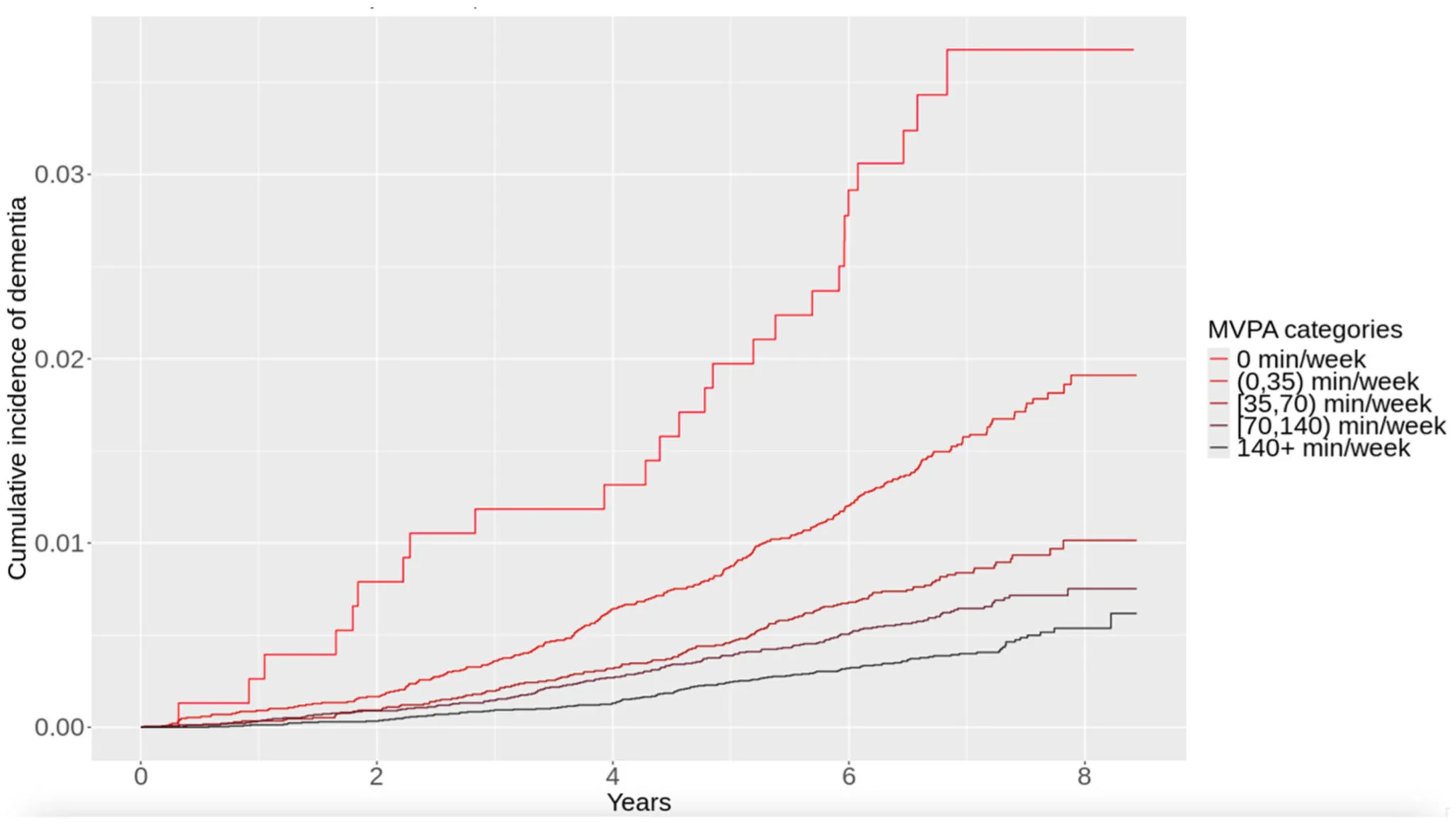
Chart showing risk of dementia as a function of exercise
Researchers compared dementia cases against activity levels. (Wanigatunga et al., Journal of the American Medical Directors Association, 2025)

The chart above shows the risk of dementia as a function of exercise. It concludes that:

  • 35 mins of exercise per week reduces your dementia risk by 41%
  • 35-70 mins of exercise per week reduces your dementia risk by 60%
  • 70-140 mins of exercise per week reduces your dementia risk by 63%
  • 140+ mins of exercise per week reduces your dementia risk by 69%


“Our findings suggest that increasing physical activity, even as little as five minutes per day, can reduce dementia risk in older adults,” says Johns Hopkins epidemiologist Amal Wanigatunga.

He goes on to say that “even frail or nearly frail older adults might be able to reduce their dementia risk through low-dose exercise.”

Additionally, “a growing body of evidence (suggests) that some exercise is better than nothing, especially with regard to an aging-related disorder that affects the brain that currently has no cure.”

Takeaway

There are lots of factors at play, from diet to genetics, so this research doesn’t prove direct cause and effect, but it does suggest exercise and brain health are closely linked (as we’ve discussed in previous articles).

More importantly, it shows that anyone at any stage of life can benefit from almost any level of additional exercise. So if you feel like you’re not exercising as much as you should, this is your wake up call. It’s never too late to start.


Source:

Small Amounts of Moderate to Vigorous Physical Activity Are Associated with Big Reductions in Dementia Risk

Moderate-to-Vigorous Physical Activity at any Dose Reduces All-Cause Dementia Risk Regardless of Frailty Status

Share the Post:

Active Aging News

Weekly Newsletter

RELATED NEWS

The Specialist electrical engineer communicated with the team via walkie-talkie at night against the light of bokeh in the background

The Unseen Toll: How Shift Work May Accelerate Aging

Elderly men in park, chess game and winner of competition or challenge, friends in retirement and happiness. Achievement, success and contest outdoor, moving piece for checkmate and problem solving

Strategies for Peak Cognitive Fitness

Vitamin D keeps you healthy while lack of sun. Yellow soft shell D-vitamin capsule against sun and blue sky on sunny day. Cure concept.

Beyond Bones: Vitamin D’s Surprising Role in Slowing Your Biological Clock

3d illustration of colon cancer - colon tumor

The Gut’s Uninvited Guest: A New Clue in the Fight Against Colorectal Cancer

middle aged woman with hand on chest experiencing pain

The Silent Killer: Widow-Maker Heart Attacks

OTHER STORIES

Fat woman, fat belly, chubby, obese woman hand holding excessive belly fat with measure tape,

BMI vs BF%: Which Of These Two Indicators Is The Clear Winner?

Creatine ethyl ester (CEE)

Creatine: Is It Too Good To Be True?

Process brewing tea, tea ceremony, Cup of freshly brewed fruit and herbal tea, dark mood. Hot water is poured from the kettle into a cup with tea leaves.

The Surprising Advantages of Tea for Older Adults

Elderly woman in company of hatha yoga lovers performs bridge pose, setu bandha sarvangasana

From Rusty Gate to Golden Gate: Reclaiming Your Mobility with Setu Bandhasana

Street portrait of two women, 60-65 years old and 40-45 years old, against a background of people and architecture. Women tourists and travelers.

Aging Occurs in Two Rapid Bursts at 44 and 60

Happy multiracial family having breakfast in the kitchen - daughter pouring the milk into her father's mug

Whole Milk vs. Low-Fat: Ditching the Dairy Dogma After 50

[chatbot style="floating"]

Please enter your email to access your profile