2 MIN. READ

Just 5 Minutes of Activity Reduces Dementia Risk in Seniors

iStock/AaronAmat

A team of researchers at Johns Hopkins University found that up to 35 minutes of moderate-to-vigorous physical activity (MVPA) every week is associated with a 41 percent drop in dementia risk, compared to those who didn’t exercise at all. And this is true even for frail older adults.

There were other encouraging findings. Even the oldest among us can reduce dementia risk by increasing our weekly activity, and even just a few minutes of exercise per day can have protective effects for brain health.

How was the research conducted?

The researchers analyzed data on nearly 90,000 adults living in the UK, with a median age of 63, across an average of 4.4 years. Data was logged using dedicated activity trackers worn on the wrist, which logged movement over time. By also recording which participants went on to develop dementia, the researchers could link activity with dementia risk

What were the findings?
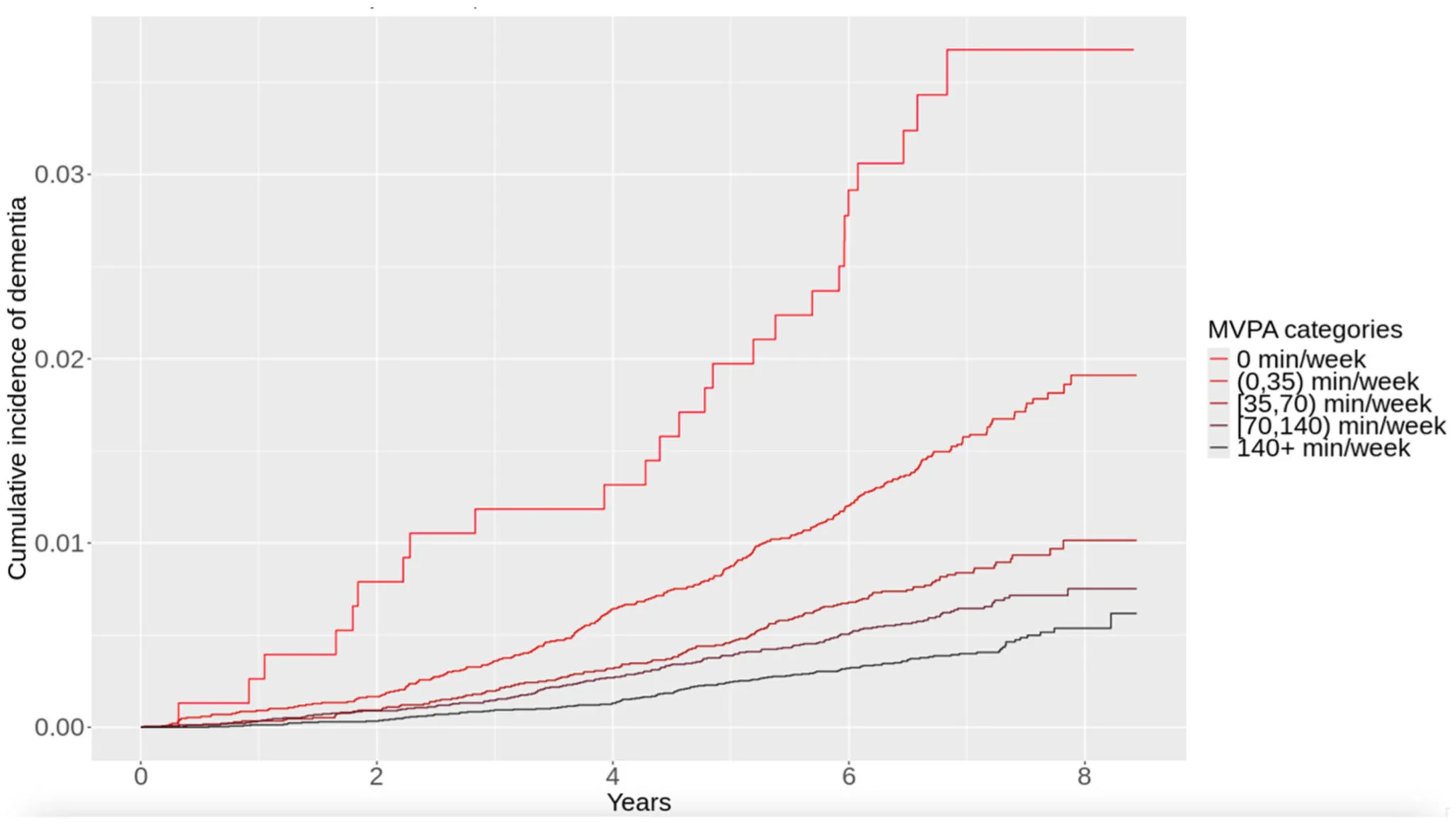
Chart showing risk of dementia as a function of exercise
Researchers compared dementia cases against activity levels. (Wanigatunga et al., Journal of the American Medical Directors Association, 2025)

The chart above shows the risk of dementia as a function of exercise. It concludes that:

  • 35 mins of exercise per week reduces your dementia risk by 41%
  • 35-70 mins of exercise per week reduces your dementia risk by 60%
  • 70-140 mins of exercise per week reduces your dementia risk by 63%
  • 140+ mins of exercise per week reduces your dementia risk by 69%


“Our findings suggest that increasing physical activity, even as little as five minutes per day, can reduce dementia risk in older adults,” says Johns Hopkins epidemiologist Amal Wanigatunga.

He goes on to say that “even frail or nearly frail older adults might be able to reduce their dementia risk through low-dose exercise.”

Additionally, “a growing body of evidence (suggests) that some exercise is better than nothing, especially with regard to an aging-related disorder that affects the brain that currently has no cure.”

Takeaway

There are lots of factors at play, from diet to genetics, so this research doesn’t prove direct cause and effect, but it does suggest exercise and brain health are closely linked (as we’ve discussed in previous articles).

More importantly, it shows that anyone at any stage of life can benefit from almost any level of additional exercise. So if you feel like you’re not exercising as much as you should, this is your wake up call. It’s never too late to start.


Source:

Small Amounts of Moderate to Vigorous Physical Activity Are Associated with Big Reductions in Dementia Risk

Moderate-to-Vigorous Physical Activity at any Dose Reduces All-Cause Dementia Risk Regardless of Frailty Status

Share the Post:

Active Aging News

Weekly Newsletter

RELATED NEWS

Shot of a mature man sitting with his doctor and going over his medical results on a digital tablet in the clinic

The Geriatrician’s Dossier: Common Health Advice You Should Now Ignore

Black female doctor checking measuring pressure on patient's hand

A New Way to Measure How Fast You’re Aging

Women injecting semaglutide

Navigating the GLP-1 Wave: What Adults Over 50 Need to Know About the Side Effects

Sketch of white, brown and beige fat cells

The Amazing Truth About Brown Fat

Close up aged Caucasian man old sportsman morning training warm-up sporty lifestyle exercise retired senior stadium city outside masculinity power movement routine aerobics gymnastic bodycare wellness

Why “When” You Exercise Matters More Than “How Much”

OTHER STORIES

hydrogen water bottle

Fountain of Youth… In a Glass? The Buzz About Hydrogen Water for Seniors

Young adult child active mature middle age old mum drink whey protein shake bottle diet food after home workout. Love health care older aged mom asia elder people happy relax sport protect aging life.

Stronger for Longer: High-Impact Supplements to Support an Active Lifestyle

Active and Engaged Seniors Delight in a Nature Walk in the Park Using Nordic Poles

The Best ROI for Your 60s: Why the Fitness Generalist Outlives the Specialist

Group of multiethnic mature people dancing modern dance

Stepping Out: Why Your Next Doctor’s Prescription Might Involve a Dance Floor

An elderly woman is sitting on the sofa at home, holding her stomach with her hands. Feels the pain of internal organs, indigestion, poisoning, menstrual pain

Ditch the Pills: Why Doctors Are Prescribing Kiwis, Deep Breaths, and No More Pasta Before Bed

Senior couple exercising Tai Chi

Tai Chi: The Elegant Way to Defeat Gravity

[chatbot style="floating"]

Please enter your email to access your profile