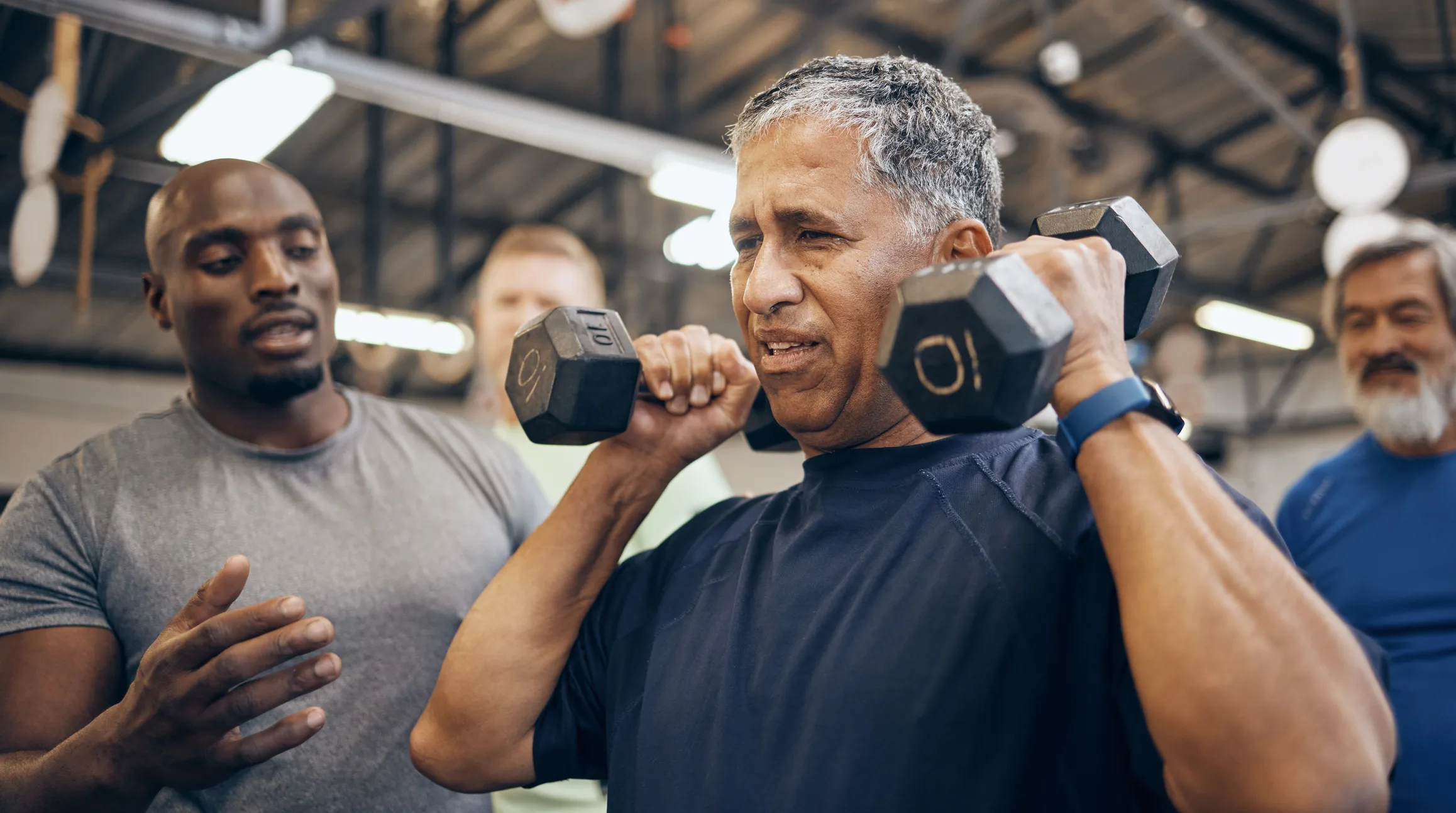
If you’re a man over 50, you’ve probably heard of osteoporosis—but you likely dismissed it as a “women’s disease.” After all, you have bigger, stronger bones, and you’re practically indestructible… right?
Wrong. The data is starting to fight back against the “Superman idea.” About 1 in 5 men over the age of 50 will suffer a fracture due to osteoporosis in their remaining years. And when a major osteoporotic fracture happens to a man (think hip, spine, or shoulder), the outcomes are grim: men have a higher rate of death (up to 30% within a year), disability, and institutionalization than women do.
In fact, a 50-year-old man is more likely to die from complications of a major fracture than from prostate cancer. It’s time to stop shrugging this off.
The “Too Slow” Wake-Up Call
The issue often comes to light with a startling lack of drama, as it did for Ronald Klein, a dentist in Pennsylvania. In 2006, he was biking and tried to jump a curb. He was going “too slow,” toppled over, and thrust out his arm to break the fall. It seemed minor, yet he couldn’t get up.
The damage? Fractured hip and shoulder. As he astutely noted, “A 52-year-old is not supposed to break a hip and a shoulder.” He was right. His fall was the alarm bell revealing the silent, progressive condition of osteoporosis.
For decades, men simply didn’t live long enough for bone loss to catch up; they succumbed to heart disease and smoking first. Now, men routinely live into their 70s and 80s, giving osteoporosis plenty of time to work its damage.
The Screening Standoff: Why Doctors Miss It
While women are universally advised to get a bone density screening after age 65, the guidance for men is murky. This confusion means men are vastly undertested, even in places where screening is covered, like the VA health system. One study of older veterans found only 2% of those at risk had been screened—a number researchers called “abysmal.”
Why the low screening rate?
- The Gender Bias: Many patients and doctors still regard osteoporosis as solely a female problem, rooted in a “Superman idea” that men are immune.
- Conflicting Guidelines: Professional guidelines are “all over the place.” Some recommend screening for all men over 70, or men over 50 with risk factors, but other influential groups deem the evidence “insufficient.”
- The Medicare Gap: Because of this lack of consensus, Medicare and many private insurers often won’t cover screening for men who haven’t already suffered a fracture. It’s a classic “don’t fix it until it breaks” scenario, which, in the case of bone health, can be catastrophic.
Take Control: When to Ask for the DXA Scan
Osteoporosis is often asymptomatic, meaning you don’t feel your bones thinning until one breaks. Since your doctor might not bring it up, it’s crucial for you to be proactive.
The gold standard test is the DXA scan (pronounced DECKS-ah), a quick, non-invasive test that measures bone density. While it may cost $100 to $300 out-of-pocket without insurance, that’s a small price for mobility.
You should strongly consider a DXA scan if you have any of the following risk factors:
- A Fracture After Age 50: This is the loudest alarm bell.
- Family History: A parent or sibling with a hip fracture.
- Medication Use: Long-term use of steroids or certain prostate cancer drugs.
- Lifestyle: Current smoking or excessive alcohol consumption.
- Chronic Conditions: Rheumatoid arthritis, hyperthyroidism, or Parkinson’s disease.
The Solution: Studies show that when bone health services are set up—with proactive reminders and explanations of results—nearly half of at-risk men agree to be screened. Of those tested, up to half discover they have osteoporosis or the precursor, osteopenia.
Takeaway
Lifestyle changes (exercise, calcium, Vitamin D) are important, but they usually aren’t enough to reverse bone loss once it starts. Fortunately, effective and often inexpensive medications are available to preserve or rebuild bone, drastically improving your chances of a robust, active future. Don’t wait for a broken hip to start the conversation.
Source: