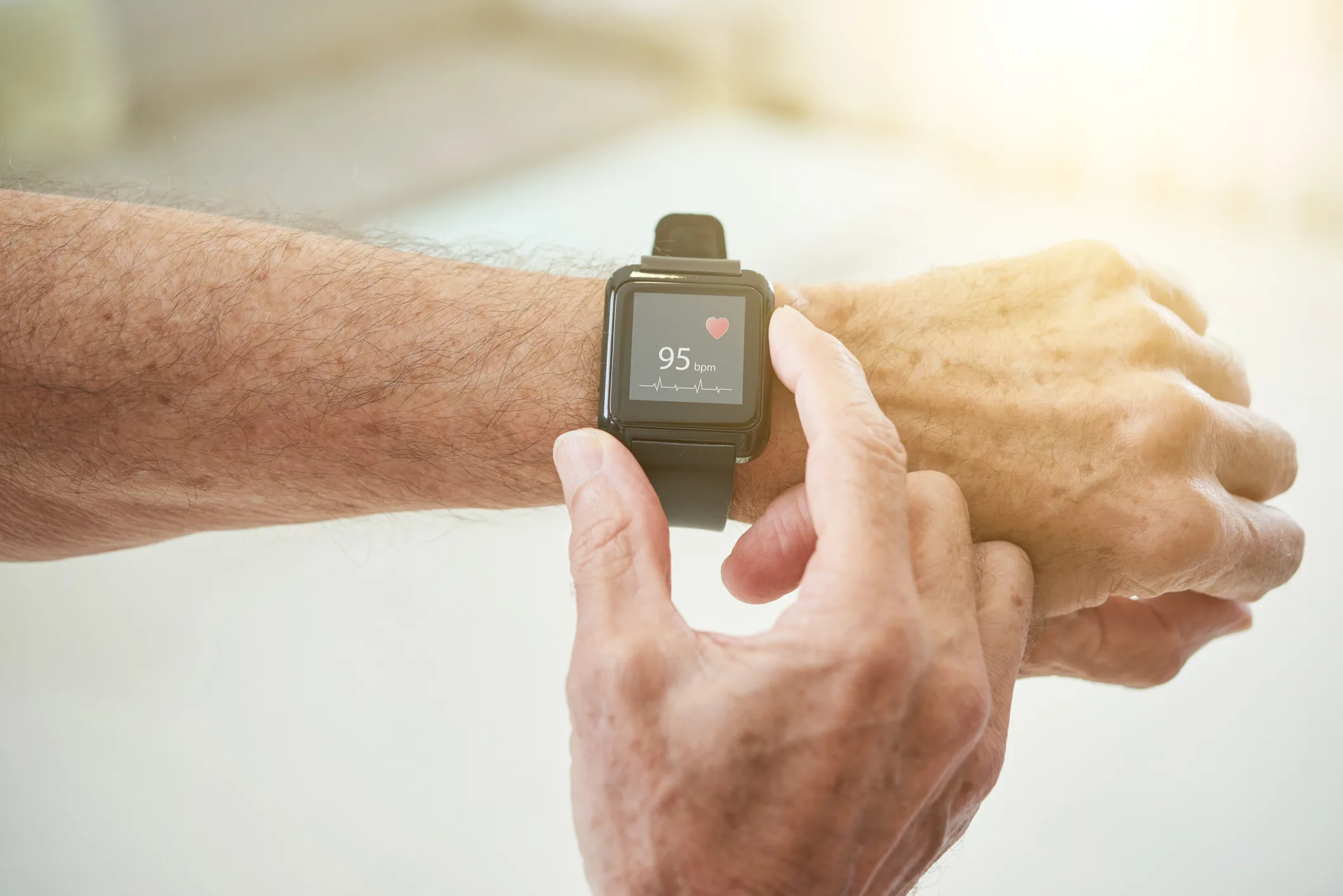
Remember when the only thing your watch measured was the time it took to nap? Well, welcome to the future, where that little screen on your wrist is morphing from a simple gadget into a genuine health sleuth—and it’s zeroing in on your heart.
For the 50+ crowd, structural heart disease—things like a weakened pump, a leaky valve, or a thickened muscle—is a serious concern, often lurking quietly until it lands you in the emergency room. Now, a groundbreaking preliminary study suggests that combining the simple ECG sensor on your everyday smartwatch with a specialized Artificial Intelligence (AI) algorithm could provide an early “check engine light” for your most vital organ.
The A.I. Heart Sleuth: Catching Trouble Early
Traditionally, finding these hidden structural issues requires an Echocardiogram (a full-scale heart ultrasound)—not exactly a routine screening test you get at your annual check-up. The goal of this new research is to bridge that gap.
Researchers at Yale developed an AI algorithm trained on mountains of traditional heart data. They then taught it to interpret the simple, single-lead ECG signals captured by the back and digital crown of a common smartwatch.
Why is this a big deal for us? Structural heart disease often goes undiagnosed for years. Study author Arya Aminorroaya, M.D., M.P.H., an internal medicine resident at Yale New Haven Hospital and a research affiliate at the Cardiovascular Data Science (CarDS) Lab at Yale School of Medicine in New Haven, Connecticut, noted, “We are missing the asymptomatic window of these diseases where we could intervene earlier.”
The Report Card: How Accurate Is This Tiny Doctor?
The AI algorithm was tested on 600 adults (with a median age of 62) who used a smartwatch to take a quick, 30-second ECG. The results were remarkably strong for a preliminary test:
- High Accuracy: When detecting structural heart disease using the smartwatch ECGs, the AI model scored an impressive 88% on a standard performance scale.
- The Power of No: It was highly effective at ruling out heart disease. If the watch said your heart was fine, it was correct 99% of the time (a “Negative Predictive Value” of 99%). That’s a lot of peace of mind for a wrist-tap!
- What It Found: The AI successfully identified weakened pumping ability, damaged heart valves, and thickened heart muscle—all serious conditions.
In short, your watch, paired with AI, becomes a powerful screening tool that’s already in your possession. You don’t need a special trip to the doctor for a basic screening test.
Next Steps (and a Dose of Reality)
While this news is certainly exciting—and opens the door to truly accessible, large-scale heart screening—a little caution is warranted.
- Remember the Caveat: This is a preliminary study presented at a scientific meeting; the findings have not yet been fully peer-reviewed or published in a scientific journal. Don’t throw out your doctor’s number yet!
- More Than Just Symptoms: The researchers believe this tech could eventually be integrated into community screening programs (think testing at the local community center or pharmacy) so that even those without a personal smartwatch could benefit.
Takeaway
This research highlights that your modern-day timepiece is becoming far more than a step counter or a weather forecast. It’s becoming a tireless, witty watchdog for your long-term health. Keep wearing it—your future self (and your cardiologist) will thank you.
Source:
App Turns Smartwatch Into Detector of Structural Heart Disease
An AI tool detected structural heart disease in adults using a smartwatch